Growth Was Rewarded, but the Market Demanded Proof
AI dominated the week, but the broader market told a more complex story as investors weighed infrastructure spending, monetization, earnings quality, restructuring, trade, crypto, energy and borrowing costs.


A Week Where Opportunity Expanded but Execution Still Mattered
The market repeatedly rewarded developments that made future growth more tangible this week, but the pattern extended well beyond the artificial-intelligence trade. Meta’s Muse created new expectations around AI monetization and computing demand, AMD crossed $1 trillion in market value, Akamai secured a transformative Anthropic agreement, and Microsoft broadened Copilot into coding and autonomous agents. At the same time, Oracle’s Project Jupiter difficulties demonstrated that the infrastructure required to support that growth carries substantial financial and execution demands.
Similar distinctions appeared elsewhere. Costco combined strong sales and digital demand with higher spending. AutoZone overcame softer sales through stronger margins. On Holding rallied behind long-term targets and a $1 billion buyback, while Novo Nordisk fell when ambitious pipeline goals failed to resolve questions about future growth. MGM Resorts lost its takeover premium, Starbucks accelerated restructuring, and Bitcoin moved back above $85,000.
Macro conditions added another layer. Oil and fuel costs increased pressure on inflation and economic activity, mortgage rates reached 6.95%, and the U.S.-China trade truce was extended without resolving broader disputes over technology, AI and trade.
Across these very different developments, markets repeatedly distinguished between the size of an opportunity and the evidence that companies could convert it into sustainable results.
Key Points
- Meta, AMD, Akamai, Microsoft, Alibaba, Datadog and Everpure showed how AI demand continued spreading from applications into chips, cloud infrastructure, enterprise software and data-center capacity.
- Oracle, Zscaler, Novo Nordisk and MGM Resorts showed the other side of the week as execution concerns, leadership changes, unresolved growth questions and disappearing catalysts produced sharp negative reactions.
- Costco, AutoZone, On Holding, Starbucks, Bitcoin and Coinbase showed that market-moving developments extended well beyond AI into consumer demand, margins, restructuring, capital returns and risk appetite.
The Repeating Pattern
The week’s strongest pattern was not simply enthusiasm for artificial intelligence. It was the market’s repeated response to new information that changed the visibility of future growth.
Meta provided one of the clearest examples. Muse adoption initially drove Meta shares sharply higher as commerce integrations raised expectations for subscriptions, transactions and revenue beyond advertising. The implications then spread outward: Arm surged about 15%, Intel 14% and AMD 9% as markets connected autonomous AI agents with greater CPU requirements. Meta subsequently expanded Muse further through transaction-based monetization, retailer integrations, computer control, Muse Charm and AI-connected glasses.
AMD then crossed the $1 trillion market-cap threshold for the first time after another 9.9% surge, extending a 2026 rally supported by record revenue, rapid data-center growth and major AI infrastructure agreements. Alibaba added another dimension by unveiling its Zhenwu V900 AI chip alongside broader cloud and model expansion plans.
The semiconductor story itself was becoming less uniform. Nvidia and AMD remained associated with accelerated computing, while Broadcom and Marvell expanded through custom AI silicon. Hyperscaler spending was therefore creating distinct opportunities rather than lifting every part of the chip market for exactly the same reason.
Microsoft extended the pattern into enterprise software by combining AI chat, coding and autonomous agents inside a redesigned Copilot. Its focus on broader workplace adoption and consumption-based revenue illustrated another stage of the AI cycle: converting technical capability into recurring commercial usage.
Datadog offered a related example. Shares climbed about 7% as rapid revenue growth and expanding AI workloads strengthened investor interest, although its increasingly elevated valuation kept expectations themselves relevant to the reaction.
How Markets Responded Across Events
The infrastructure required to support AI became just as important as the applications and processors.
Akamai’s $11.6 billion, seven-year agreement with Anthropic sharply expanded its cloud infrastructure business, with the potential commitment reaching roughly $20 billion. The scale connected Akamai directly with the growing need for computing capacity behind advanced AI workloads.
New Era Energy & Digital illustrated the importance of another scarce resource: power. Its shares surged about 30% after securing up to 207 MW of contracted power for the first phase of its Texas data-center project through a 20-year agreement, although significant financial commitments still remained.
Everpure also surged after presenting a stronger fiscal 2028 growth outlook tied to AI infrastructure, hyperscale customers and an expanding data-management business. The reaction showed how the AI buildout was reaching companies tied to the supporting infrastructure surrounding hyperscale computing.
Oracle demonstrated the opposite reaction. Shares fell about 5% after reports that it invoked force majeure protections tied to Project Jupiter, a major New Mexico AI data center. Instead of focusing on the size of AI demand, the market was confronted with project delays, capital spending and the financial demands of infrastructure expansion.
Cybersecurity added another branch to the AI story. Zscaler fell about 9% following an unexpected sales leadership transition even as broader demand for cybersecurity was receiving additional attention because of AI-related security risks. CrowdStrike and Palo Alto Networks were among the companies expanding their focus on securing AI systems and agents. The contrast was notable: an improving industry backdrop did not prevent company-specific execution concerns from dominating Zscaler’s immediate reaction.
Accenture approached the same security question from another direction. Its long-term Anthropic partnership focused on evaluating advanced AI models, with each company expecting to invest at least $1 billion over five years. The agreement extended Accenture’s role beyond enterprise implementation toward frontier-model safety.
Taken together, Meta, AMD, Intel, Arm, Nvidia, Broadcom, Marvell, Alibaba, Microsoft, Datadog, Akamai, New Era, Everpure, Oracle, Zscaler, CrowdStrike, Palo Alto Networks and Accenture showed how widely the AI theme had spread. But their different reactions also demonstrated that merely being connected to AI was not enough. The market differentiated between adoption, monetization, infrastructure demand, security needs and execution risk.
Outside AI, that same selectivity remained visible.
On Holding surged after setting ambitious 2029 sales and margin targets, authorizing its first $1 billion share buyback and outlining expansion beyond running into football and golf. AutoZone rose even though revenue and same-store sales were softer, as a sharp gross-margin increase, higher net income and improving sales late in the quarter offset the weaker top line.
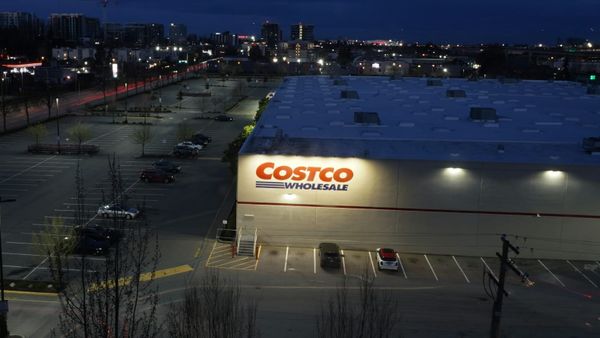
Costco’s fiscal fourth quarter also exceeded earnings and revenue expectations, supported by strong comparable sales and digital demand. But slower paid-membership growth and higher costs remained part of the picture as the retailer prepared a $7.5 billion fiscal 2027 capital program.
Novo Nordisk demonstrated how ambitious targets could produce a very different outcome. Shares fell about 8% after its capital markets day left investors seeking more clarity on growth beyond semaglutide. Its $23 billion pipeline target and at least five potential multi-blockbusters were not enough to remove near-term questions.
Starbucks was dealing with a different form of execution. The company is closing roughly 250 North American stores and taking approximately $300 million in restructuring charges as it sharpens its “Back to Starbucks” turnaround. At the same time, it continues remodeling cafes and planning longer-term expansion.
MGM Resorts showed how quickly expectations can reset when an external catalyst disappears. Shares sank about 10% after People Inc. withdrew its $48.30-per-share acquisition proposal, removing the takeover premium and returning attention to MGM’s standalone operations.
Paramount Skydance moved in the opposite direction after reaching a settlement with California and other states challenging its Warner Bros. Discovery acquisition. Shares climbed as the agreement removed a major legal obstacle, although it also added production, investment and other commitments to the transaction.
Despite very different catalysts, the outcomes repeatedly followed changes in what investors could see ahead: more visible growth, fewer obstacles or stronger economics were treated differently from new execution problems, disappearing catalysts or unresolved strategic questions.
What This Behavior Suggests
The week also contained developments that did not fit neatly into the corporate growth narrative but reinforced how many forces were shaping expectations simultaneously.
Bitcoin climbed more than 7% above $85,000 while Coinbase gained about 3.5%. Coinbase also launched retail IPO access, extending its push into traditional financial markets even as the Senate failed to advance the CLARITY Act. The combination linked a sharp cryptocurrency move with Coinbase’s continued effort to broaden beyond its core exchange business.
Tesla reopened reservations for its long-delayed Roadster ahead of an October 1 reveal, putting attention back on a product that arrives alongside third-quarter deliveries, earnings and updates across the company’s vehicle and autonomy programs. The reaction placed Tesla among the week’s companies where future product developments, rather than current-period financial results alone, influenced attention.
Trade and technology policy remained another important layer. Nvidia shares edged higher ahead of the Trump-Xi summit as attention centered on whether U.S.-China discussions might alter access to the Chinese market for advanced AI chips. Later in the week, President Donald Trump and Chinese President Xi Jinping extended the U.S.-China trade truce by two months, keeping current arrangements in place until January 10 while leaving disputes over trade, technology, AI and Taiwan unresolved.
Those developments added geopolitical constraints to an AI market already being shaped by demand, capacity, capital and competition.
The macroeconomic backdrop provided a different source of pressure. High oil and fuel prices squeezed households and businesses as global supply buffers contracted. U.S. gasoline reached $4.47 a gallon and diesel climbed above $6, while disruptions across the Middle East and Russia increased pressure on inflation and economic activity.
At the same time, mortgage rates reached 6.95% as inflation remained above the Federal Reserve’s target and policymakers raised rates. Elevated borrowing costs and higher vehicle prices extended the affordability pressure beyond housing.
That macro backdrop mattered because it existed alongside strong company-specific growth narratives. AI spending could accelerate, Costco could report resilient demand and Bitcoin could rally while households simultaneously faced higher financing and energy costs. The week therefore did not produce a single uniform message about economic conditions or risk appetite.
Why This Context Matters
The breadth of the week helps explain why a simple “AI rally” description would have been incomplete.
Artificial intelligence was unquestionably the most persistent corporate theme. Meta was pushing Muse toward monetization and hardware. AMD crossed $1 trillion. Arm and Intel rallied alongside renewed CPU demand. Nvidia remained exposed to U.S.-China market-access questions. Broadcom and Marvell represented custom silicon. Alibaba was building more of its own AI stack. Microsoft was pushing autonomous agents into enterprise workflows. Akamai and New Era highlighted computing capacity and power. Accenture, Zscaler, CrowdStrike and Palo Alto Networks showed how security and model safety were becoming part of the same ecosystem.
Yet the market was simultaneously processing Costco’s consumer demand, AutoZone’s margin expansion, On Holding’s long-term targets, Novo Nordisk’s pipeline uncertainty, Starbucks’ restructuring, MGM’s lost takeover proposal and Paramount Skydance’s reduced regulatory obstacle.
Bitcoin’s return above $85,000 added another measure of market risk appetite, while Coinbase continued expanding into traditional finance. Tesla returned attention to its Roadster and upcoming product developments. Oil, inflation and mortgage rates continued pressuring household economics. The U.S.-China trade truce reduced one immediate source of uncertainty without resolving the underlying technology and trade disputes.
These developments were not expressions of one identical economic condition. What connected them was how quickly markets recalibrated when new information altered expectations.
That could be a new AI revenue stream at Meta, greater computing demand for AMD and Arm, contracted power for New Era, improved margins at AutoZone, clearer targets at On Holding, project risk at Oracle, pipeline uncertainty at Novo Nordisk or the disappearance of MGM’s takeover premium.
The catalyst changed. The mechanism of the reaction was remarkably consistent.
Conclusion
This week’s market behavior was broader than any single rally, sector or macro event.
AI remained at the center of the largest cluster of developments, but the story moved well beyond chips. Meta demonstrated adoption and monetization. AMD, Intel and Arm reflected computing demand. Nvidia, Broadcom, Marvell and Alibaba showed different approaches to AI silicon. Microsoft and Datadog represented enterprise software and cloud workloads. Akamai, New Era and Everpure brought infrastructure and capacity into focus. Zscaler, CrowdStrike, Palo Alto Networks and Accenture extended the theme into cybersecurity and AI safety. Oracle showed the financial and operational risks attached to building at scale.
Beyond technology, On Holding, AutoZone and Costco demonstrated how markets responded to growth targets, margins and business momentum. Novo Nordisk showed the consequences when long-term ambitions failed to resolve near-term concerns. Starbucks continued restructuring. MGM lost a takeover catalyst while Paramount Skydance removed a legal obstacle.
Bitcoin and Coinbase reflected another form of risk appetite and financial expansion. Tesla brought future products back into focus. The Trump-Xi summit and trade-truce extension kept technology policy and market access relevant. Oil, inflation and 6.95% mortgage rates reminded investors that strong corporate growth narratives were unfolding against continued pressure on households and businesses.
Across these events, the repeated behavior was not indiscriminate optimism or pessimism. Markets consistently responded to changes in the visibility, credibility and economics of what came next.
FAQs
What was the main pattern in markets this week?
Markets repeatedly reacted to changes in the visibility of future growth and execution. Meta, AMD, Akamai, On Holding and New Era benefited from developments that expanded or clarified their opportunities, while Oracle, Novo Nordisk and MGM faced negative reactions when uncertainty increased.
Why did AI dominate so many of the week’s stories?
AI demand appeared across an unusually broad set of businesses. The week connected Meta and Microsoft with applications, AMD, Nvidia, Arm, Intel, Broadcom, Marvell and Alibaba with computing, Akamai and New Era with infrastructure, and Zscaler, CrowdStrike, Palo Alto Networks and Accenture with security and safety.
Were markets rewarding every AI-related company?
No. Oracle fell about 5% as Project Jupiter raised questions about project delays, capital spending and infrastructure execution, while Zscaler fell about 9% after an unexpected sales leadership transition despite broader cybersecurity demand.
What important developments occurred outside technology?
Consumer, healthcare, crypto and corporate transactions also produced major moves. Costco reported strong sales and digital demand, AutoZone benefited from margin expansion, On Holding presented 2029 targets, Novo Nordisk fell after its pipeline update, MGM lost its takeover premium, and Bitcoin climbed above $85,000.
How did macro conditions fit into the week?
Households and businesses continued to face pressure from energy, inflation and borrowing costs. Gasoline reached $4.47 a gallon, diesel exceeded $6 and mortgage rates reached 6.95%, creating a contrasting backdrop to strong company-specific growth stories.
This article was created with AI assistance and reviewed by an editor. For details, please refer to our Terms of Use.
Go Beyond the Market Brief with Market Edge
Follow SharperTrades’ complete approach to trading and investing, combining active trade opportunities through Block Orders, long-term research through Stock Investor, and structured market education through the Swing Trading Masterclass. Try Market Edge for $19 your first month →
Explore Research with Stock Investor
Stock Investor is SharperTrades’ platform for long-term investing research and portfolio management. Members receive research reports, portfolio updates, conviction tracking, and in-depth analysis designed to support disciplined investment decisions.
Explore Active Trading & Income Strategies
Block Orders tracks institutional activity and highlights active trade setups and price behavior across long and short opportunities.
For options-focused traders, Essential Option Income provides a structured approach to options income strategies, while Pro Option Trader offers a broader range of options strategies and trade opportunities.
Think More Clearly with SteadyCapital
SteadyCapital is SharperTrades’ decision-support system for long-term investors, built around the SteadyCapital Method™. Review investment ideas, challenge assumptions, evaluate valuation and risk, compare companies, and think through important buy, hold, add, trim, or sell decisions before you act.
Risk Disclosure
All content is provided for educational purposes only and does not constitute investment advice. Trading involves risk, and past performance is not indicative of future results. Please review our full Risk Disclosure for additional information.