Oil Near $100 Tests Global Markets as Hormuz Risk Raises Inflation Pressure
Brent crude is trading near $97 as conflict around the Strait of Hormuz disrupts energy flows. Higher oil and diesel prices are pressuring global markets, raising costs for consumers and putting inflation and interest rates back at the center of the market outlook.

The Oil Shock Is Spreading Beyond the Energy Market
Crude oil has returned to the center of the global market story. Brent climbed as high as $97.93 a barrel on Monday before retreating after Iran said an agreement with Oman on a temporary safe shipping route through the Strait of Hormuz was nearing completion. West Texas Intermediate traded above $92, while Brent remains roughly 35% above its level before the war began in late February.
The pressure is increasingly visible beyond crude itself. Diesel prices have more than doubled this year and are roughly 90% above prewar levels, while U.S. gasoline averaged $4.14 a gallon over Labor Day weekend, about $1 higher than a year earlier. Goldman Sachs outlined a wide range for oil: as high as $120 if shipping disruptions intensify, but as low as $80 if regional exports normalize.
Key Points
- Oil is carrying a geopolitical risk premium. Brent traded near $97 as attacks on shipping, U.S.-Iran military escalation and uncertainty surrounding the Strait of Hormuz raised concerns about the reliability of Middle East energy flows.
- The economic impact is already reaching consumers. Diesel prices have more than doubled this year, U.S. gasoline averaged a Labor Day record $4.14 a gallon, and higher transportation and production costs are adding to inflation concerns.
- Markets face sharply different outcomes depending on shipping conditions. Goldman Sachs sees oil potentially reaching $120 if disruptions intensify, while normalized regional exports could send prices toward $80.
Why Is the Strait of Hormuz Moving Global Markets?
The immediate driver is no longer simply how much oil producers are willing to pump. The ability to move energy safely through one of the world's critical shipping corridors has become central to the price of crude.
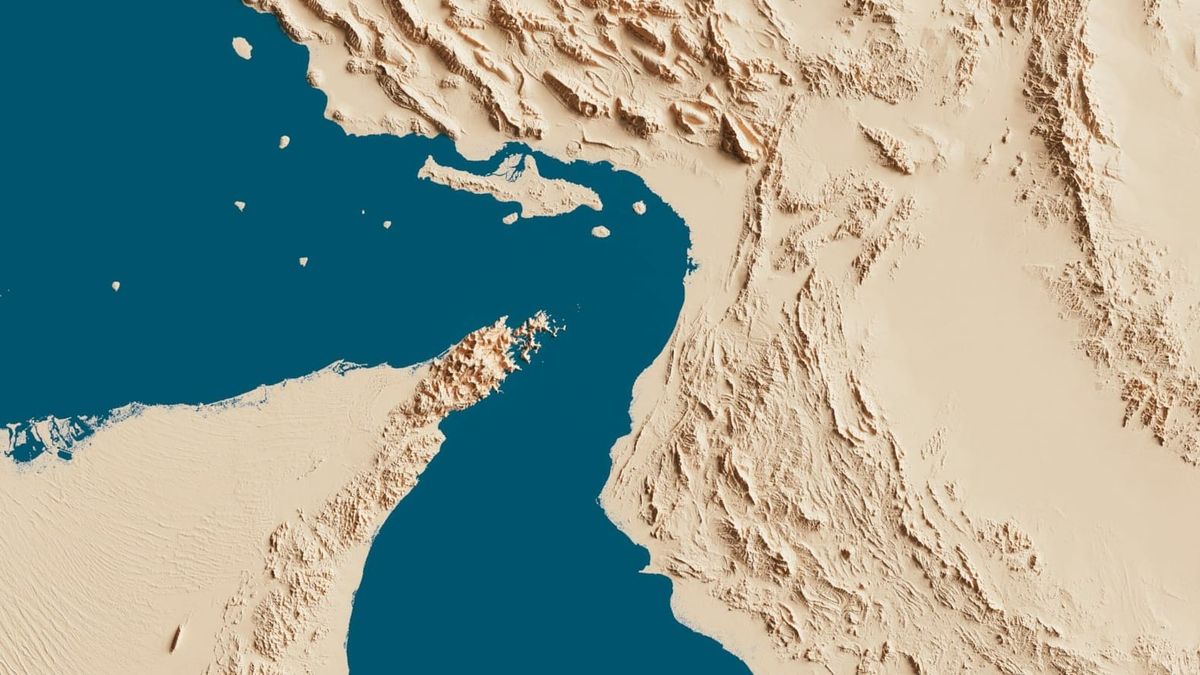
The Strait of Hormuz previously handled about 20% of global crude supplies. Recent hostilities have included U.S. strikes against Iranian tankers, Iranian attacks and threats against vessels, an American blockade of Iranian ports, and plans by Tehran for a restricted zone outside the strait. Reports of an attack on Saudi Aramco infrastructure near the Yemen border added another source of supply concern.
Even without a complete closure of Hormuz, disruption can affect the market. Attacks can delay shipments, raise insurance costs and increase the premium buyers are willing to pay for immediately available oil.
That risk has pushed Brent and WTI to their highest levels since July 23. Oil gained almost 8% last week alone.
Yet Monday also demonstrated how quickly that risk premium can change. Iran said an agreement being negotiated with Oman was in its final stages and would establish a temporary safe route through the waterway. Brent subsequently reversed earlier gains, falling to around $96.15 after reaching $97.93.
The reaction showed that markets are responding not only to actual lost supply, but also to changes in the perceived risk surrounding future shipments.
How Higher Oil Prices Reach Stocks, Inflation and Household Budgets
The effects extend well beyond energy traders.
Higher oil prices pushed U.S. stock-index futures lower from earlier Monday highs, while Treasury futures also slipped as investors considered the possibility that elevated energy costs could reinforce inflation. European stocks struggled for direction as investors weighed energy prices alongside political uncertainty.
Central banks are becoming part of the story as well. The European Central Bank is expected to raise rates to 2.5%, while markets were pricing a 58% probability of a Federal Reserve increase at its September 16 meeting. Markets were also assigning a 75% probability to a quarter-point Bank of Japan increase on September 18.
Energy prices matter because oil and refined products are embedded throughout the economy. Diesel powers trucks, ships, agricultural equipment and manufacturing. Its price has more than doubled this year and is around 90% above its prewar level.
For households, the most visible transmission mechanism is gasoline. Average U.S. gasoline prices reached $4.14 per gallon over Labor Day weekend, breaking the previous holiday record of $3.82 and standing roughly $1 above last year's level.
Businesses exposed to transportation and fuel costs face the same pressure from another direction. Airlines, transportation companies and consumers were identified among those facing rising costs if energy prices remain elevated, while energy producers can benefit from higher prices.
The shock is also becoming global. Asian refiners have sought crude from Canada, Africa, Brazil and Argentina as Middle East supplies remain disrupted. China has increased purchases of African and American grades as Iranian supply has declined, although its estimated August imports of 7.3 million barrels per day remained below the prewar range of 11 million to 12 million.
The result is an energy shock that increasingly connects geopolitics, inflation, consumer spending, interest rates and global market sentiment.
What Matters Next for Oil?
The unusually wide range of possible outcomes illustrates the uncertainty.
Goldman Sachs sees a severe-disruption scenario in which oil reaches $120 a barrel. From roughly $97.50, that would represent an increase of about 23%. If exports normalize instead, the bank sees the possibility of oil falling toward $80, roughly 18% below that level.
Those aren't equivalent forecasts. They represent different outcomes dependent on what happens to shipping and exports.
Among the variables identified as important are the frequency of attacks, vessel traffic, availability of shipping insurance, export volumes and the direction of U.S.-Iran hostilities.
The composition of the energy shock matters too. Natural gas and refined petroleum products have risen faster than crude. Goldman Sachs said supply shocks in those markets are larger and pointed specifically to natural gas and diesel as areas where geopolitical disruption is having an outsized effect.
Oil-producing countries outside the immediate conflict are also becoming more important. Asian buyers have increasingly searched for barrels from other regions, pushing up prices for some Canadian, South American and African crude grades.
Meanwhile, OPEC and its allies agreed to keep October production unchanged from September after six consecutive months of output increases.
That leaves the market balancing two competing developments: attempts to create safer shipping routes and find replacement supplies on one side, and continued military escalation and infrastructure risk on the other.
What It Means for Investors
The oil market is increasingly acting as a bridge between geopolitical risk and the broader financial system.
For stock-market investors, the important signal is not simply whether crude rises or falls on a given day. The larger question is whether elevated energy costs persist long enough to influence inflation, corporate costs and central-bank policy. Monday's decline in U.S. stock-index futures as oil climbed illustrates that connection.
There is also evidence that wealthy investors have been emphasizing capital preservation and diversification amid broader volatility and inflation concerns. A Goldman Sachs survey cited in the provided data found that high-net-worth individuals hold roughly 20% of their net worth in cash and cash equivalents. Berkshire Hathaway was reported to hold approximately $365.5 billion in cash as of August 2026.
Alternative assets are also common among wealthy portfolios. Nearly four in 10 investors with $1 million to $5 million in investable assets had exposure to alternatives, while the figure reached 80% among those with more than $10 million. UBS data cited in the material showed high-net-worth investors held about 2% of their wealth in gold in 2025 and planned to increase that to 3% in 2026.
These figures do not establish a direct response to the current oil shock. They do, however, illustrate how wealthy investors have been allocating capital amid market volatility and inflation concerns: maintaining substantial liquidity while spreading some capital beyond traditional stocks and bonds.
For everyday investors and households, the consequences are more immediate. Higher gasoline and diesel prices directly raise energy and transportation expenses, while broader inflation can reduce purchasing power. With U.S. inflation reported at 3.4% in July, the interaction between energy prices, inflation and interest rates remains an important part of the stock market update.
Conclusion
The latest oil rally is about more than the price of a barrel.
Brent near $97 reflects a market confronting uncertainty over whether energy can continue moving reliably through the Middle East. That uncertainty is already appearing in diesel, gasoline, global crude sourcing, stock-index futures and expectations for central-bank policy.
Monday's reversal after news of a possible Iran-Oman shipping agreement also demonstrated the other side of the equation: reducing the threat to shipping can quickly remove part of oil's geopolitical premium.
That leaves the Strait of Hormuz at the center of the market news today. If disruption broadens, Goldman Sachs' severe scenario puts crude as high as $120. If regional exports normalize, its lower scenario points toward $80. Between those outcomes lies a much broader question for global markets: how long elevated energy costs continue feeding through to businesses, consumers, inflation and interest rates.
FAQs
Why are oil prices rising?
Oil prices have risen as conflict involving the U.S. and Iran has increased the risk of shipping disruptions around the Strait of Hormuz. Brent also responded to attacks involving tankers and reports of damage to Saudi energy infrastructure.
How high could oil prices go?
Goldman Sachs said oil could reach $120 a barrel if attacks on Middle East shipping broaden and intensify. The bank also sees a scenario in which oil falls toward $80 if regional exports normalize.
How do higher oil prices affect everyday consumers?
Higher energy prices can raise direct fuel expenses and transportation costs. Average U.S. gasoline prices reached $4.14 per gallon over Labor Day weekend, about $1 above their level a year earlier, while diesel prices are around 90% above prewar levels.
Why do higher oil prices matter for the stock market?
Higher energy costs can increase inflationary pressure and costs for fuel-dependent businesses. On Monday, rising oil prices pushed U.S. stock-index futures down from earlier highs while Treasury futures also declined amid inflation concerns.
How are wealthy investors positioning amid market uncertainty?
A Goldman Sachs survey cited in the provided data found high-net-worth individuals held roughly 20% of their net worth in cash and cash equivalents. Wealthier investors also had significant exposure to alternative investments, while UBS data showed high-net-worth investors planned to increase their average gold allocation from 2% in 2025 to 3% in 2026.
This article was created with AI assistance and reviewed by an editor. For details, please refer to our Terms of Use.
Go Beyond the Market Brief with Market Edge
Follow SharperTrades’ complete approach to trading and investing, combining active trade opportunities through Block Orders, long-term research through Stock Investor, and structured market education through the Swing Trading Masterclass. Try Market Edge for $19 your first month →
Explore Research with Stock Investor
Stock Investor is SharperTrades’ platform for long-term investing research and portfolio management. Members receive research reports, portfolio updates, conviction tracking, and in-depth analysis designed to support disciplined investment decisions.
Explore Active Trading & Income Strategies
Block Orders tracks institutional activity and highlights active trade setups and price behavior across long and short opportunities.
For options-focused traders, Essential Option Income provides a structured approach to options income strategies, while Pro Option Trader offers a broader range of options strategies and trade opportunities.
Think More Clearly with SteadyCapital
SteadyCapital is SharperTrades’ decision-support system for long-term investors, built around the SteadyCapital Method™. Review investment ideas, challenge assumptions, evaluate valuation and risk, compare companies, and think through important buy, hold, add, trim, or sell decisions before you act.
Risk Disclosure
All content is provided for educational purposes only and does not constitute investment advice. Trading involves risk, and past performance is not indicative of future results. Please review our full Risk Disclosure for additional information.