Robotaxi Expansion Accelerates as Waymo, Tesla and Zoox Push Into New Markets
Robotaxi deployment is moving from testing toward commercial scale as Waymo expands across U.S. cities and targets Tokyo, Tesla enters Las Vegas, and Zoox builds its footprint. The shift is increasing competitive pressure across autonomous driving and ride-hailing.

Robotaxi Competition Shifts From Technology to Scale
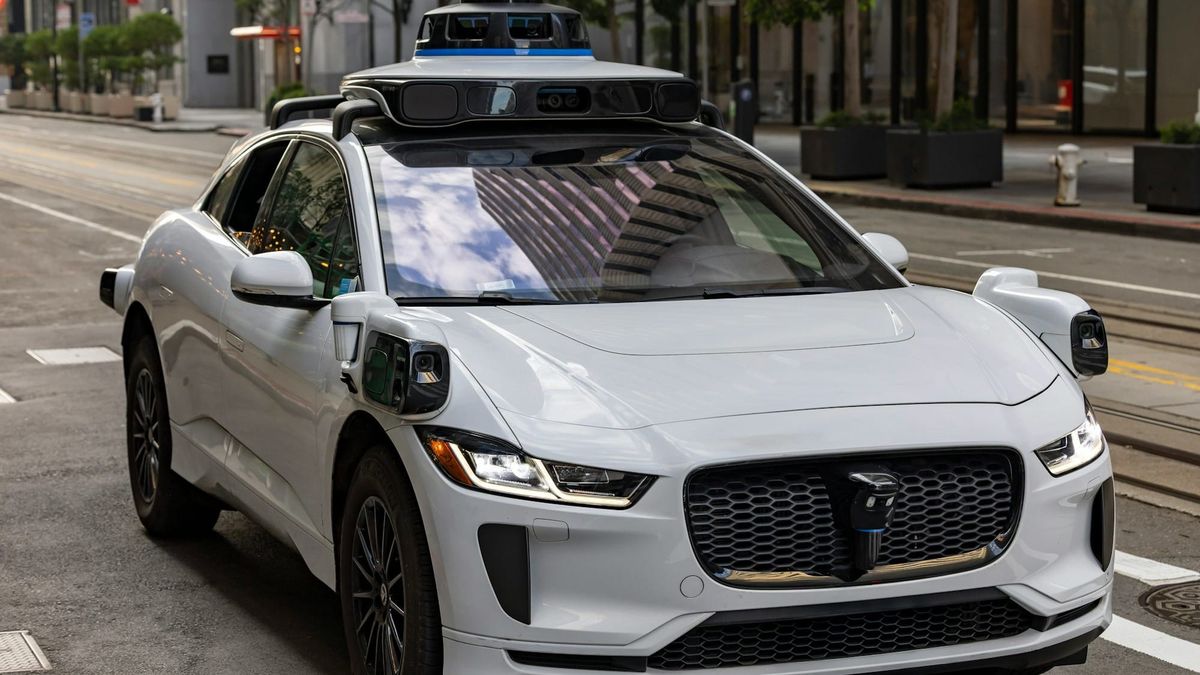
The robotaxi market is entering a new phase as autonomous-driving companies expand commercial fleets, enter new cities and build partnerships designed to accelerate deployment.
Alphabet (GOOGL) subsidiary Waymo now averages more than 500,000 paid robotaxi rides per week across its U.S. operations and has expanded from three cities in September 2024 to service in 15 U.S. cities. Tesla (TSLA) is building its own autonomous fleet, while Amazon (AMZN)-backed Zoox has established a commercial presence in Las Vegas. At the same time, Uber Technologies (UBER) is positioning its ride-hailing network as a platform for autonomous vehicles from multiple partners.
Key Points
- Waymo has expanded to 15 U.S. cities, averages more than 500,000 paid rides per week and operates roughly 4,000 robotaxis, with about 80% concentrated in California and Texas.
- Tesla, Zoox and other autonomous-driving companies are expanding their robotaxi footprints, while Uber is pursuing a partnership-based strategy designed to bring autonomous vehicles onto its network.
- Commercial scale remains the central question as companies move beyond technical validation toward larger fleets, more cities, lower costs and international deployment.
Waymo Pushes Robotaxis Toward Commercial Scale
Waymo's expansion illustrates how quickly the robotaxi market is moving beyond limited testing.
The company was operating commercially in Phoenix, Los Angeles and San Francisco in September 2024. It now offers robotaxi service in 15 U.S. cities and averages 500,000 paid rides each week.
Yet the geographic expansion masks a concentrated fleet. About 80% of Waymo's roughly 4,000 robotaxis are located in California and Texas. Texas has become particularly important, with Waymo's fleet there increasing 49% in three weeks to 1,102 registered autonomous vehicles as of Sept. 24.
Waymo initially entered commercial service in Austin through Uber in March 2025 and subsequently expanded its Texas operations into Dallas, Houston and San Antonio.
A new vehicle is becoming increasingly important to that expansion. Waymo's Ojai robotaxi, a modified Zeekr RT equipped with its sixth-generation autonomous-driving system, now accounts for about one-third of the company's Texas fleet.
Waymo is also bringing the Ojai to Las Vegas, where it has started offering fully autonomous rides to public passengers. The initial fleet consists of a few dozen vehicles, and the service area covers nearly 24 miles, including destinations such as Allegiant Stadium and The Venetian.
More than 100,000 people expressed interest in riding before the rollout. Waymo has also said it is scaling production capacity for Waymo-enabled vehicles toward tens of thousands of units annually at its Mesa, Arizona factory.
The company could have significantly more vehicles available for expansion. MoffettNathanson estimates Waymo is on track to import 5,100 Ojai vehicles into the U.S. by year-end, although tariffs on Chinese-built vehicles are increasing the cost of those imports.
Waymo's ambitions also extend beyond the United States. It plans to launch a fully autonomous commercial taxi service in Tokyo in 2027 with taxi-app operator GO and Nihon Kotsu, subject to regulatory approval and further validation.
The Tokyo service would initially use a small fleet before gradually expanding toward approximately 100 vehicles in selected neighborhoods.
Who Is Challenging Waymo in the Robotaxi Race?
Waymo's expansion is occurring alongside growing competition from Tesla, Zoox and other autonomous-driving developers.
Las Vegas provides one example. Zoox began commercial operations there in August, meaning Waymo is entering a market where an autonomous competitor is already operating.
Tesla is expanding as well. Nevada regulators unanimously approved a full permit for a paid driverless taxi service across Clark County, allowing up to 5,000 autonomous vehicles over the following 12 months. Tesla stock rose 5% following the development, according to the supplied material.
Tesla's unsupervised autonomous fleet has also surpassed one million miles across cities including Austin, Dallas and Houston. Its Cybercab debuted in Austin on Sept. 8 with 45 registered vehicles.
Bank of America's fleet estimates illustrate how large the robotaxi market could become if current expansion plans are realized. The bank projects the combined fleets of Waymo, Tesla and Zoox rising from approximately 4,500 vehicles currently to about 118,000 in 2029.
Its base case estimates Tesla reaching approximately 92,000 robotaxis by 2029, compared with about 20,000 for Waymo and 6,000 for Zoox. The bank estimates robotaxi bookings could reach roughly $6 billion by 2028, equivalent to about 5% of the U.S. ride-hailing market.
Other approaches are emerging as well.
Wayve is pursuing scale through automaker and ride-hailing partnerships. It has reached an agreement with Mercedes-Benz to integrate its automated-driving technology into at least one model within two years, adding to partnerships with Nissan and Stellantis. Wayve has also partnered with Nissan and Uber for a planned robotaxi service in Tokyo.
Volkswagen subsidiary MOIA America has partnered with Beep to launch passenger service using self-driving ID Buzz vehicles equipped with Mobileye technology in Lake Nona, Florida, although a human operator remains onboard.
The range of approaches shows that autonomous mobility is developing through both vertically controlled robotaxi fleets and partnerships involving automakers, technology developers and ride-hailing platforms.
What Happens to Uber as Robotaxis Expand?
The rise of autonomous fleets creates a different strategic question for Uber because the company already controls a large ride-hailing network without owning the vehicles that provide most rides.
Investor concerns about autonomous competition have weighed on Uber stock. Shares closed at $69.89 on Sept. 22, down approximately 29% over the previous year and nearly 12% over four weeks.
The operating business, however, continued to grow. Second-quarter gross bookings increased 24% to $58 billion, while trips rose 18% to 3.9 billion.
Uber's strategy is to participate in autonomous transportation through partnerships. Its partners have committed approximately 120,000 robotaxis to its network over multiple years, according to Bank of America's analysis.
The competitive relationship is complicated because some autonomous companies can simultaneously serve as Uber partners and potential rivals.
Waymo launched in Austin through Uber, but plans to introduce its own app in Austin and Atlanta beginning in January 2028, ending its exclusive Uber arrangement in those markets.
Bank of America estimates Uber's share of U.S. ride-hailing bookings could decline from approximately 76% currently to 73% in 2028 and around 70% in 2029. Even under a scenario where every incremental robotaxi booking in 2029 came directly from Uber and Lyft (LYFT), the bank estimated Uber's U.S. bookings at $96 billion, about 6% below its base forecast.
Pricing could influence how quickly autonomous rides expand the broader market. Tesla appears to be pricing rides about 30% below Uber, Lyft and Waymo while building its audience, according to the supplied Bank of America analysis.
U.S. ride-hailing currently costs roughly $3 per mile, compared with approximately $0.66 to $1 per mile for owning a vehicle based on AAA estimates cited by the bank. Bank of America identified robotaxi fares below $2 per mile as an important threshold for broader adoption.
What It Means for Investors
The robotaxi story is increasingly becoming a question of commercialization rather than simply whether autonomous-driving technology can operate on public roads.
Waymo's 500,000 weekly paid rides, approximately 4,000-vehicle fleet and expansion into additional cities demonstrate growing commercial scale. Its planned Tokyo launch adds another test: whether an operating model developed in the United States can be adapted to different roads, regulations and transportation systems.
Tesla and Zoox are increasing competitive pressure. Bank of America's projections suggest fleet expansion could accelerate substantially through 2029, although those figures remain analyst estimates rather than confirmed deployment levels.
For Uber, autonomous vehicles represent both competition and a potential source of rides for its existing platform. Its strategy depends heavily on partnerships, with approximately 120,000 autonomous vehicles committed to its network over multiple years.
The economics remain another important part of the story. Waymo raised $16 billion in February at a $126 billion valuation, but has not disclosed expected revenue, fares or profitability for its planned Tokyo service. Its Chinese-built Ojai vehicle is intended to help reduce costs, yet tariffs are currently increasing the expense of importing those vehicles.
The next stage of the robotaxi market therefore involves more than adding cities. Fleet size, manufacturing capacity, partnerships, pricing, regulatory approvals and the economics of operating autonomous vehicles at scale are all becoming increasingly important.
Conclusion
Robotaxis are moving deeper into commercial transportation as Waymo, Tesla, Zoox and their competitors increase fleet deployments and geographic reach.
Waymo currently holds significant operating scale, with roughly 4,000 vehicles and more than 500,000 paid rides each week. Its rapid Texas expansion, Las Vegas launch and planned Tokyo service illustrate a strategy increasingly focused on repeating its commercial model across new markets.
Tesla is expanding its autonomous operations and has received approval for as many as 5,000 vehicles in Clark County, while Zoox already operates commercially in Las Vegas. Uber is taking another route, seeking to make its ride-hailing network a platform for autonomous fleets from multiple partners.
The competitive focus is consequently shifting. Proving that autonomous vehicles can drive without human control remains important, but the industry's next challenge is demonstrating that robotaxi services can scale across fleets, cities and countries while establishing sustainable economics.
FAQs
How large is Waymo's robotaxi operation?
Waymo operates roughly 4,000 robotaxis and averages more than 500,000 paid rides each week across its U.S. operations. About 80% of its fleet is currently concentrated in California and Texas.
Where is Waymo expanding its robotaxi service?
Waymo now offers robotaxi service in 15 U.S. cities. Its recent expansion includes Las Vegas, while the company also plans to launch a fully autonomous commercial taxi service in Tokyo in 2027, subject to regulatory approval and further validation.
How is Tesla competing in robotaxis?
Tesla has received approval for a paid driverless taxi service across Clark County, Nevada, allowing up to 5,000 autonomous vehicles over 12 months. Its Cybercab also debuted in Austin on Sept. 8 with 45 registered vehicles.
Could robotaxis disrupt Uber?
Bank of America estimates Uber's share of U.S. ride-hailing bookings could decline from approximately 76% currently to 73% in 2028 and around 70% in 2029. Uber is also pursuing autonomous transportation through partners that have committed approximately 120,000 robotaxis to its network over multiple years.
How large could robotaxi fleets become?
Bank of America projects the combined Waymo, Tesla and Zoox robotaxi fleet could grow from approximately 4,500 vehicles currently to roughly 118,000 in 2029, with robotaxi bookings reaching about $6 billion by 2028.
This article was created with AI assistance and reviewed by an editor. For details, please refer to our Terms of Use.
Go Beyond the Market Brief with Market Edge
Follow SharperTrades’ complete approach to trading and investing, combining active trade opportunities through Block Orders, long-term research through Stock Investor, and structured market education through the Swing Trading Masterclass. Try Market Edge for $19 your first month →
Explore Research with Stock Investor
Stock Investor is SharperTrades’ platform for long-term investing research and portfolio management. Members receive research reports, portfolio updates, conviction tracking, and in-depth analysis designed to support disciplined investment decisions.
Explore Active Trading & Income Strategies
Block Orders tracks institutional activity and highlights active trade setups and price behavior across long and short opportunities.
For options-focused traders, Essential Option Income provides a structured approach to options income strategies, while Pro Option Trader offers a broader range of options strategies and trade opportunities.
Think More Clearly with SteadyCapital
SteadyCapital is SharperTrades’ decision-support system for long-term investors, built around the SteadyCapital Method™. Review investment ideas, challenge assumptions, evaluate valuation and risk, compare companies, and think through important buy, hold, add, trim, or sell decisions before you act.
Risk Disclosure
All content is provided for educational purposes only and does not constitute investment advice. Trading involves risk, and past performance is not indicative of future results. Please review our full Risk Disclosure for additional information.