United Airlines’ Strong Travel Demand Meets Rising Fuel Costs as Profit Outlook Weakens
United Airlines reports record quarterly revenue and resilient travel demand, but soaring jet fuel costs pressure earnings and force a lower profit outlook. UAL shares rebound as investors weigh revenue growth against shrinking margins.

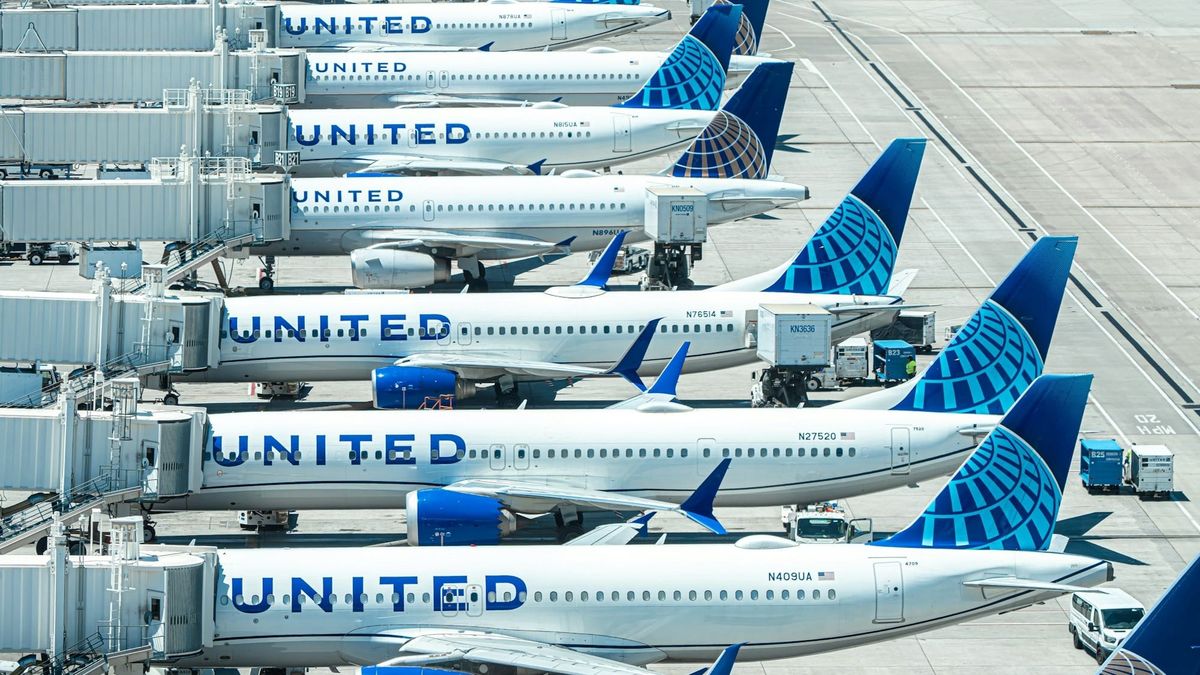
United Airlines Faces a Profitability Test Despite Strong Passenger Demand
United Airlines Holdings (UAL) is reporting some of its strongest revenue growth in years, supported by rising passenger spending across premium cabins, economy travel, loyalty programs, and cargo operations. Yet the airline's financial performance is increasingly being shaped by a factor outside its control: the cost of fuel.
United's latest earnings revealed a widening gap between strong travel demand and the company's ability to convert that demand into profits. Despite disappointing earnings guidance, UAL stock rebounded Wednesday as investors reassessed the results amid movements in oil prices and broader airline-sector sentiment.
Key Points
- Revenue remains strong: United reported record third-quarter operating revenue of $17.9 billion, supported by broad-based growth across passenger and ancillary businesses.
- Fuel costs pressure profitability: A 62% increase in fuel expenses contributed to weaker-than-expected earnings and a reduced profit outlook.
- Demand remains resilient: United expects fourth-quarter revenue growth above 20%, although higher operating costs continue to complicate its earnings outlook.
United Airlines Reports Record Revenue as Fuel Expenses Surge
United Airlines reported third-quarter operating revenue of $17.9 billion, an increase of 17.4% from the previous year, reflecting continued strength in passenger demand and customer spending.
Adjusted earnings reached $2.54 per share, narrowly missing Wall Street expectations of $2.57. Reported diluted earnings were $3.14 per share.
The company generated pretax earnings of $1.3 billion, representing a pretax margin of 7.3%. On an adjusted basis, pretax earnings totaled $1.1 billion, with a margin of 6.2%.
The earnings shortfall came despite growth across virtually every major revenue category.
Premium cabin revenue increased 17%, while Basic Economy revenue advanced 16%. Loyalty revenue also grew 17%, and cargo revenue climbed 23%. Contracted business revenue was particularly strong, rising 26% from a year earlier.
Economy cabin unit revenue increased for the third consecutive quarter, suggesting that demand extended beyond higher-priced premium seating.
United carried a record 49.5 million passengers during the quarter while increasing capacity by approximately 1.3%. The airline also reported the lowest seat cancellation rate among the three largest U.S. carriers.
However, operating expenses rose alongside revenue.
Fuel costs increased by $1.8 billion from the prior-year quarter, reaching approximately $4.84 billion. The 62% increase substantially reduced the earnings benefit of stronger ticket sales.
The company also reported that its total revenue per available seat mile increased 15.9%, while its cost per available seat mile rose 17.3%.
These measures compare revenue and operating costs with the airline's available passenger capacity. The faster increase in costs demonstrates why higher revenue has not translated into comparable profit growth.
Why Did United Airlines Stock Rebound Despite Weaker Earnings Guidance?
United's earnings announcement initially triggered a negative market reaction.
Shares declined following Tuesday's results and remained under pressure during much of Wednesday's premarket session. However, the stock subsequently reversed direction, gaining approximately 3.7% to $101.43 in early trading.
The recovery may have been supported by a decline in oil prices, although the available information does not establish a single cause for the reversal.
The central concern for investors remains the airline industry's exposure to volatile energy markets.
Brent crude was trading near $109 per barrel, while jet fuel prices had more than doubled over the preceding year. Higher fuel expenses have affected airlines throughout the sector, even as travel demand remains resilient.
United's fourth-quarter adjusted earnings guidance of $0.50 to $1.50 per share fell below the $1.64 consensus estimate.
The company also reduced its 2026 adjusted earnings outlook from its previous range of $9 to $11 per share to approximately $7.22 per share or less, according to the supplied earnings commentary.
The weaker outlook reflects the difficulty airlines face in passing higher operating costs directly to passengers.
Raising ticket prices can help offset fuel expenses, but fare increases depend partly on how competitors respond. Reducing flight schedules can also support pricing, although operating fewer flights may increase costs per available seat as fixed expenses are spread across less capacity.
This creates a challenging balance between maintaining passenger volumes, supporting ticket prices, and protecting profitability.
Airline Stocks Reflect the Same Industrywide Pressure
United's results follow a similarly mixed report from Delta Air Lines (DAL).
Delta recorded strong third-quarter revenue and premium passenger demand but reduced its full-year earnings guidance as fuel expenses increased.
The company expects approximately $6 billion in additional fuel costs this year and has been reducing main cabin capacity to help manage the operating environment.
Other major carriers, including American Airlines (AAL), Southwest Airlines (LUV), and Alaska Air Group (ALK), have also experienced pressure from changing fuel prices and broader industry conditions.
UBS analyst Atul Maheswari argued that a sustained improvement in airline stocks would likely require a meaningful decline in jet fuel prices.
The recent market reaction therefore reflects more than United's individual earnings performance. Investors are weighing whether strong passenger demand can sufficiently offset the industry's rising cost structure.
What Comes Next for United Airlines?
United expects fourth-quarter operating revenue to increase more than 20% year over year, accelerating from its third-quarter growth rate.
The forecast indicates continued confidence in customer demand, even as profitability remains sensitive to energy prices.
Beyond its near-term financial outlook, United is expanding its airport infrastructure, premium services, and onboard technology.
Houston Expansion Strengthens United's Airport Network
United is opening a new Terminal B North concourse at George Bush Intercontinental Airport in Houston.
The three-level facility spans approximately 765,000 square feet and adds 22 mainline gates as part of a broader terminal modernization program.
The project also includes a 54,000-square-foot United Club with seating for approximately 800 passengers, which the airline describes as the largest airline club in the Americas.
United expects the broader Terminal B transformation to increase peak-date customer capacity by 40% in 2026 compared with 2023.
The airline has invested more than $3.5 billion at Houston's airport since 2015, with the latest concourse forming part of a $2.6 billion Terminal B transformation.
These investments support United's focus on premium travel and international connectivity.
Fleet Technology and Financial Flexibility Remain Priorities
United is also expanding Starlink satellite internet service across its aircraft.
More than 640 aircraft were equipped with the technology, and over 5.4 million customers used the service during September.
The company expects Starlink availability to reach 61% of flights by the end of 2026, with full fleet coverage targeted by the end of 2027.
Additional initiatives include modernization at Washington Dulles International Airport and continued investment in passenger services.
On the financial side, United expanded its revolving credit facility, increasing available liquidity from $3 billion to $5 billion.
The additional borrowing capacity supports the airline's efforts to strengthen its balance sheet and pursue an investment-grade credit rating.
Nevertheless, the immediate financial challenge remains unchanged: United must manage elevated fuel expenses while maintaining the revenue growth needed to support its operations and ongoing investments.
What It Means for Investors
United Airlines' latest results illustrate an important distinction between strong consumer demand and improving corporate profitability.
Passenger spending remains healthy across multiple travel categories, suggesting that the airline's revenue challenges are not primarily demand-driven. Instead, higher fuel prices are absorbing a substantial portion of the additional revenue generated by stronger travel activity.
The broader airline industry faces similar conditions. Even carriers with significant premium travel exposure have struggled to fully recover rising costs through higher fares.
For investors following UAL stock and the airline sector, this creates a market environment in which earnings expectations may be influenced as much by energy prices and operating efficiency as by passenger growth.
United's airport investments, onboard technology expansion, and increased financial flexibility provide additional context for its longer-term business development. However, the current earnings outlook shows that continued revenue growth alone does not guarantee stronger margins.
Conclusion
United Airlines continues to benefit from resilient travel demand, record passenger volumes, and expanding revenue across its business.
Yet rising fuel costs are limiting the financial rewards of that growth and placing pressure on earnings expectations. The stock's recovery following disappointing guidance reflects a market weighing strong operating momentum against persistent cost uncertainty.
For the broader airline industry, United's results reinforce a central question: how much of today's strong travel spending can ultimately translate into sustainable profitability?
FAQs
Why did United Airlines stock rise despite disappointing earnings?
United Airlines shares initially declined after its earnings announcement but rebounded during Wednesday's trading session. A decline in oil prices may have contributed to the recovery, although the available information does not establish a definitive cause.
How did United Airlines perform in the third quarter?
United Airlines reported record operating revenue of $17.9 billion, up 17.4% year over year. Adjusted earnings were $2.54 per share, slightly below analysts' expectations of $2.57 per share.
Why are higher fuel prices affecting United Airlines profits?
United Airlines experienced a 62% increase in fuel expenses during the third quarter. Although passenger revenue increased, higher operating costs reduced the profitability benefit of stronger travel demand.
What is United Airlines expecting for the fourth quarter?
United Airlines expects operating revenue growth above 20% year over year. However, its adjusted earnings guidance of $0.50 to $1.50 per share is below the analyst consensus of $1.64 per share.
How is United Airlines investing in future growth?
United Airlines is expanding its Houston airport facilities, introducing additional premium passenger amenities, and installing Starlink internet service across its fleet. The company has also increased its revolving credit facility to strengthen financial flexibility.
This article was created with AI assistance and reviewed by an editor. For details, please refer to our Terms of Use.
Go Beyond the Market Brief with Market Edge
Follow SharperTrades’ complete approach to trading and investing, combining active trade opportunities through Block Orders, long-term research through Stock Investor, and structured market education through the Swing Trading Masterclass. Try Market Edge for $19 your first month →
Explore Research with Stock Investor
Stock Investor is SharperTrades’ platform for long-term investing research and portfolio management. Members receive research reports, portfolio updates, conviction tracking, and in-depth analysis designed to support disciplined investment decisions.
Explore Active Trading & Income Strategies
Block Orders tracks institutional activity and highlights active trade setups and price behavior across long and short opportunities.
For options-focused traders, Essential Option Income provides a structured approach to options income strategies, while Pro Option Trader offers a broader range of options strategies and trade opportunities.
Think More Clearly with SteadyCapital
SteadyCapital is SharperTrades’ decision-support system for long-term investors, built around the SteadyCapital Method™. Review investment ideas, challenge assumptions, evaluate valuation and risk, compare companies, and think through important buy, hold, add, trim, or sell decisions before you act.
Risk Disclosure
All content is provided for educational purposes only and does not constitute investment advice. Trading involves risk, and past performance is not indicative of future results. Please review our full Risk Disclosure for additional information.