Trump-Xi Summit Signals Tentative Trade Stability as CEOs Push for AI and Market Access
The latest meeting between President Donald Trump and Chinese President Xi Jinping highlighted efforts to stabilize U.S.-China relations, with business leaders and investors closely watching trade, artificial intelligence, and semiconductor policy for signs of economic impact on both countries.

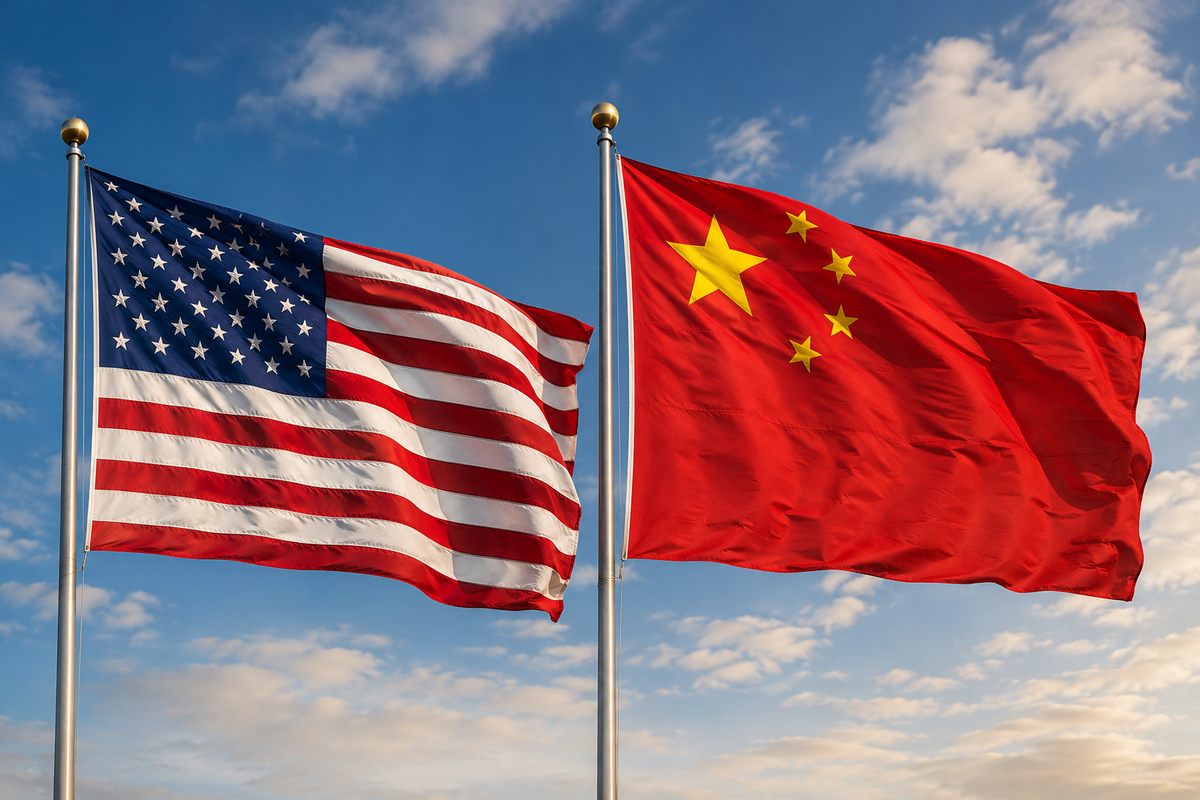
Trump and Xi talks put trade, AI, and Taiwan back at the center of global markets
President Donald Trump concluded a two-day summit in Beijing with Chinese President Xi Jinping after discussions focused on trade relations, artificial intelligence, energy markets, Taiwan, and the global economy.
Although neither side confirmed major binding agreements, investors viewed the meeting as a possible step toward stabilizing trade relations between the world’s two largest economies.
Markets also focused heavily on the presence of major corporate executives, including Nvidia (NVDA) CEO Jensen Huang and Tesla (TSLA) CEO Elon Musk, as artificial intelligence and semiconductor access increasingly shape economic competition between the United States and China.
Key Points
- Investors viewed the Trump-Xi summit as a potential stabilizing event for trade relations and Chinese equities.
- Artificial intelligence and semiconductor access became central themes during discussions involving major U.S. and Chinese technology companies.
- Analysts cautioned that weak corporate earnings and geopolitical risks could still limit a sustained rally in Chinese markets.
Why did markets focus so heavily on the Trump-Xi meeting?
The summit came at a critical moment for both the U.S. and Chinese economies after months of tariff disputes, export controls, and geopolitical tensions.
Investors viewed the fact that Trump and Xi were meeting directly as a positive signal for markets, especially because both governments emphasized maintaining stability in economic relations.
Goldman Sachs analysts said discussions were expected to center primarily on tariffs, semiconductor restrictions, export controls, and Chinese purchases of U.S. agricultural products, energy, and aircraft.
Trump later stated that China had agreed to purchase Boeing aircraft and billions of dollars in American agricultural goods, though Chinese officials did not confirm specific deals publicly.
The White House also said the two countries discussed expanding Chinese investment into U.S. industries and improving market access for American businesses operating in China.
For investors following stock market news and market volatility, the summit represented a possible extension of the current trade truce rather than a major geopolitical reset.
How did AI and semiconductor competition shape the talks?
Artificial intelligence became one of the most closely watched elements of the summit.
The presence of Nvidia (NVDA) CEO Jensen Huang alongside Trump drew particular attention because advanced AI chips remain a major competitive advantage for U.S. technology firms.
Chinese companies continue facing restrictions on access to advanced Nvidia processors due to U.S. export controls.
Shortly after the summit meetings began, reports emerged that Washington had cleared sales of Nvidia H200 AI chips to several major Chinese technology companies, including Alibaba (BABA), Tencent, ByteDance, and JD.com.
Analysts said access to advanced AI chips is becoming increasingly important as Chinese cloud and internet companies accelerate investments in artificial intelligence infrastructure.
Recent earnings from Alibaba (BABA) and Tencent suggested rising demand tied to AI and cloud computing, helping improve investor sentiment around parts of China’s technology sector.
At the same time, Chinese technology firms remain under pressure from restrictions tied to semiconductors and advanced computing capabilities.
The summit also highlighted broader AI competition between the two countries, with Trump saying discussions included possible AI “guardrails” and co-operation on managing AI risks.
What does the summit mean for the U.S. and Chinese economies?
Both governments framed the meeting as an effort to stabilize economic relations while reducing risks to global trade and supply chains.
The discussions also touched on the Strait of Hormuz, energy markets, and the ongoing Iran conflict, all of which remain important for global oil flows and inflation pressures.
Chinese officials warned that disruptions to energy supplies and global trade routes could weigh on economic growth worldwide.
For China’s economy, investors continue watching whether easing trade tensions could support Chinese equities, particularly after underperformance in Hong Kong-listed technology stocks.
The Hang Seng Index has posted modest gains this year, though the Hang Seng Tech Index remains lower year to date despite growing AI optimism.
Analysts also noted that mainland Chinese AI-related companies tied to semiconductors and hardware have performed more strongly than internet and e-commerce firms listed in Hong Kong.
Still, some investors remain cautious because broader earnings growth across Chinese equities has yet to show major improvement.
Meanwhile, the U.S. economy continues balancing trade policy, inflation concerns, semiconductor competition, and geopolitical tensions tied to Taiwan and the Middle East.
Taiwan remained one of the summit’s most sensitive topics after Xi warned that mishandling the issue could create “clashes and even conflicts” between the two countries.
What It Means for Investors
For investors, the Trump-Xi summit reinforced how closely global markets remain tied to trade policy, artificial intelligence infrastructure, semiconductor supply chains, and geopolitical stability.
The discussions helped improve short-term sentiment around Chinese technology and AI-related stocks, particularly after reports tied to Nvidia chip access.
However, markets also showed caution because many of the summit’s reported agreements were not formally confirmed, while broader risks tied to earnings growth, tariffs, Taiwan, and global energy markets remain unresolved.
The meeting highlighted that investors are currently focused less on a sweeping breakthrough and more on whether both countries can maintain stable economic and trade relations.
Conclusion
The latest Trump-Xi summit underscored the growing connection between geopolitics, artificial intelligence, trade policy, and financial markets.
While the two sides emphasized co-operation and stability, many details surrounding trade agreements, semiconductor access, and future economic policy remain uncertain.
For global investors, the summit served as another reminder that relations between the United States and China continue to play a major role in shaping stock market sentiment, technology investment trends, and the broader global economy.
FAQs
Why did investors react positively to the Trump-Xi meeting?
Investors viewed the meeting as a potential sign of improving stability between the United States and China, particularly around trade and technology policy.
Which companies were closely watched during the summit?
Nvidia (NVDA), Tesla (TSLA), Alibaba (BABA), Tencent, and Boeing were among the companies drawing investor attention during the talks.
Why are Nvidia chips important to Chinese technology companies?
Advanced Nvidia AI chips are critical for artificial intelligence training and inference, areas where Chinese technology firms continue competing globally.
Did the Trump-Xi summit produce confirmed trade deals?
Trump announced possible Boeing aircraft and agriculture purchases, but Chinese officials did not publicly confirm specific agreements.
What economic issues were discussed during the summit?
The discussions included trade relations, tariffs, semiconductor restrictions, AI competition, Taiwan, energy markets, and the Strait of Hormuz.
This article was created with AI assistance and reviewed by an editor. For details, please refer to our Terms of Use.
Explore Research with Stock Investor
For readers evaluating long-term market opportunities, Stock Investor is SharperTrades’ investing platform built around portfolio management, market research, and AI-assisted analysis. Members receive research reports, portfolio updates, conviction tracking, and educational insights designed to support disciplined investing decisions.
Follow the Market with SharperTrades
SharperTrades offers additional ways to stay connected to the market. Block Orders tracks institutional activity and highlights active trade setups and price behavior across long and short opportunities. For options-focused traders, Essential Option Income provides a structured approach to income strategies.
Learn More with SharperTrades Academy
If you value the clear, explanatory approach of Market Brief, explore SharperTrades Academy, where we publish in-depth content and structured programs covering technical analysis, options, and risk management to help you better interpret market behavior.
Track Market Participation with DarkOption Flow
For deeper insight into how markets behave during major events, DarkOption Flow provides tools designed to monitor market participation and activity. It can be used alongside price action and sentiment analysis, particularly during periods of elevated volatility.
Risk Disclosure
All content is provided for educational purposes only and does not constitute investment advice. Trading involves risk, and past performance is not indicative of future results. Please review our full Risk Disclosure for additional information.