Tesla’s Profit Decline and Lower Spending Outlook Put AI Ambitions to the Test
Tesla's third-quarter profits fell despite improving automotive margins and growing Full Self-Driving adoption. Lower spending offers near-term financial flexibility, but Robotaxi, Optimus, and future AI investments remain key uncertainties.

Tesla's Improving Auto Business Faces the Cost of AI Expansion
Tesla (TSLA) reported a sharp decline in third-quarter profits despite improving vehicle margins and growing adoption of its Full Self-Driving software. The company also reduced its spending outlook, raising questions about how quickly its investments in autonomous vehicles and robotics can begin generating meaningful returns.
Shares initially fell following the October 21 earnings announcement before recovering much of their losses during Thursday's session. The mixed reaction reflected a central challenge for Tesla: its established automotive business is showing signs of improvement, but developing its next generation of products remains expensive.
Key Points
- Profits remain under pressure: Tesla's operating income fell 56%, even as automotive margins improved and adjusted earnings exceeded expectations.
- AI development shows mixed progress: Full Self-Driving adoption is growing, but Robotaxi and Optimus have yet to make a meaningful contribution to profits.
- Spending plans are changing: Tesla lowered its 2026 capital expenditure outlook while continuing to invest in autonomous driving, robotics, and AI infrastructure.
Tesla's Earnings Show Improving Margins but Falling Profits
Tesla reported third-quarter revenue of $28.05 billion, roughly unchanged from a year earlier. Adjusted earnings reached $0.48 per share, slightly above Wall Street's expectations.
However, operating income fell 56% to $718 million, well below analysts' estimates.
The decline reflected rising operating expenses, particularly research and development spending tied to autonomous driving, robotics, and artificial intelligence.
In other words, Tesla is spending heavily on technologies that have yet to generate substantial profits.
Automotive Margins Offer Some Encouragement
Tesla's automotive business showed signs of improvement during the quarter.
Gross margin, excluding regulatory credits, increased to 18.1% from 16.3% in the previous quarter. A more favorable mix of vehicle sales across different markets helped support profitability.
Vehicle deliveries declined slightly from a year earlier, partly because of battery supply constraints. However, Tesla reported its highest passenger-vehicle order backlog in four years, while inventory levels decreased.
CEO Elon Musk said demand was exceeding production, suggesting that the delivery decline did not fully reflect underlying customer interest.
The stronger margins were encouraging, but they weren't enough to offset the company's rising expenses elsewhere.
Lower Spending Improves Financial Flexibility
Tesla reduced its 2026 capital expenditure outlook to approximately $20 billion, down from more than $25 billion.
Free cash flow recovered to $1.53 billion after turning negative in the previous quarter, although it remained below the year-earlier level.
The company also ended September with approximately $45 billion in cash and investments.
That financial position gives Tesla resources to continue developing new technologies, but the lower spending forecast raises an important question about the timing and scale of its future investments.
Why Did Tesla Stock Struggle Despite Improving Automotive Results?
Tesla's earnings reaction reflects the growing importance of its AI ambitions to the company's overall financial outlook.
Its automotive business continues to generate most of its established operating activity, but investors are increasingly focused on whether autonomous driving and robotics can become profitable businesses.
Progress is visible in some areas. In others, commercialization remains further away.
Full Self-Driving Adoption Continues to Grow
One of the quarter's more encouraging developments was stronger adoption of Tesla's Full Self-Driving (FSD) software.
Global paid FSD accounts reached 1.74 million, an increase of 67% from a year earlier. More than three-quarters of North American vehicle deliveries included a paid FSD sign-up.
The figures suggest growing customer interest in Tesla's software offerings.
However, FSD remains a supervised driver-assistance system, meaning drivers must continue monitoring the vehicle.
That makes it different from Tesla's broader Robotaxi ambitions, which depend on vehicles operating without human supervision.
Robotaxi Expansion Is Still in Its Early Stages
Tesla has expanded its Robotaxi operations in Austin, where Cybercab rides began in September.
The company reported a significant increase in unsupervised driving mileage, reaching nearly two million cumulative miles.
While that represents operational progress, Robotaxi has not yet become a meaningful source of earnings.
Tesla continues to face technical challenges, regulatory requirements, and operating costs that remain above management's targets.
The company expects Robotaxi's financial contribution to become noticeable during 2027, but achieving that goal will depend on broader deployment and improved economics.
SpaceX Merger Discussions Add Uncertainty
Another development attracting investor attention is a possible combination between Tesla and SpaceX.
Musk confirmed that independent board committees have been established to examine a potential merger.
However, no transaction terms have been agreed upon, and there is no guarantee that a deal will proceed.
Analysts have offered differing views on the potential benefits, including opportunities to share AI infrastructure and engineering resources.
Others have questioned whether a merger would offer meaningful advantages over partnerships while introducing additional complexity.
For now, the discussions remain preliminary.
What Comes Next for Tesla's AI Ambitions?
Tesla's next phase will depend on turning its autonomous driving and robotics projects into products and services that can operate at scale.
Two initiatives are particularly important: Optimus and Cybercab.
Optimus Still Faces Manufacturing Challenges
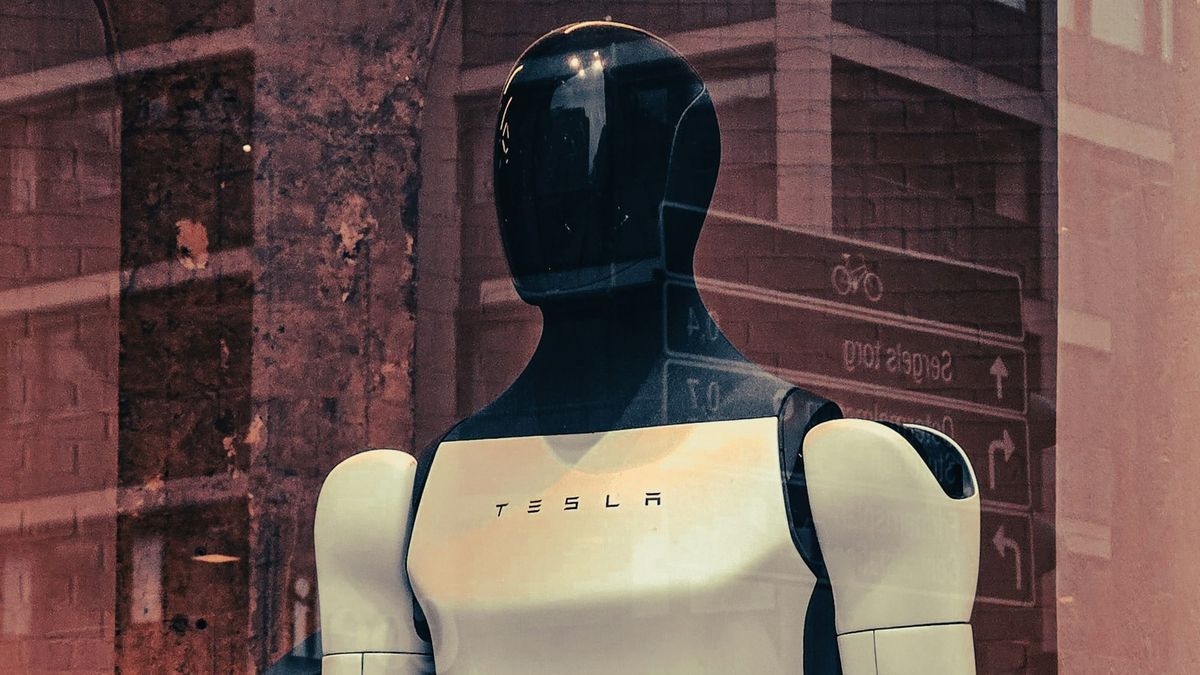
Tesla has begun early production of its Optimus humanoid robot at its Fremont factory.
However, Musk acknowledged that producing robots at scale will take time.
The company is still working on the robot's reliability, physical design, and ability to perform unfamiliar tasks in real-world environments.
Unlike Tesla's vehicles, which benefit from extensive driving data, Optimus must develop many of its capabilities through physical interaction and repeated learning.
Tesla is targeting initial deliveries to outside customers in late 2027, beginning with industrial applications.
That timeline underscores the gap between demonstrating a promising technology and developing a commercially viable product.
Cybercab Expansion Depends on Technology and Regulation
Tesla is also targeting initial Cybercab deliveries to outside customers by the end of 2026, although confirmed volumes and pricing have not been announced.
Most Cybercabs are expected to operate within Tesla's own transportation network rather than being sold directly to consumers.
Management has discussed expanding Robotaxi service beyond Austin, including into Dallas.
However, broader deployment will depend on software performance, regulatory approvals, and the economics of operating an autonomous transportation service.
Future AI Spending Remains an Open Question
Although Tesla lowered its near-term capital spending forecast, management expects investment requirements to increase in subsequent years.
AI computing infrastructure, autonomous vehicles, robotics, and potential semiconductor projects could require substantial additional funding.
The company has not finalized how future investment needs might be shared with SpaceX if merger discussions advance.
Tesla's energy storage business remains another part of its operations. Storage deployments increased during the quarter, and energy gross margins recovered, although revenue declined.
The broader challenge is balancing investments in emerging technologies with the financial performance of businesses already generating revenue.
What It Means for Investors
Tesla's results reveal an important distinction between improving operations and improving overall profitability.
The automotive business is showing better margins, and growing FSD adoption demonstrates increasing customer interest in paid software. Both are measurable developments within established parts of Tesla's business.
Robotaxi and Optimus present a different picture. Their technology is advancing, but their financial contribution remains limited, and significant development work is still required.
For investors evaluating TSLA stock, the central issue is how much additional investment these businesses will require before they can generate sustainable earnings.
Tesla's substantial cash reserves provide financial flexibility, but the timing of commercialization and the potential returns on future AI spending remain uncertain.
Conclusion
Tesla's third-quarter results show a company making progress in its automotive business while facing the rising costs of developing new technologies. Improving vehicle margins and growing FSD adoption offer encouraging signs, but declining operating profits reveal the financial pressure created by its AI ambitions. Lower capital spending provides near-term flexibility without resolving the longer-term investment requirements. The next phase will depend on Tesla's ability to turn advances in autonomous driving and robotics into commercially viable businesses.
FAQs
Why did Tesla stock decline after its third-quarter earnings?
Tesla shares initially declined because operating profit fell sharply despite better-than-expected adjusted earnings and improved automotive margins. Investors also weighed lower capital spending guidance and uncertainty surrounding the commercialization of Robotaxi and Optimus.
How much did Tesla earn in the third quarter of 2026?
Tesla reported revenue of $28.05 billion, adjusted earnings of $0.48 per share, and operating income of $718 million. Operating income declined 56% year over year.
Why did Tesla reduce its capital expenditure outlook?
Tesla lowered its 2026 capital expenditure outlook to approximately $20 billion from more than $25 billion. The reduction provides near-term financial flexibility while the company continues developing autonomous vehicles, robotics, and AI infrastructure.
When will Tesla begin delivering Optimus robots to outside customers?
Tesla is targeting external Optimus deliveries for late 2027, initially for industrial applications. Management said additional work is needed on reliability, physical design, and AI capabilities before broader commercialization.
Is Tesla merging with SpaceX?
Tesla and SpaceX have formed independent board committees to examine a potential merger. No transaction terms have been agreed upon, and a deal is not guaranteed.
This article was created with AI assistance and reviewed by an editor. For details, please refer to our Terms of Use.
Go Beyond the Market Brief with Market Edge
Follow SharperTrades’ complete approach to trading and investing, combining active trade opportunities through Block Orders, long-term research through Stock Investor, and structured market education through the Swing Trading Masterclass. Try Market Edge for $19 your first month →
Explore Research with Stock Investor
Stock Investor is SharperTrades’ platform for long-term investing research and portfolio management. Members receive research reports, portfolio updates, conviction tracking, and in-depth analysis designed to support disciplined investment decisions.
Explore Active Trading & Income Strategies
Block Orders tracks institutional activity and highlights active trade setups and price behavior across long and short opportunities.
For options-focused traders, Essential Option Income provides a structured approach to options income strategies, while Pro Option Trader offers a broader range of options strategies and trade opportunities.
Think More Clearly with SteadyCapital
SteadyCapital is SharperTrades’ decision-support system for long-term investors, built around the SteadyCapital Method™. Review investment ideas, challenge assumptions, evaluate valuation and risk, compare companies, and think through important buy, hold, add, trim, or sell decisions before you act.
Risk Disclosure
All content is provided for educational purposes only and does not constitute investment advice. Trading involves risk, and past performance is not indicative of future results. Please review our full Risk Disclosure for additional information.