Foot Locker Weakness and Margin Pressure Force a Major Reset at Dick’s Sporting Goods
Dick’s Sporting Goods cut its full-year outlook after Foot Locker sales weakened and promotional pressure intensified across athletic footwear and apparel, sending DKS shares sharply lower despite continued comparable-sales growth at the core Dick’s business.

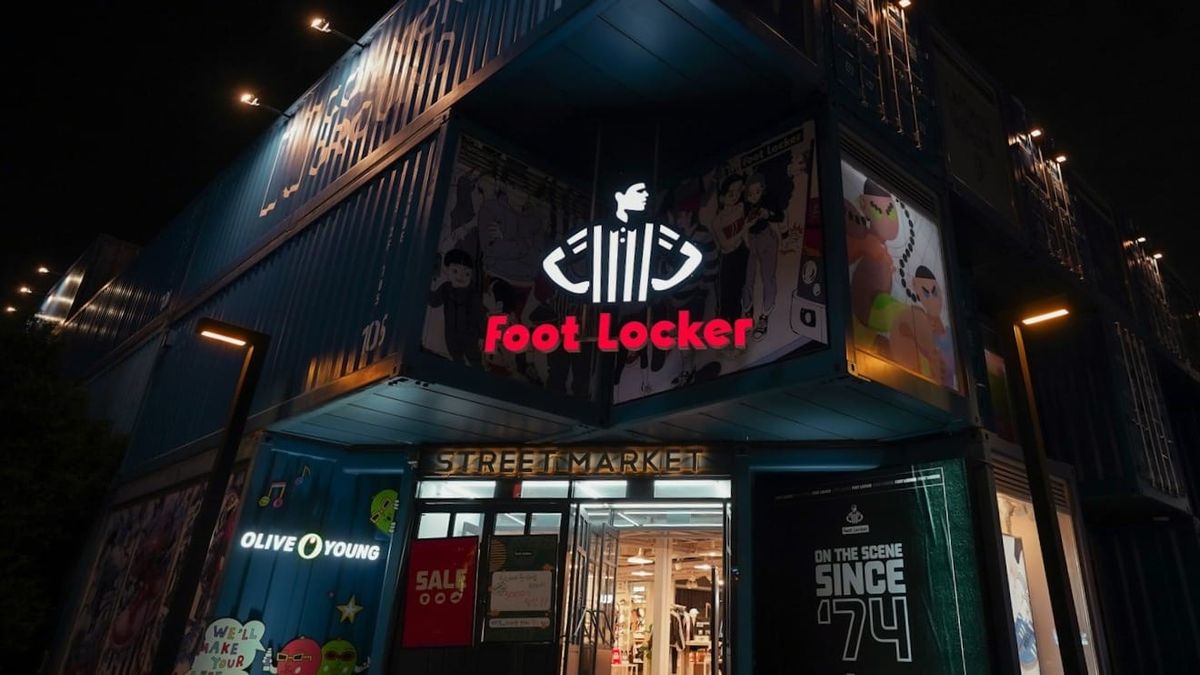
Foot Locker Turns From Growth Opportunity Into a Near-Term Earnings Drag
Dick’s Sporting Goods (DKS) came under heavy selling pressure Tuesday after second-quarter earnings and revenue missed expectations and management substantially reduced its fiscal 2026 profit outlook.
Adjusted earnings fell to $3.53 per share from $4.38 a year earlier, below expectations of $3.76. Net sales increased 53% to $5.59 billion, largely reflecting the addition of Foot Locker, but still came in below the $5.64 billion consensus. The larger concern was the deterioration at Foot Locker and the impact of an increasingly promotional footwear market on profitability.
Key Points
- Dick’s reported adjusted Q2 earnings of $3.53 per share versus expectations of $3.76, while $5.59 billion in net sales also came in below expectations.
- Foot Locker comparable sales declined 3.6%, prompting Dick’s to sharply reduce its Foot Locker sales outlook and forecast a fiscal-year segment loss of $40 million to $80 million.
- The core Dick’s business remained stronger, with comparable sales rising 4.9%, but increased promotions and competitive pricing are pressuring profitability.
Foot Locker Weakness Forces a Sharp Outlook Reset
The biggest change in the Dick’s Sporting Goods earnings story was not the relatively modest second-quarter revenue miss. It was the deterioration in expectations for the recently acquired Foot Locker business.
Pro forma Foot Locker comparable sales declined 3.6% during the quarter. Management said the business was particularly exposed to weaker footwear launches, disappointing retro-product performance and legacy footwear silhouettes as conditions across portions of athletic footwear and apparel became increasingly promotional.
Dick’s responded by cutting its Foot Locker pro forma comparable-sales forecast for fiscal 2026 to a range of negative 2% to flat, down sharply from its previous expectation for growth of 1.5% to 3%.
The earnings implications are significant. Foot Locker is now expected to generate a segment loss of between $40 million and $80 million for the fiscal year, while the company also lowered operating-income expectations for both Foot Locker and the core Dick’s business.
That deterioration contributed to a major reset in consolidated guidance. Dick’s reduced adjusted EPS guidance to $11.00 to $12.00 from $13.50 to $14.50. The company also lowered its net sales forecast to $21.9 billion to $22.2 billion from $22.1 billion to $22.4 billion.
Why Did DKS Stock Fall So Sharply?
The market reaction reflected the combination of an earnings miss, weaker guidance and a less predictable recovery at Foot Locker.
DKS stock fell roughly 27% during Tuesday's session after already entering the earnings report down about 9% for the year through Monday. The magnitude of the decline indicates how dramatically the new outlook changed expectations around the company's earnings trajectory.
Profitability provided another source of concern. Adjusted operating margin fell to 8.1% of net sales from 13% a year earlier. The decline reflected several factors, including the addition of the structurally lower-margin Foot Locker operations, competitive pricing, acquisition-related mix and a $31.9 million Foot Locker segment loss.
Executive Chairman Ed Stack said portions of the athletic footwear and apparel market became increasingly promotional as the quarter progressed. Dick’s responded by remaining competitively priced in an effort to protect and grow its market position.
That response helps explain why the issue extends beyond Foot Locker. Even though the core Dick’s business continues to produce positive comparable sales, greater promotional activity can put pressure on the profit generated from those sales.
The earnings reaction also spread across the sporting-goods and footwear sector. Nike (NKE), Under Armour (UAA), Academy Sports & Outdoors (ASO) and On Holding (ONON) all traded lower Tuesday.
The Core Dick’s Business Remains the Stronger Part of the Story
The quarter also showed a substantial difference between the performance of Dick’s core operations and Foot Locker.
Comparable sales at the Dick’s business increased 4.9%, supported by gains in both average ticket and transactions as well as strong demand surrounding the 2026 FIFA World Cup. Segment profit increased to $485.2 million from $475 million.
Management maintained its full-year comparable-sales outlook of 2.5% to 4% for the Dick’s business. First-half comparable sales increased 5.4%.
Those figures contrast sharply with Foot Locker's 3.6% comparable-sales decline and reduced full-year expectations.
However, the core operation is not completely insulated from the broader footwear environment. Dick’s lowered its operating-income outlook even while maintaining the core business's comparable-sales forecast. Inventory at Dick’s also increased 6%.
The combination puts greater emphasis on the relationship between sales growth and margins. Maintaining customer traffic and market share through more aggressive pricing can support revenue, but heavier promotional activity can simultaneously reduce profitability.
What It Means for Investors
The second-quarter results change the central issue surrounding DKS stock from whether the Foot Locker acquisition can add growth to how long the acquired business may remain a drag on consolidated earnings.
Dick’s core business continues to show positive comparable-sales growth, while Foot Locker is experiencing declining comparable sales and is now expected to post a segment loss for the year. That divergence makes the performance of the two businesses increasingly important when evaluating future company results.
The footwear environment will also remain central. Management specifically identified fewer launches, weaker-than-expected launch and retro-product performance, legacy footwear exposure and increasing promotional activity as pressures on Foot Locker.
Future results therefore have several clearly defined markers: Foot Locker comparable-sales performance, the degree of promotional activity, operating margins, inventory levels and progress toward improving Foot Locker's profitability.
The quarter also carries a broader retail signal. Dick’s maintained growth in its core business, but weaker footwear trends and greater promotional activity were strong enough to materially reduce consolidated profit expectations. The declines in other sporting-goods and footwear stocks following the report show that investors were also assessing whether those pressures extend beyond Dick’s.
Conclusion
Dick’s Sporting Goods entered the quarter with a strong core business but emerged with substantially lower earnings expectations as weakness at Foot Locker collided with a more promotional athletic footwear market.
The core Dick’s operation remained resilient, producing 4.9% comparable-sales growth and maintaining its full-year sales outlook. Foot Locker moved in the opposite direction, with comparable sales declining 3.6% and its fiscal-year outlook being reduced significantly.
The resulting guidance cut explains why the earnings reaction was so severe. Fiscal-year adjusted EPS expectations dropped from $13.50–$14.50 to $11.00–$12.00, while Foot Locker is now expected to generate a segment loss.
The next phase of the DKS story will consequently depend less on headline consolidated revenue growth and more on whether Foot Locker can stabilize while Dick’s protects the profitability of its stronger core business.
FAQs
Why did Dick’s Sporting Goods stock fall?
Dick’s Sporting Goods stock fell after second-quarter earnings and revenue missed expectations and the company substantially reduced its fiscal 2026 profit outlook. Weakness at Foot Locker and increasingly promotional athletic footwear and apparel conditions were major factors behind the revised guidance.
How did Dick’s Sporting Goods perform in the second quarter?
Dick’s reported adjusted earnings of $3.53 per share, compared with expectations of $3.76. Net sales increased 53% to $5.59 billion but came in below expectations of $5.64 billion. Overall comparable sales increased 2.1%.
How is Foot Locker performing?
Foot Locker pro forma comparable sales declined 3.6% in the second quarter. Dick’s lowered its fiscal-year Foot Locker comparable-sales outlook to negative 2% to flat and now expects the segment to record a loss of between $40 million and $80 million.
Is the core Dick’s Sporting Goods business also weakening?
The core Dick’s business remained stronger than Foot Locker, with second-quarter comparable sales increasing 4.9%. Management maintained its full-year comparable-sales outlook of 2.5% to 4%, although it reduced the business's operating-income expectations amid greater promotional pressure.
What matters next for DKS?
Key areas include Foot Locker comparable sales, promotional activity across athletic footwear and apparel, operating margins, inventory levels and progress toward improving Foot Locker's profitability.
This article was created with AI assistance and reviewed by an editor. For details, please refer to our Terms of Use.
Go Beyond the Market Brief with Market Edge
Follow SharperTrades’ complete approach to trading and investing, combining active trade opportunities through Block Orders, long-term research through Stock Investor, and structured market education through the Swing Trading Masterclass. Try Market Edge for $19 your first month →
Explore Research with Stock Investor
Stock Investor is SharperTrades’ platform for long-term investing research and portfolio management. Members receive research reports, portfolio updates, conviction tracking, and in-depth analysis designed to support disciplined investment decisions.
Explore Active Trading & Income Strategies
Block Orders tracks institutional activity and highlights active trade setups and price behavior across long and short opportunities.
For options-focused traders, Essential Option Income provides a structured approach to options income strategies, while Pro Option Trader offers a broader range of options strategies and trade opportunities.
Think More Clearly with SteadyCapital
SteadyCapital is SharperTrades’ decision-support system for long-term investors, built around the SteadyCapital Method™. Review investment ideas, challenge assumptions, evaluate valuation and risk, compare companies, and think through important buy, hold, add, trim, or sell decisions before you act.
Risk Disclosure
All content is provided for educational purposes only and does not constitute investment advice. Trading involves risk, and past performance is not indicative of future results. Please review our full Risk Disclosure for additional information.