CoreWeave vs. Nebius: Two AI Financing Models Face a Growing Market Test
CoreWeave and Nebius are pursuing different strategies to finance AI data center expansion. As investors reassess borrowing costs and capital requirements, the contrast between debt financing and customer prepayments is becoming increasingly important.

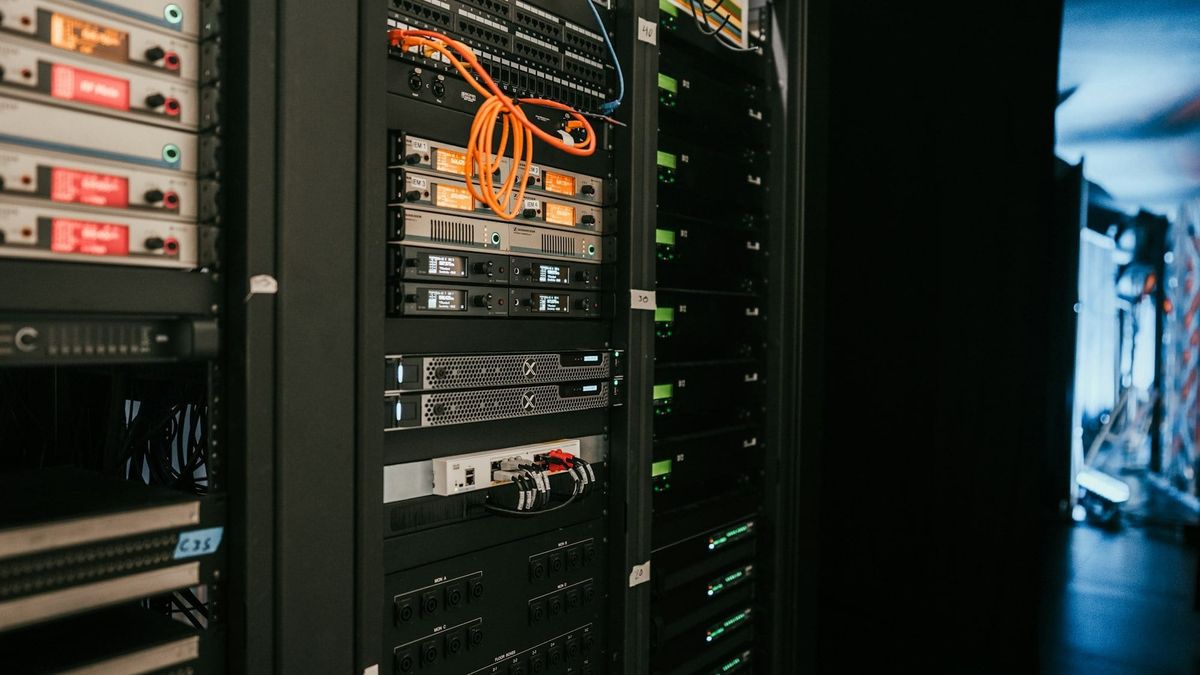
AI Infrastructure Growth Puts Two Different Financing Strategies Under the Spotlight
CoreWeave (CRWV) and Nebius Group (NBIS) are facing renewed scrutiny as investors question how artificial intelligence infrastructure providers will finance their rapid expansion. Both companies are developing computing capacity to meet demand for AI services, but their approaches to funding that growth differ significantly.
CoreWeave has relied heavily on debt financing and long-term customer contracts, while Nebius has placed greater emphasis on customer prepayments and equity capital. With both stocks falling approximately 15% over five trading sessions, the market is increasingly evaluating not just how quickly these businesses can grow, but how efficiently they can fund that growth.
Key Points
- CoreWeave and Nebius use different financing models: CoreWeave relies more heavily on debt and long-term contracts, while Nebius uses customer prepayments and equity funding to support expansion.
- Nebius is attracting analyst attention for its funding structure, with Rosenblatt Securities projecting rapid revenue growth and highlighting customer agreements that cover substantial upfront infrastructure costs.
- Both companies remain exposed to significant capital requirements, making cash flow, customer commitments and the economics of AI computing capacity central to their long-term outlook.
CoreWeave's Debt-Funded Expansion Provides Scale but Adds Financial Pressure
CoreWeave has established itself as a major provider of specialized cloud computing infrastructure for artificial intelligence.
The company supplies computing capacity used by AI developers and large technology customers, with much of its infrastructure supported by advanced graphics processing units.
Expanding this business requires substantial investment in computing equipment, power availability and data center facilities.
CoreWeave has financed much of that expansion through borrowing, supported by customer contracts intended to provide visibility into future revenue.
Long-Term Contracts Support Infrastructure Investment
A central feature of CoreWeave's business model is its use of multiyear agreements with large customers.
According to Bank of America analyst Tal Liani, CoreWeave primarily sells computing capacity through approximately five-year contracts with major cloud providers and AI laboratories.
The company also leases much of its data center capacity from third-party developers rather than building every facility itself.
CoreWeave typically coordinates agreements with infrastructure providers and customers, allowing contracted demand to support financing arrangements.
This structure can reduce uncertainty about whether newly deployed computing capacity will generate revenue.
The company has already established approximately 1.5 gigawatts of active capacity, substantially more than Nebius's currently reported footprint.
That scale represents an important difference between the two businesses.
CoreWeave has already deployed significant infrastructure, while Nebius is pursuing a substantial expansion from a smaller operating base.
Borrowing Costs Remain a Major Consideration
CoreWeave's financing strategy also creates significant obligations.
The company carries approximately $41 billion in outstanding debt, according to figures discussed in recent analyst commentary.
Its borrowing arrangements have supported rapid expansion, but they also require ongoing interest payments and eventual refinancing.
Recent volatility in CoreWeave's bonds has intensified attention to those obligations.
The distinction between existing debt costs and future borrowing conditions is important.
Rising market yields on fixed-rate bonds do not automatically increase the interest payments CoreWeave currently owes.
However, elevated yields can make new financing or refinancing more expensive.
CoreWeave has defended its financial position, arguing that its contracted revenue backlog is sufficient to support existing debt obligations.
Several Wall Street analysts have also emphasized its operating scale, contracted demand and experience bringing computing capacity online.
JPMorgan and Bank of America have maintained positive ratings, while Bernstein has expressed concerns about the sustainability of the company's debt-heavy model.
The disagreement illustrates how investors can interpret the same infrastructure expansion strategy differently.
CoreWeave's scale provides established operating capacity, but its financing structure places greater emphasis on debt servicing and future access to capital.
Why Is Nebius's Customer-Funded Model Attracting Attention?
Nebius is pursuing a different approach to expanding its AI computing infrastructure.
Rather than relying as heavily on borrowing, the company has used customer prepayments and equity financing to support new deployments.
The distinction has become particularly relevant as investors reassess financing risks across the AI infrastructure sector.
Rosenblatt Securities recently initiated coverage of Nebius with a Buy rating and a $304 price target.
The firm's analysis emphasized Nebius's growth potential and its ability to secure funding directly from customers before completing major infrastructure projects.
Customer Prepayments Help Finance New Capacity
Customer prepayments allow a company to receive cash before delivering all the services covered by an agreement.
For AI infrastructure providers, these payments can help fund the computing equipment and facilities required to fulfill customer contracts.
According to Rosenblatt, approximately 70% of Nebius's second-quarter customer deals included prepayments covering 50% to 60% of the associated capital expenditures.
Capital expenditures, commonly called capex, represent money spent on long-term assets such as computing equipment and infrastructure.
By receiving a substantial portion of project funding in advance, Nebius can reduce the amount of additional capital it must raise for those deployments.
Rosenblatt expects customer prepayments to exceed $9 billion during 2026.
The approach also provides evidence of customer commitments before infrastructure is fully deployed.
However, prepayments are not equivalent to profit.
Nebius must still build and operate the contracted infrastructure, deliver the agreed services and manage the remaining costs.
The financing advantage therefore depends on the company executing its projects within the economics established by those agreements.
Nebius Targets Rapid Revenue and Capacity Expansion
Rosenblatt projects approximately 98% annualized revenue growth for Nebius through 2030.
The firm expects the company to expand its active computing capacity significantly as new facilities become operational.
Nebius currently has approximately 250 megawatts of active capacity, according to the supplied analyst discussion.
Rosenblatt expects that figure to reach between 800 megawatts and one gigawatt by the end of 2026, alongside a larger portfolio of contracted capacity.
A megawatt measures electrical power capacity. In the context of AI data centers, available power is an important constraint on the amount of computing equipment that can operate.
The expansion would substantially increase Nebius's operating footprint.
However, the company is starting from a smaller base than CoreWeave.
Its growth projections therefore depend on bringing additional infrastructure online, installing computing equipment and delivering services under its customer agreements.
Rosenblatt's estimates also point to substantial capital requirements, with projected 2026 spending of approximately $20 billion to $25 billion.
Even with customer prepayments, the company faces a significant funding and execution challenge.
Customer Concentration and Cash Flow Remain Risks
Nebius's financing model offers advantages, but it introduces its own considerations.
According to Rosenblatt, Microsoft (MSFT) and Meta Platforms (META) account for more than half of Nebius's remaining performance obligations.
These obligations represent contracted services that have not yet been delivered.
A large backlog can provide visibility into future revenue, but concentration among a limited number of customers also creates dependence on those relationships.
Nebius's financial outlook is further complicated by its substantial investment requirements.
Rosenblatt does not expect the company to become free-cash-flow positive until 2034.
Free cash flow measures the cash remaining after a business funds its capital expenditures.
A company can report rapid revenue growth while continuing to consume cash if its infrastructure investments exceed the cash generated by operations.
For Nebius, the central challenge is converting its contracted growth opportunities into operating capacity while managing the substantial investment required.
The company's customer-funded approach changes the financing structure, but it does not eliminate the economic demands of expansion.
AI Infrastructure Economics Put Both Business Models to the Test
The differences between CoreWeave and Nebius are becoming more important as investors reassess the economics of AI infrastructure.
Both companies operate in a market where computing capacity requires significant upfront investment.
Both also depend on customers continuing to purchase access to that capacity over time.
Their financing structures determine how the initial investment is funded and which financial risks receive the greatest emphasis.
Scale Versus Funding Flexibility
CoreWeave's larger active infrastructure footprint reflects substantial investment already deployed.
Its long-term contracts provide revenue visibility, while borrowing has enabled the company to expand its operations rapidly.
The trade-off is greater exposure to interest costs, debt maturities and refinancing conditions.
Nebius's approach emphasizes customer commitments that help finance infrastructure before it becomes operational.
That can reduce reliance on traditional borrowing for individual projects.
However, Nebius must still fund the remaining investment, complete construction and equipment deployment, and generate sufficient operating cash flow.
The comparison is therefore not simply between a risky model and a safer one.
It is between different combinations of operating scale, funding arrangements and execution requirements.
The Useful Life of AI Chips Matters
Another important factor is how long expensive computing equipment can remain commercially productive.
Both companies rely on graphics processing units, or GPUs, to provide AI computing services.
The useful life of this equipment influences how much revenue can be generated from an initial investment.
Rosenblatt believes certain high-end GPUs may remain economically useful for eight to nine years.
That is longer than some conventional accounting depreciation schedules.
Depreciation is the process of spreading an asset's cost across its expected useful life.
If computing equipment remains productive for longer, it can potentially generate revenue over a longer period.
However, the economic benefit depends on continued customer demand and the ability of older equipment to remain commercially relevant.
CoreWeave has also extended the expected useful life of certain older GPUs based on contracted demand.
These developments highlight the importance of equipment utilization and asset longevity in evaluating AI infrastructure profitability.
Credit Markets Are Differentiating Between Borrowers
The broader credit market is also reflecting increased scrutiny of AI-related financing.
Goldman Sachs (GS) reported that spreads on high-yield AI-related debt widened significantly during October 13–14, while spreads on non-AI-related debt changed relatively little.
A credit spread represents the additional yield investors demand for holding corporate debt rather than comparable U.S. Treasury securities.
Wider spreads indicate that investors are requiring greater compensation for perceived risk.
Goldman Sachs linked the divergence to concerns about the economics of AI infrastructure expansion, particularly among lower-rated borrowers exposed to elevated financing costs.
The firm's analysis also suggested that differences between individual AI-related borrowers could remain significant.
That environment places greater importance on the specific financing arrangements, customer contracts and operating economics of each infrastructure provider.
For CoreWeave, the market is focused on leverage and the ability to meet future obligations.
For Nebius, attention is centered on the durability of customer funding, the execution of its expansion plans and the timeline for positive cash generation.
What It Means for Investors
CoreWeave and Nebius demonstrate that exposure to the same AI infrastructure market does not necessarily imply the same financial characteristics.
CoreWeave has established a substantially larger operating footprint, supported by debt financing and long-term customer contracts.
That model provides existing computing capacity and revenue visibility but also creates significant financial obligations.
Nebius is pursuing rapid expansion with greater reliance on customer prepayments and equity capital.
Its approach can reduce some borrowing requirements, although the company still faces substantial capital expenditures and a lengthy projected path to positive free cash flow.
The comparison also highlights the importance of separating revenue growth from cash generation.
Strong customer demand can support substantial expansion, but the financial outcome depends on how much capital must be invested, how that capital is financed and how long the resulting assets remain productive.
Neither financing model guarantees superior returns.
CoreWeave's existing scale and Nebius's customer-funded growth strategy each offer distinct advantages and risks.
The recent sell-off in both stocks suggests that investors are increasingly examining those differences rather than treating all AI infrastructure providers as interchangeable beneficiaries of rising computing demand.
Conclusion
CoreWeave and Nebius are approaching the same AI infrastructure opportunity through notably different financing strategies.
CoreWeave has used substantial borrowing and long-term contracts to establish a large operating footprint.
Nebius has emphasized customer prepayments and equity financing while pursuing rapid capacity expansion.
Both companies face significant investment requirements, and neither is insulated from changes in customer demand, financing conditions or infrastructure economics.
Recent analyst commentary and credit-market developments indicate that investors are paying closer attention to these financial distinctions.
The comparison illustrates an important development in the AI infrastructure sector: expanding computing capacity is only one part of the business.
How that expansion is funded, how efficiently the infrastructure operates and when investment translates into sustainable cash flow are becoming equally important measures of performance.
FAQs
What is the main difference between CoreWeave and Nebius?
CoreWeave has relied more heavily on debt financing and long-term customer contracts to expand its AI computing infrastructure. Nebius has placed greater emphasis on customer prepayments and equity funding. Both approaches support growth but create different financial obligations and risks.
Why are customer prepayments important for Nebius?
Customer prepayments provide funding before contracted services are fully delivered. According to Rosenblatt Securities, many of Nebius's recent customer agreements included advance payments covering a substantial portion of the capital required for associated infrastructure projects, reducing some external financing needs.
Does CoreWeave have more AI computing capacity than Nebius?
Yes. According to the supplied analyst discussion, CoreWeave has approximately 1.5 gigawatts of active capacity, compared with roughly 250 megawatts for Nebius. Nebius is pursuing a significant expansion of its operating capacity.
Is Nebius's financing model less risky than CoreWeave's?
Nebius's greater use of customer prepayments can reduce reliance on borrowing, but it does not eliminate risk. The company still faces substantial capital requirements, customer concentration and execution challenges. CoreWeave faces greater scrutiny over leverage and refinancing, while benefiting from a larger existing operating footprint.
Why does free cash flow matter for AI infrastructure companies?
Free cash flow measures the cash remaining after capital expenditures. AI infrastructure companies must invest heavily in computing equipment and facilities, so strong revenue growth does not necessarily produce positive free cash flow. Investors use this measure to assess whether operations can eventually support expansion without continued external financing.
This article was created with AI assistance and reviewed by an editor. For details, please refer to our Terms of Use.
Go Beyond the Market Brief with Market Edge
Follow SharperTrades’ complete approach to trading and investing, combining active trade opportunities through Block Orders, long-term research through Stock Investor, and structured market education through the Swing Trading Masterclass. Try Market Edge for $19 your first month →
Explore Research with Stock Investor
Stock Investor is SharperTrades’ platform for long-term investing research and portfolio management. Members receive research reports, portfolio updates, conviction tracking, and in-depth analysis designed to support disciplined investment decisions.
Explore Active Trading & Income Strategies
Block Orders tracks institutional activity and highlights active trade setups and price behavior across long and short opportunities.
For options-focused traders, Essential Option Income provides a structured approach to options income strategies, while Pro Option Trader offers a broader range of options strategies and trade opportunities.
Think More Clearly with SteadyCapital
SteadyCapital is SharperTrades’ decision-support system for long-term investors, built around the SteadyCapital Method™. Review investment ideas, challenge assumptions, evaluate valuation and risk, compare companies, and think through important buy, hold, add, trim, or sell decisions before you act.
Risk Disclosure
All content is provided for educational purposes only and does not constitute investment advice. Trading involves risk, and past performance is not indicative of future results. Please review our full Risk Disclosure for additional information.