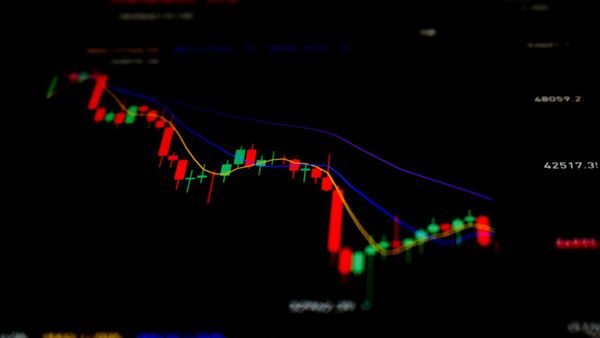
Gold Rebounds as Fed Rate-Hike Bets Ease, While Bitcoin Faces Conflicting Signals
Gold climbed toward $4,180 as traders reduced expectations for an October Federal Reserve rate hike. Bitcoin remains under pressure, with analysts divided over its outlook as inflation, interest rates and liquidity shape both markets.

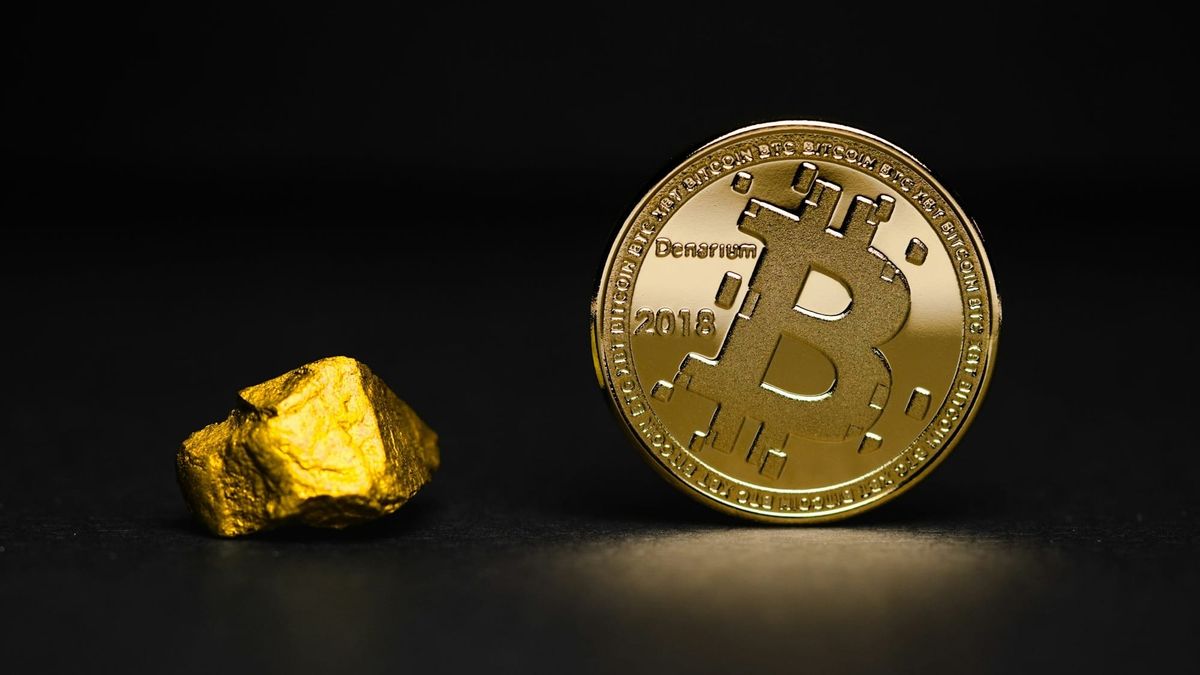
Gold and Bitcoin Reflect Different Reactions to Inflation and Monetary Policy
Gold began the week on firmer footing as investors scaled back expectations for another Federal Reserve interest rate increase following comments from Chair Kevin Warsh. The precious metal traded near $4,180 an ounce after declining the previous week, with easing rate-hike expectations helping counter pressure from elevated inflation and a stronger U.S. dollar.
Bitcoin, meanwhile, remained near $82,000, substantially below its October 2025 record. While gold has benefited from renewed interest in its defensive characteristics, Bitcoin's recent weakness has prompted conflicting assessments from market strategists about whether the cryptocurrency is signaling broader financial-market vulnerability or approaching a new phase of recovery.
Key Points
- Gold recovered toward $4,180 an ounce as traders reduced the probability of an October Federal Reserve rate hike to less than 20%, easing pressure on the non-yielding metal.
- Bitcoin traded near $82,000, approximately 35% below its October 2025 record, with tighter financial conditions and leveraged liquidations contributing to recent volatility.
- Market strategists remain divided, with some warning of further weakness in Bitcoin and others identifying potential recovery signals, while central banks continue reassessing how and where they hold gold reserves.
Gold Rebounds as Interest Rate Expectations Shift
Gold opened the week higher after remarks from Federal Reserve Chair Kevin Warsh prompted traders to reduce expectations for an interest rate increase at the central bank's October 27–28 meeting.
Spot gold advanced approximately 0.4% to $4,180.97 an ounce in early Asian trading, following a 0.7% decline the previous week.
The recovery followed several inflation reports that had reinforced expectations for tighter monetary policy.
September's Consumer Price Index increased 3.7% from a year earlier, exceeding the 3.6% forecast. Producer prices rose 6.3% annually, while import prices increased 1.1% during September, also exceeding expectations.
Those figures initially supported the U.S. dollar and increased expectations for additional Federal Reserve tightening.
Gold typically faces pressure when interest rates and bond yields rise because the metal does not generate interest income. Higher yields can make interest-bearing assets comparatively more attractive, while a stronger dollar can increase the cost of gold for international buyers.
However, traders subsequently reduced the implied probability of an October quarter-point rate increase to less than one in five following Warsh's remarks.
The shift helped stabilize gold prices despite continued concerns about inflation.
Gold Remains Well Below Its Earlier Peak
Although gold has maintained support above $4,000 an ounce since August, its performance in 2026 has been uneven.
The metal reached a record near $5,600 earlier in the year before declining sharply amid the market disruption surrounding the U.S.-Iran conflict.
Gold remains approximately one-fifth below its level when the conflict erupted in late February.
The decline highlights the tension between gold's traditional role as a defensive asset and its sensitivity to monetary policy.
Geopolitical uncertainty can support demand for bullion, but rising real yields and dollar strength can simultaneously create selling pressure.
Analysts Disagree on Gold's Recovery Prospects
Economist Peter Schiff argues that persistent inflation strengthens the longer-term case for gold, even when markets initially react by pricing in additional interest rate increases.
Schiff has warned that inflation could accelerate toward 7% or higher in 2027, potentially placing the Federal Reserve in a difficult position between controlling prices and limiting financial instability.
Those figures represent Schiff's projections rather than established economic outcomes.
Other analysts have offered different assessments.
Capital Economics economist Hamad Hussain expects gold to face continued pressure through year-end as the Federal Reserve maintains a tighter policy stance.
Bank of America strategists have also indicated that gold could remain below $4,000 into year-end, while a separate outlook cited in the supplied reporting identified the possibility of a recovery above $4,800 next year.
Metals Focus has projected a gold price of $5,330 in 2027, citing government deficits, debt-servicing costs and uncertainty surrounding U.S. policy.
The range of projections reflects differing assumptions about inflation, interest rates, currency movements and investment demand.
Why Is Bitcoin Struggling While Gold Stabilizes?
Bitcoin has faced a different set of pressures, with its price remaining substantially below the record established in October 2025.
The cryptocurrency traded near $82,000 on October 18, approximately 35% below its all-time high of $126,080.
Its weakness has coincided with tighter monetary conditions, reduced risk appetite and substantial liquidations of leveraged trading positions.
Leveraged Selling Adds to Bitcoin Volatility
Bitcoin's decline below $80,000 on October 15 triggered approximately $972 million in leveraged liquidations.
About 91.7% of those liquidated positions were long trades, meaning traders had been positioned to benefit from rising prices.
Liquidations occur when leveraged positions no longer have sufficient collateral to remain open, forcing positions to close.
This mechanism can amplify market volatility because forced selling may accelerate an existing decline.
Gold has also experienced substantial losses during 2026, but its year-to-date decline has been smaller than Bitcoin's.
According to the supplied figures, Bitcoin was down approximately 6.8% for the year as of October 16, compared with a decline of about 4.6% for gold.
The comparison illustrates how the two assets can respond differently to the same macroeconomic environment.
Strategists Offer Conflicting Interpretations of Bitcoin's Weakness
Bloomberg Intelligence senior commodity strategist Mike McGlone has warned that Bitcoin's recent performance resembles patterns seen during previous cryptocurrency downturns.
McGlone described Bitcoin as a potential leading indicator for broader risk assets and raised the possibility of a decline toward $10,000 under a scenario involving a 20% correction in U.S. equities and tighter central bank policy.
That scenario is conditional and represents McGlone's assessment, not a market consensus.
Fidelity's director of global macro, Jurrien Timmer, has presented a more constructive interpretation.
Timmer suggested that a new four-year Bitcoin bull market could already be developing, based on longer-term price patterns.
He also identified the current market as potentially occupying an accumulation phase, although he acknowledged that both gold and Bitcoin remain affected by slowing global liquidity growth.
Other cryptocurrency analysts have challenged McGlone's bearish projections by pointing to institutional ownership and historical valuation measures.
CryptoQuant founder Ki Young Ju noted that spot Bitcoin ETFs have absorbed approximately $58 billion and that corporate treasury holders control around 1.3 million Bitcoin.
He argued that historical on-chain valuation patterns do not support an imminent collapse to $10,000.
These contrasting views illustrate the uncertainty surrounding Bitcoin's longer-term direction.
Peter Schiff Renews the Gold Versus Bitcoin Debate
Schiff has also urged Bitcoin investors to move toward gold, arguing that the precious metal offers stronger protection against inflation and financial instability.
His criticism comes despite a mixed record of previous Bitcoin forecasts.
In June 2022, Schiff warned that Bitcoin would not recover from its decline. The cryptocurrency subsequently reached a record above $126,000 in October 2025.
Other warnings about resistance and support levels have also been followed by recoveries.
However, Bitcoin's continued decline from its record has renewed discussion about whether gold and cryptocurrencies serve comparable roles during periods of economic stress.
The recent price action suggests that investors are treating them differently.
Gold continues to attract attention as a traditional store of value, while Bitcoin remains particularly sensitive to liquidity conditions, leveraged positioning and changes in broader risk sentiment.
Central Banks Reconsider Gold Reserves as Financial Risks Evolve
Beyond short-term price movements, central banks are reassessing the geographical distribution of their gold reserves.
The changes reflect growing attention to geopolitical uncertainty, access to physical bullion and the reliability of international financial infrastructure.
European Central Banks Are Relocating Gold Holdings
The Dutch central bank, De Nederlandsche Bank, recently moved more than 78 metric tons of gold from New York and seven tons from Canada to London.
The institution cited increasing geopolitical uncertainty and the need to strengthen crisis preparedness.
Governor Olaf Sleijpen explained that London's role as a major bullion trading center makes reserves held at the Bank of England more accessible.
France also completed the removal of its gold holdings from the Federal Reserve Bank of New York between July 2025 and January 2026.
These movements follow earlier gold repatriation efforts by Germany, Austria and other central banks.
Germany transferred substantial quantities of gold from London, New York and Paris to Frankfurt over several decades.
India has also accelerated the relocation of its reserves since 2023.
Why Does the Location of Gold Reserves Matter?
Gold held abroad can provide access to major international trading centers, but geopolitical uncertainty has increased attention to the risks associated with overseas custody.
Krishan Gopaul, a senior analyst at the World Gold Council, explained that central banks are increasingly balancing three considerations: custody risk, physical accessibility and market liquidity.
Some institutions are increasing domestic storage, while others are distributing reserves across several international locations.
The objective is not necessarily to bring every gold bar home.
Instead, central banks are seeking arrangements that allow reserves to remain accessible and tradable under a range of financial and geopolitical conditions.
Gopaul also emphasized that relocating gold does not necessarily indicate an intention to sell it.
The developments illustrate how bullion's role extends beyond market prices and investment demand.
For central banks, gold also represents a reserve asset whose location and accessibility can matter during periods of financial stress.
What It Means for Investors
Gold and Bitcoin are providing contrasting signals about how financial markets are responding to inflation, interest rates and uncertainty.
Gold's recovery following reduced Federal Reserve rate-hike expectations demonstrates its sensitivity to borrowing costs and the U.S. dollar. At the same time, central bank reserve movements reflect longer-term considerations involving financial resilience and access to physical assets.
Bitcoin's recent volatility highlights a different set of market dynamics. Leveraged trading, institutional participation and liquidity conditions remain central to the debate over whether its weakness represents a broader warning for risk assets or a temporary phase within a longer market cycle.
The upcoming Federal Reserve meeting will provide another reference point for both markets. However, the competing analyst assessments underscore that monetary policy alone does not determine the direction of gold or Bitcoin.
Conclusion
Gold's recovery toward $4,180 and Bitcoin's continued weakness illustrate how differently the two assets can respond to the same economic pressures. Easing expectations for an October Federal Reserve rate increase have supported bullion, while Bitcoin remains affected by liquidity concerns and volatile positioning. Beyond daily price movements, central bank gold reserve relocations and growing institutional participation in cryptocurrency reveal distinct forces shaping each market. The direction of interest rates, inflation and financial conditions remains central to both.
FAQs
Why did gold prices rise at the beginning of the week?
Gold rose toward $4,180 an ounce as traders reduced expectations for a Federal Reserve interest rate increase in October following comments from Chair Kevin Warsh. Lower rate-hike expectations can support gold because the metal does not pay interest.
Why has Bitcoin underperformed gold in 2026?
Bitcoin has faced pressure from tighter financial conditions, weaker risk sentiment and leveraged trading liquidations. As of October 16, Bitcoin was down approximately 6.8% for the year, compared with a decline of about 4.6% for gold.
What is Peter Schiff predicting for gold and Bitcoin?
Peter Schiff argues that persistent inflation and financial instability support gold's role as a defensive asset. He has urged investors to move away from Bitcoin, although several of his previous bearish Bitcoin forecasts were followed by substantial price recoveries.
Why are central banks relocating their gold reserves?
Central banks are reassessing where they store gold to balance geopolitical risk, physical accessibility and market liquidity. Recent relocations by European central banks reflect efforts to improve access to reserves during periods of financial uncertainty.
How could Federal Reserve policy affect gold and Bitcoin?
Higher interest rates can weigh on gold because it does not generate interest income. Bitcoin is also sensitive to monetary conditions, particularly changes in liquidity and investor risk appetite. Market participants are monitoring the Federal Reserve's October 27–28 meeting for additional policy signals.
This article was created with AI assistance and reviewed by an editor. For details, please refer to our Terms of Use.
Go Beyond the Market Brief with Market Edge
Follow SharperTrades’ complete approach to trading and investing, combining active trade opportunities through Block Orders, long-term research through Stock Investor, and structured market education through the Swing Trading Masterclass. Try Market Edge for $19 your first month →
Explore Research with Stock Investor
Stock Investor is SharperTrades’ platform for long-term investing research and portfolio management. Members receive research reports, portfolio updates, conviction tracking, and in-depth analysis designed to support disciplined investment decisions.
Explore Active Trading & Income Strategies
Block Orders tracks institutional activity and highlights active trade setups and price behavior across long and short opportunities.
For options-focused traders, Essential Option Income provides a structured approach to options income strategies, while Pro Option Trader offers a broader range of options strategies and trade opportunities.
Think More Clearly with SteadyCapital
SteadyCapital is SharperTrades’ decision-support system for long-term investors, built around the SteadyCapital Method™. Review investment ideas, challenge assumptions, evaluate valuation and risk, compare companies, and think through important buy, hold, add, trim, or sell decisions before you act.
Risk Disclosure
All content is provided for educational purposes only and does not constitute investment advice. Trading involves risk, and past performance is not indicative of future results. Please review our full Risk Disclosure for additional information.