Waymo’s Custom AI Chip Push Signals Deeper Control of Alphabet’s Robotaxi Technology
Waymo is deploying a custom autonomous-driving chip capable of more than 1,000 trillion operations per second, expanding Alphabet’s control over its robotaxi technology while continuing to work with major semiconductor partners including Nvidia, AMD and TSMC.

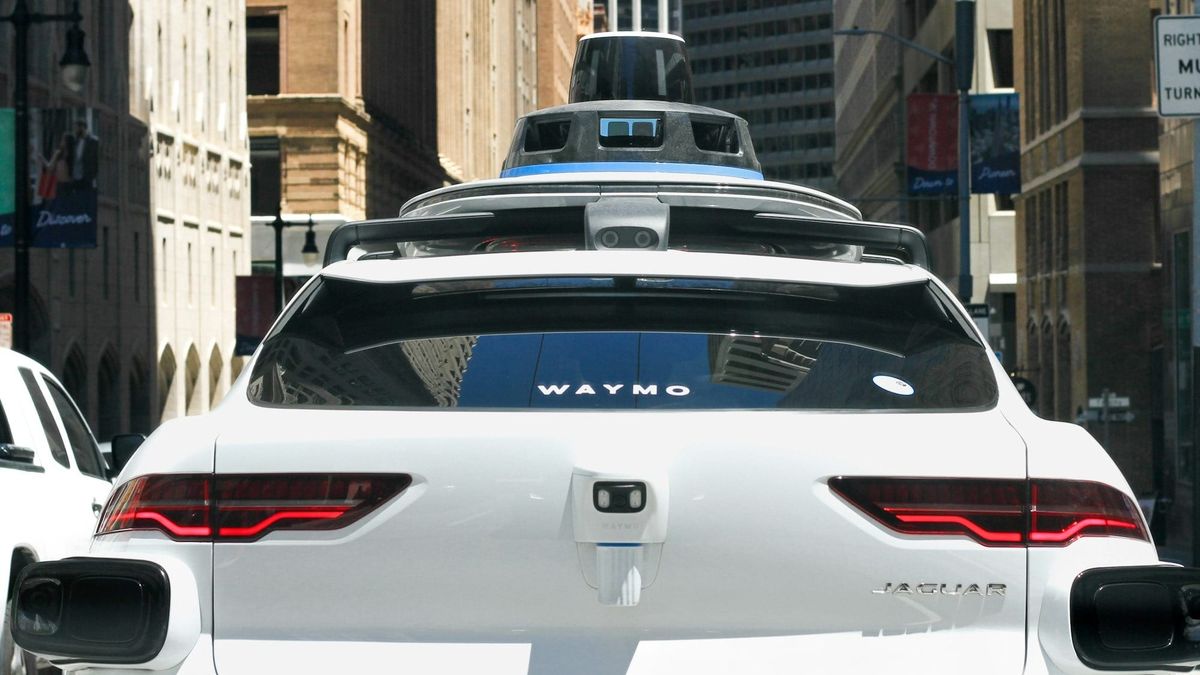
Waymo brings more of its autonomous-driving compute stack in-house
Alphabet (GOOG) subsidiary Waymo is expanding its custom semiconductor strategy with an application-specific integrated circuit, or ASIC, designed specifically for autonomous driving. The chip is already in production in Waymo’s latest robotaxi generation and is intended to process sensor information and AI models quickly enough to support real-time driving decisions.
The development extends a broader technology strategy at Waymo: combining internally designed silicon, sensors and software with components supplied by established semiconductor companies. Waymo said its onboard computing power has increased 20-fold over eight years as the company built a system capable of handling the entire driving task without a human backup.
Key Points
- Waymo has developed a custom autonomous-driving ASIC capable of more than 1,000 TOPS, or trillions of operations per second, for its latest robotaxi generation.
- Waymo said its onboard compute power has increased 20-fold in eight years, supporting real-time AI processing without relying on a human backup driver.
- The company continues to work with semiconductor partners including Nvidia (NVDA), Advanced Micro Devices (AMD), Micron, Samsung, Sandisk and Taiwan Semiconductor Manufacturing (TSM) while adding more internally designed silicon.
Waymo Builds a Custom Chip for Real-Time Autonomous Driving
Waymo’s new ASIC is designed around the unusual demands of fully autonomous driving. Unlike traditional driver-assistance systems, Waymo’s technology must perform the complete driving task without a human available to intervene.
That requires decisions to be made onboard the vehicle rather than relying on remote computing. Waymo said its system continuously processes information within milliseconds, with machine-learning models building a detailed picture of the surrounding environment and evaluating the safest path forward.
The company describes latency, or the delay between receiving sensor information and acting on it, as a central engineering challenge. Its goal is to minimize the time from the “first pixel” captured by its sensors to the physical response of the vehicle.
Waymo said its raw computing capability has increased 20 times in eight years. Its latest custom chip is capable of more than 1,000 TOPS, placing its stated processing capacity on par with Nvidia’s latest autonomous-driving systems based on that performance measure.
The ASIC is manufactured using TSMC’s 5-nanometer production technology. Although Waymo is increasing its use of internally designed hardware, it continues to emphasize a mixed approach that combines custom silicon with products from outside semiconductor suppliers.
Why Is Waymo Developing More of Its Own Silicon?
Waymo has historically used chips from semiconductor companies such as Nvidia and AMD inside computing systems of its own design. Developing an application-specific chip allows the company to tailor more of that computing architecture directly to the needs of autonomous vehicles.
Waymo said the custom processor can help it process sensor information more quickly and operate the AI models required to understand and respond to complicated urban environments.
The development also complements sensors designed internally by Waymo. The result is a more purpose-built combination of hardware and software rather than a system assembled entirely from general-purpose third-party components.
That strategy could also affect the physical design of future Waymo vehicles. The company said more purpose-built robotaxis may reduce costs while providing greater space and accessibility for passengers.
Waymo’s fleet has historically included Jaguar vehicles retrofitted with autonomous-driving technology. The company has more recently launched a robotaxi with Zeekr, part of Geely Automobile Holdings, and that vehicle is being equipped with the new custom chip.
Waymo is not abandoning external suppliers. Its compute program includes partnerships with AMD, Micron, Nvidia, Samsung, Sandisk, Socionext and TSMC. The shift instead adds internally developed silicon to a broader supplier ecosystem.
What Matters Next for Waymo and Alphabet?
Waymo’s custom-chip development adds another technology layer to Alphabet’s broader push toward specialized computing.
Within Waymo specifically, the immediate focus is performance. The autonomous system must combine large amounts of sensor data with machine-learning models while producing driving decisions within milliseconds. The new ASIC is intended to improve those capabilities in the latest robotaxi generation.
Scale is another important part of the story. Waymo said its compute architecture draws on more than 200 million miles of fully autonomous driving experience. The company is already operating robotaxi services in cities including San Francisco, Phoenix and Atlanta.
Waymo was described in the supplied material as the leading U.S. robotaxi operator by rides compared with rivals including Tesla and Amazon.com (AMZN) subsidiary Zoox. The custom-chip rollout therefore comes as Waymo moves beyond proving that fully autonomous driving works and continues developing hardware specifically designed around commercial robotaxi operations.
The semiconductor relationships also remain relevant. Waymo is simultaneously increasing internal control and retaining access to external computing, memory and manufacturing expertise. Its latest hardware therefore reflects a hybrid model rather than a complete move away from third-party chip suppliers.
What It Means for Investors
For Alphabet investors, Waymo’s custom chip provides another example of the company developing specialized computing technology around an AI-intensive business.
Waymo’s challenge is different from traditional data-center computing because every major decision must occur inside a moving vehicle and within extremely short response times. The company’s 20-fold increase in compute power over eight years shows how rapidly those hardware requirements have expanded.
The custom ASIC also gives Waymo greater control over the relationship between its sensors, AI models, software and onboard processing. At the same time, the company continues to rely on an extensive semiconductor supply chain rather than attempting to build every component itself.
That distinction matters. Waymo’s latest development is not simply a replacement of Nvidia, AMD or other suppliers. It represents a deeper layer of vertical integration alongside continuing partnerships with those companies.
The move also connects Waymo more closely with a broader pattern inside Alphabet, where custom silicon is being used to tailor computing systems to specific AI workloads. For Waymo, however, that computing infrastructure is moving out of the data center and directly into vehicles operating on public roads.
Conclusion
Waymo’s new autonomous-driving ASIC marks a significant expansion of its internally designed hardware stack.
The chip delivers more than 1,000 TOPS of processing performance and is already being incorporated into Waymo’s latest robotaxi generation. Combined with internally designed sensors and a software stack built from more than 200 million fully autonomous miles, the new processor gives Waymo greater control over how its vehicles perceive and respond to the environment.
At the same time, Waymo continues working with major semiconductor companies rather than replacing them outright. Its approach combines custom silicon with technology from Nvidia, AMD, TSMC and other suppliers.
For Alphabet, the development adds another custom-computing effort to a growing portfolio of AI-intensive businesses and shows how Waymo is increasingly designing its robotaxi technology around the specific demands of fully autonomous operation.
FAQs
What is Waymo’s new custom chip?
Waymo’s new chip is an application-specific integrated circuit designed for autonomous driving. It is capable of more than 1,000 trillion operations per second and is being used in the company’s latest generation of robotaxis.
Why does Waymo need its own autonomous-driving chip?
Waymo’s fully autonomous vehicles must process sensor information and AI models onboard within milliseconds without relying on a human backup driver. The custom chip allows Waymo to tailor computing performance more closely to those requirements.
Is Waymo replacing Nvidia and AMD with its own chips?
No. Waymo is increasing its use of custom silicon while continuing to work with outside semiconductor suppliers including Nvidia, AMD, Micron, Samsung, Sandisk, Socionext and TSMC.
How much has Waymo increased its computing power?
Waymo said it has increased the raw computing power of its autonomous-driving stack by 20 times over the past eight years.
How does the custom chip fit into Alphabet’s Waymo strategy?
The chip gives Waymo greater control over its autonomous-driving hardware and software stack while supporting its move toward more purpose-built robotaxis. It complements Waymo’s internally designed sensors and continuing partnerships with semiconductor suppliers.
This article was created with AI assistance and reviewed by an editor. For details, please refer to our Terms of Use.
Go Beyond the Market Brief with Market Edge
Follow SharperTrades’ complete approach to trading and investing, combining active trade opportunities through Block Orders, long-term research through Stock Investor, and structured market education through the Swing Trading Masterclass. Try Market Edge for $19 your first month →
Explore Research with Stock Investor
Stock Investor is SharperTrades’ platform for long-term investing research and portfolio management. Members receive research reports, portfolio updates, conviction tracking, and in-depth analysis designed to support disciplined investment decisions.
Explore Active Trading & Income Strategies
Block Orders tracks institutional activity and highlights active trade setups and price behavior across long and short opportunities.
For options-focused traders, Essential Option Income provides a structured approach to options income strategies, while Pro Option Trader offers a broader range of options strategies and trade opportunities.
Think More Clearly with SteadyCapital
SteadyCapital is SharperTrades’ decision-support system for long-term investors, built around the SteadyCapital Method™. Review investment ideas, challenge assumptions, evaluate valuation and risk, compare companies, and think through important buy, hold, add, trim, or sell decisions before you act.
Risk Disclosure
All content is provided for educational purposes only and does not constitute investment advice. Trading involves risk, and past performance is not indicative of future results. Please review our full Risk Disclosure for additional information.