U.S. Rare Earth Push Lifts MP Materials as Mine-to-Magnet Strategy Takes Shape
MP Materials gained more than 7% on Friday as stronger rare-earth production, upcoming magnet shipments and expanding U.S. government support highlighted progress toward a domestic mine-to-magnet supply chain less dependent on China.

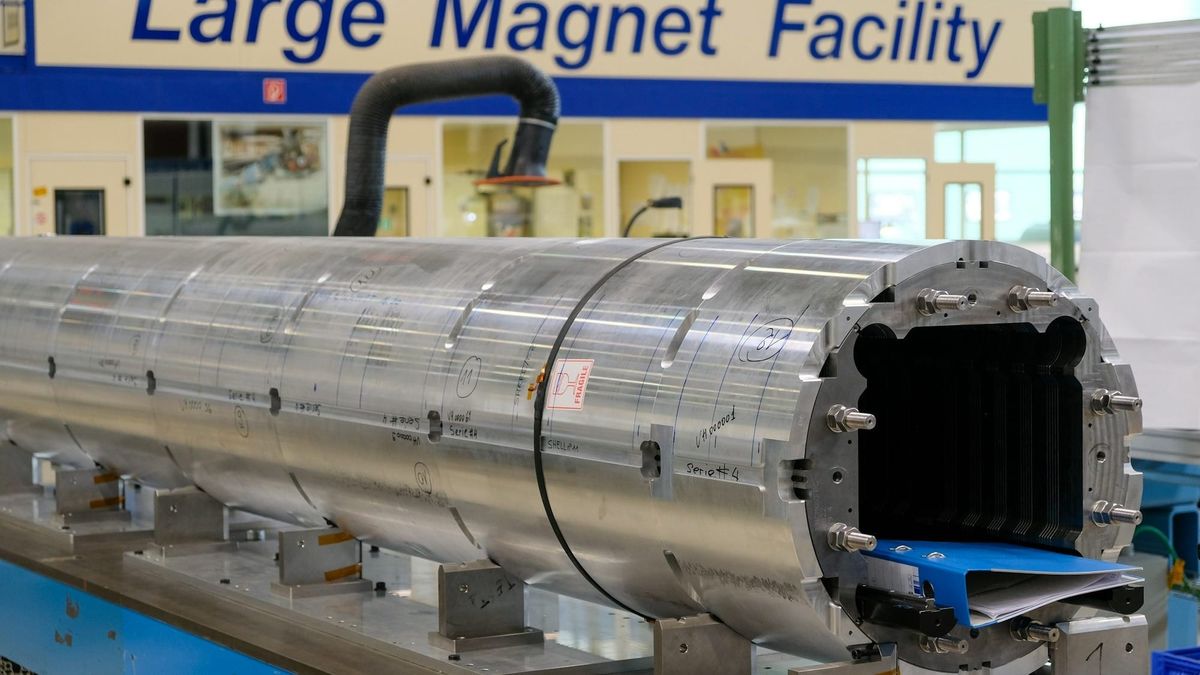
MP Materials Moves Deeper Into the U.S. Rare Earth Supply Chain
MP Materials (MP) is increasingly moving beyond its roots as a rare-earth miner, expanding into refined materials, heavy rare earths and permanent magnets used across automotive, technology, aerospace and defense applications.
That transition was in focus after MP reported stronger second-quarter results and the U.S. government highlighted billions of dollars of additional investment in critical-minerals projects. MP shares closed Friday at $51.11, up 7.6%, as investors assessed the company's improving operations alongside the broader effort to develop a U.S. rare-earth supply chain independent of China.
Key Points
- MP Materials reported Q2 revenue of $108.5 million, while revenue plus price-protection agreement income reached $126.1 million and adjusted EBITDA improved to $28.5 million.
- NdPr production increased 41% year over year and sales volumes jumped 127%, while MP expects initial commercial magnet shipments to General Motors in the fourth quarter and shipments to Apple in 2027.
- U.S. efforts to reduce reliance on China are accelerating, with more than $10 billion in federal critical-minerals investments already pledged and another $3 billion in projects highlighted by President Trump.
Rare Earth Production and Profitability Strengthen
MP Materials' second-quarter results showed significant improvement across its core rare-earth operations.
The company generated $108.5 million in revenue, up 89% from a year earlier. Revenue plus income from its price-protection agreement reached $126.1 million, more than double the prior-year period.
Adjusted EBITDA, which measures operating profitability before interest, taxes, depreciation and amortization, reached $28.5 million. That represented a $41 million improvement from a year earlier. Adjusted diluted earnings improved by $0.12 per share to a loss of $0.01.
The Materials segment generated $113.2 million in revenue plus price-protection agreement income and $32.5 million in adjusted EBITDA, an improvement of $45 million from the previous year.
Underlying production also increased.
MP produced 840 metric tons of neodymium-praseodymium, or NdPr, during the quarter, up 41% year over year despite an extended planned plant shutdown in April. NdPr is a critical input for high-performance permanent magnets.
Sales volumes reached 1,006 metric tons, an increase of 127% from a year earlier and the second consecutive quarter in which sales exceeded 1,000 metric tons.
The company expects third-quarter NdPr production to exceed 1,000 metric tons as it works to improve plant reliability, throughput and operational consistency.
MP's strategy has changed substantially from a year earlier. Instead of selling rare-earth concentrate to other companies, it has stopped concentrate sales and is increasingly processing its materials internally into higher-value rare-earth oxides, metals and eventually finished magnets.
That shift is central to the company's effort to become a vertically integrated domestic rare-earth producer rather than primarily a mining operation.
Why Is MP Materials Expanding Beyond Mining?
MP Materials is building capabilities across multiple stages of the rare-earth supply chain, from extraction at Mountain Pass in California to separated rare-earth materials and finished magnets manufactured in Texas.
The next major step is commercialization of its magnet business.
At the Independence facility in Texas, MP delivered magnets to General Motors (GM) for in-vehicle qualification testing during the second quarter. Initial commercial shipments remain scheduled for the fourth quarter, followed by a gradual production ramp.
MP also expects to begin shipping magnets to Apple (AAPL) in 2027.
The company's larger 10X magnet manufacturing project is under construction. MP acquired the site for approximately $80 million during the quarter, foundation work is underway and long-lead manufacturing equipment has been ordered.
Capital requirements remain substantial. MP spent $230.3 million during the second quarter, with more than 60% directed toward its Magnetics segment. Year-to-date capital expenditures reached $308 million through June, while management maintained its full-year capital-spending guidance of $500 million to $600 million.
MP ended the quarter with $1.45 billion in cash and short-term investments. Management said its balance sheet and expected improvement in operating cash flow from oxide and magnet sales fully fund the company's long-term capital plan.
The company is simultaneously moving into heavier rare-earth elements.
MP completed mechanical construction of its first heavy rare-earth separation circuit in May and expects to begin producing terbium and dysprosium later this year.
Those materials broaden the company's capabilities beyond NdPr.
MP also announced a multiyear agreement worth hundreds of millions of dollars to supply gadolinium oxide to an undisclosed U.S. aerospace and defense manufacturer. Gadolinium is used in applications including high-performance alloys for jet engines and lasers.
The company is advancing a samarium program with first production planned for 2028 and moving forward with engineering and procurement for a gadolinium separation project on a similar timeline.
MP is also evaluating other rare earths contained in its Mountain Pass ore body, including yttrium, while its heavy rare-earth separation circuit has been designed to process third-party feedstocks.
Taken together, those projects show how MP is expanding from mining into separation, refining, metals and finished magnet manufacturing.
U.S. Critical Minerals Investment Targets Dependence on China
MP's expansion is unfolding alongside a broader U.S. effort to establish domestic and allied critical-minerals supply chains.
President Donald Trump highlighted approximately $3 billion of U.S. investments in critical-minerals mining during a meeting with industry executives Friday.
The announced projects included a $1.4 billion loan agreement with Sila Nanotechnologies through the Defense Department's Office of Strategic Capital, $400 million from the Pentagon to expand scandium production in Australia and $150 million involving Minnesota rare-earth company Niron Magnetics.
The Export-Import Bank is also working toward more than $1 billion of financing for Ivanhoe Electric's Santa Cruz copper project in Arizona, along with a $25 million investment to launch a graphite mining project in Alabama.
More than $180 million is also planned for educational programs intended to train workers for the mining industry.
The federal government has already pledged more than $10 billion toward developing U.S. markets for rare earths and permanent magnets.
MP has been one of the most direct beneficiaries.
The Defense Department previously agreed to take a $400 million preferred-equity stake in the company as part of an agreement designed to support domestic rare-earth supply. The arrangement provided MP with capital, a guaranteed customer and a price floor for NdPr.
MP recorded $17.6 million of price-protection agreement income during the second quarter, down from $42.3 million in the first quarter as NdPr prices moved closer to the level established under the Defense Department agreement.
The policy objective is broader than MP itself. Executives from Rio Tinto (RIO), BHP Group, Freeport-McMoRan (FCX), USA Rare Earth (USAR), Energy Fuels, U.S. Antimony, Sunrise Energy Metals and The Metals Company were also expected to participate in Friday's industry event.
Rare earths remain a source of tension between the United States and China despite a trade truce that eased some export controls on critical minerals and magnets.
The U.S. response has increasingly centered on creating an independent mine-to-magnet supply chain. MP's existing Mountain Pass operation and expanding downstream manufacturing capabilities place it directly within that effort.
What It Means for Investors
The latest MP stock news reflects two developments occurring simultaneously: improving company-level execution and expanding government support for the domestic critical-minerals industry.
Operationally, MP is producing and selling more NdPr while moving closer to commercial magnet production.
The 41% increase in NdPr production and 127% increase in sales volumes show progress in the company's materials business. Adjusted EBITDA of $28.5 million also marked a significant improvement from the adjusted EBITDA loss recorded a year earlier.
The next stage increasingly depends on downstream execution.
Commercial magnet shipments to General Motors are expected to begin during the fourth quarter, while Apple shipments are planned for 2027. The Independence facility is moving through customer qualification, while construction of the larger 10X facility continues.
Heavy rare earths add another layer. Production of terbium and dysprosium is expected to begin later this year, while the new gadolinium agreement introduces a multiyear aerospace and defense customer relationship worth hundreds of millions of dollars.
At the same time, the U.S. government is deploying billions of dollars to reduce the country's dependence on Chinese-controlled critical-minerals supply chains.
That policy support does not eliminate the challenges of building a domestic industry. The supplied information notes that the scale of the critical-minerals buildout is enormous and that development has faced serious challenges and slow progress.
For MP, the central issue is therefore execution across several projects at once: increasing rare-earth output, commissioning heavy rare-earth separation, qualifying magnets with customers and expanding manufacturing capacity.
Those milestones will determine how quickly the company's mine-to-magnet strategy translates into a larger downstream business.
Conclusion
MP Materials' second-quarter results provide evidence that its transformation from a rare-earth miner into a vertically integrated materials and magnet manufacturer is advancing.
Revenue increased sharply, adjusted EBITDA improved to $28.5 million, NdPr production rose 41% and sales volumes increased 127%.
The next phase moves further downstream.
MP expects commercial magnet shipments to General Motors in the fourth quarter and Apple shipments in 2027. It is constructing its larger 10X magnet facility while preparing to begin production of terbium and dysprosium and expanding into gadolinium and other heavy rare earths.
Those developments are taking place as the U.S. government increases financial support for critical minerals and permanent magnets in an effort to build supply chains independent of China.
MP's 7.6% Friday gain reflected investor reaction to that combination of improving operations, expanding downstream capabilities and a broader policy push toward domestic rare-earth production.
FAQs
Why did MP Materials stock rise after its second-quarter results?
MP Materials shares closed Friday at $51.11, up 7.6%, after the company reported stronger second-quarter operating results, higher NdPr production and sales volumes, progress toward commercial magnet shipments and continued expansion into heavy rare earths.
How much rare-earth material did MP Materials produce in Q2 2026?
MP Materials produced 840 metric tons of NdPr during the second quarter, up 41% year over year. NdPr sales volumes reached 1,006 metric tons, an increase of 127% from a year earlier.
When will MP Materials begin commercial magnet shipments?
MP Materials expects initial commercial magnet shipments to General Motors in the fourth quarter of 2026. The company also expects to begin supplying magnets to Apple in 2027.
What heavy rare earths is MP Materials developing?
MP Materials expects to begin producing terbium and dysprosium later in 2026. It also signed a multiyear agreement to supply gadolinium oxide to a U.S. aerospace and defense manufacturer and is advancing samarium and additional gadolinium projects targeted for 2028.
How is the U.S. government supporting the rare-earth industry?
The federal government has pledged more than $10 billion toward developing U.S. rare-earth and permanent-magnet markets, while President Trump highlighted another $3 billion in critical-minerals investments. The Defense Department previously agreed to take a $400 million preferred-equity stake in MP Materials.
This article was created with AI assistance and reviewed by an editor. For details, please refer to our Terms of Use.
Go Beyond the Market Brief with Market Edge
Follow SharperTrades’ complete approach to trading and investing, combining active trade opportunities through Block Orders, long-term research through Stock Investor, and structured market education through the Swing Trading Masterclass. Try Market Edge for $19 your first month →
Explore Research with Stock Investor
Stock Investor is SharperTrades’ platform for long-term investing research and portfolio management. Members receive research reports, portfolio updates, conviction tracking, and in-depth analysis designed to support disciplined investment decisions.
Explore Active Trading & Income Strategies
Block Orders tracks institutional activity and highlights active trade setups and price behavior across long and short opportunities.
For options-focused traders, Essential Option Income provides a structured approach to options income strategies, while Pro Option Trader offers a broader range of options strategies and trade opportunities.
Think More Clearly with SteadyCapital
SteadyCapital is SharperTrades’ decision-support system for long-term investors, built around the SteadyCapital Method™. Review investment ideas, challenge assumptions, evaluate valuation and risk, compare companies, and think through important buy, hold, add, trim, or sell decisions before you act.
Risk Disclosure
All content is provided for educational purposes only and does not constitute investment advice. Trading involves risk, and past performance is not indicative of future results. Please review our full Risk Disclosure for additional information.