Tesla’s Flying Roadster Reveal Drives Investor Excitement as SpaceX Technology Takes Center Stage
Tesla unveiled a Roadster prototype capable of airborne maneuvers using SpaceX thrusters, lifting TSLA shares ahead of earnings. The demonstration highlights engineering ambitions, but production timing, profitability and commercialization remain key questions.

Tesla Demonstrates a Rocket-Powered Roadster as Investors Assess Its Commercial Potential
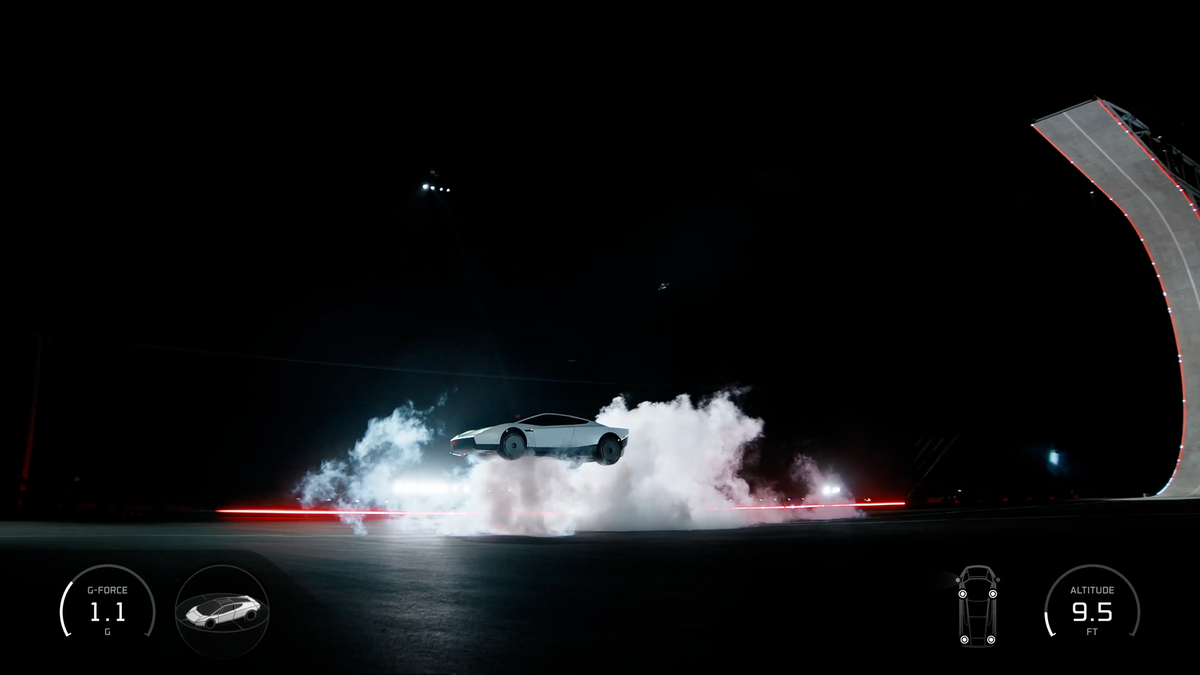
Tesla (TSLA) unveiled its redesigned Roadster on October 15, demonstrating a prototype that used suction technology and rocket-inspired thrusters to drive upside down, launch into the air and land after performing aerial maneuvers. The event took place at a SpaceX (SPCX) testing facility in Texas, bringing together technologies developed by two companies led by Elon Musk.
Tesla shares rose as much as 5.4% in Friday's premarket trading following the demonstration, outperforming a broader technology market facing renewed pressure. The reveal attracted attention to Tesla's engineering capabilities, although analysts emphasized that the company's upcoming earnings, autonomous driving operations and profitability remain more important to its financial outlook.
Key Points
- Tesla unveiled a Roadster prototype with airborne capabilities, using SpaceX-derived cold-gas thrusters and a suction system to perform inverted driving and controlled aerial maneuvers.
- TSLA shares climbed as much as 5.4% in premarket trading, reflecting enthusiasm for the demonstration, although production is not expected to begin until 2028.
- Tesla's October 21 earnings remain the more significant financial event, with investors focused on automotive margins, robotaxi expansion, capital spending and the commercial progress of its autonomous technologies.
Tesla Unveils a Flying Roadster With SpaceX Thruster Technology
Tesla's redesigned Roadster made its public debut during an October 15 demonstration at a SpaceX rocket testing facility in Texas.
The event, originally scheduled for October 1, had been postponed because of weather conditions at the testing site.
During the presentation, the electric sports car drove partway up an inverted ramp while remaining attached through a vacuum-based suction system.
The vehicle then launched from the ramp, performed aerial rotations and used cold-gas thrusters to stabilize itself before landing.
A subsequent demonstration showed the Roadster jumping over several Tesla vehicles, including a Semi truck, before returning to the ground.
The demonstrations highlighted an unusual combination of automotive engineering and propulsion technology adapted from SpaceX.
Three Roadster Versions Target Different Capabilities
Tesla introduced three configurations of the redesigned Roadster.
The Performance version is intended as a road-focused, two-seat sports car equipped with a multi-mode suction system designed to enhance vehicle performance.
The Thrust version adds rear-mounted cold-gas thrusters intended to deliver substantially faster acceleration.
The Rocket version incorporates additional thrusters positioned around the vehicle, allowing upward acceleration and rotational movement during airborne maneuvers.
Tesla demonstrated acceleration from zero to 60 miles per hour in approximately 0.81 seconds during the event.
The company also outlined performance specifications that vary by configuration, including acceleration targets below one second for the more advanced versions.
Tesla stated that the vehicles would offer more than 300 miles of driving range, while the Rocket configuration was described as capable of reaching speeds up to 230 miles per hour.
Musk also discussed a more ambitious potential speed target for a production version, although that figure remains separate from the specifications presented for the demonstrated vehicle.
Production Is Planned for 2028
Despite the demonstration, the redesigned Roadster remains some distance from commercial production.
Musk said Tesla expects manufacturing to begin in 2028.
The timeline follows a lengthy development period.
Tesla originally introduced the next-generation Roadster in 2017, with initial expectations that deliveries would begin in 2020.
The company has continued accepting reservations, although pricing details remain incomplete.
Reservation information indicates substantial deposits for different configurations, while the Rocket version is expected to be available by invitation.
Tesla has not confirmed final pricing for the redesigned vehicle.
Another unresolved issue is whether the thruster-equipped versions will receive approval for public-road use.
The demonstration established that the prototype could perform the showcased maneuvers, but Tesla has not outlined a regulatory approval process for those capabilities.
Why Did Tesla Stock Rise After the Roadster Reveal?
Tesla shares responded positively to the presentation, climbing as much as 5.4% in Friday's premarket trading.
The stock continued to trade higher during the morning session, with reported gains ranging from approximately 3% to 4%.
The advance stood out against weaker performance in parts of the broader technology sector.
The market reaction suggested that the demonstration strengthened investor enthusiasm for Tesla's engineering capabilities and its technological relationship with SpaceX.
However, analysts distinguished the Roadster's promotional value from its potential financial contribution.
A Showcase Vehicle Rather Than a Major Earnings Driver
The Roadster is widely viewed as a showcase for Tesla's technology rather than a product expected to materially change its near-term financial results.
Deepwater Management analyst Gene Munster described the demonstration as an engineering achievement with limited direct commercial value.
Morningstar analyst Seth Goldstein also characterized the Roadster as a potential showcase vehicle for the brand.
Such vehicles can demonstrate technical capabilities and attract attention without necessarily contributing substantial sales volumes.
The distinction is particularly relevant because Tesla's planned production date remains two years away.
The company has not disclosed final pricing, expected production volumes or the regulatory path for its most advanced configurations.
As a result, the Roadster's contribution to future revenue and profitability remains uncertain.
SpaceX Collaboration Draws Attention to Corporate Ties
The demonstration also highlighted the technological relationship between Tesla and SpaceX.
The Roadster's cold-gas thrusters draw on propulsion capabilities associated with SpaceX, while the event itself took place at one of the aerospace company's testing facilities.
The collaboration has renewed discussion among some analysts about the possibility of a future combination between the two businesses.
Munster suggested that the presentation reflected Musk's interest in bringing Tesla and SpaceX closer together.
However, those comments represent analyst interpretation rather than confirmation of a merger.
No merger agreement or transaction terms were announced during the Roadster event.
For investors, the demonstrated technology-sharing arrangement is an established development, while a potential corporate combination remains speculative.
Market Reaction Reflects Enthusiasm and Uncertainty
Tesla's share-price advance followed a period of weakness.
The stock had declined approximately 7% over the preceding six months and remained below its 52-week high.
The Roadster announcement provided a company-specific catalyst at a time when some technology and semiconductor stocks were under pressure.
Nevertheless, the stock's immediate reaction does not establish the vehicle's eventual commercial success.
Tesla still faces questions about manufacturing timelines, product pricing and the ability to translate engineering demonstrations into profitable businesses.
Those questions are especially relevant as the company expands spending across several major initiatives.
Tesla's October 21 Earnings Shift Attention Back to Robotaxi and Profitability
Tesla's next earnings report, scheduled for October 21, will provide a broader assessment of the company's financial and operational progress.
While the Roadster generated significant attention, analysts are focused on developments in autonomous driving, vehicle deliveries, operating margins and capital spending.
Tesla has increased investment in its robotaxi network, Full Self-Driving technology, humanoid robotics and manufacturing infrastructure.
These programs represent a much larger part of the company's long-term strategy than the Roadster alone.
Robotaxi Expansion Shows Operational Progress
Morgan Stanley analyst Andrew Percoco recently adopted a more constructive view of Tesla ahead of third-quarter earnings, citing progress in its autonomous vehicle operations.
Following the September Cybercab launch, Tesla expanded its Austin fleet to more than 300 Cybercabs, according to the firm's research.
That represented an eightfold increase over approximately 30 days.
Tesla also surpassed one million cumulative unsupervised robotaxi miles, compared with approximately 380,000 at the time of its second-quarter earnings.
The figures indicate growing operational activity as Tesla works to establish a commercially scalable autonomous transportation service.
However, fleet expansion and accumulated mileage do not by themselves demonstrate attractive economics or safety performance at scale.
Morgan Stanley identified vehicle utilization, weekly paid miles, unsupervised mileage and operating costs as important measures of progress.
These indicators can help clarify whether Tesla's autonomous vehicle investments are developing into a sustainable commercial business.
Automotive Margins and Cash Flow Remain Under Pressure
Tesla's recent financial results have also raised questions about profitability.
The company reported record second-quarter vehicle deliveries, but automotive gross margin excluding regulatory credits declined from 19.2% to 16.3%.
Energy gross margin also fell, while free cash flow turned negative as capital expenditures increased substantially.
Gross margin measures the share of revenue remaining after the direct costs associated with producing goods and services.
Declining margins indicate that a company is retaining less revenue after those costs.
Tesla's operating margin was reported at approximately 1.4% in the second quarter, while free cash flow was negative $1.09 billion.
The company also reported a cash position of approximately $43.5 billion.
That liquidity provides financial resources as Tesla continues expanding its operations, although the scale of planned investment remains substantial.
Capital Spending Raises the Importance of Execution
Tesla expects capital expenditures to exceed $25 billion in 2026.
The spending supports multiple initiatives, including autonomous vehicles, Optimus humanoid robots and semiconductor manufacturing capabilities.
Analysts are increasingly focused on whether those investments can generate sufficient future returns.
Morgan Stanley identified the commercial development of Robotaxi, Full Self-Driving and Optimus as central to evaluating Tesla's longer-term strategy.
The firm's research also highlighted Tesla Semi and the company's energy storage business as additional opportunities.
For now, the financial contribution of these initiatives remains an important question.
The upcoming earnings report will offer another opportunity for management to discuss their progress alongside automotive performance and cash generation.
What It Means for Investors
Tesla's Roadster presentation demonstrated the company's ability to combine automotive engineering with propulsion technologies developed by SpaceX.
The event generated considerable attention and contributed to a positive short-term reaction in TSLA shares.
However, the Roadster remains a prototype with a planned production date in 2028, incomplete pricing information and unresolved questions about road approval for its most advanced capabilities.
These limitations make it difficult to assess its eventual financial contribution.
The broader investment discussion remains centered on Tesla's ability to convert substantial spending into profitable commercial operations.
Robotaxi expansion has produced measurable progress in fleet size and unsupervised driving mileage.
At the same time, declining automotive margins, negative free cash flow and elevated capital expenditures demonstrate the financial demands associated with Tesla's expansion plans.
The Roadster also reinforces the technological relationship between Tesla and SpaceX, although speculation about a potential merger remains separate from any confirmed corporate action.
For investors following Tesla stock news, the distinction between technological achievement and financial performance is particularly important.
The October 21 earnings report will provide a more direct assessment of the company's operating results and the progress of its larger commercial initiatives.
Conclusion
Tesla's redesigned Roadster delivered an unusual demonstration of automotive and aerospace technology.
By combining a suction system with SpaceX-derived thrusters, the company showcased a prototype capable of inverted driving and controlled airborne maneuvers.
The presentation helped lift Tesla shares and renewed attention to its engineering capabilities and relationship with SpaceX.
However, commercial production remains scheduled for 2028, and several important questions surrounding pricing, manufacturing and regulatory approval remain unanswered.
Tesla's upcoming earnings report will shift attention back to the company's broader financial performance.
Automotive margins, cash flow, autonomous vehicle operations and the returns on substantial capital investment will remain central to evaluating its business.
The Roadster demonstrated what Tesla's engineers have developed. The company's financial results will provide a clearer picture of how its larger technology ambitions are progressing commercially.
FAQs
Can the new Tesla Roadster actually fly?
Tesla demonstrated a Roadster prototype performing short airborne maneuvers using cold-gas thrusters adapted from SpaceX technology. The vehicle launched from a ramp, rotated in the air and used its thrusters to stabilize itself before landing. Tesla has not established whether these capabilities will be approved for public-road use.
When will the new Tesla Roadster enter production?
Elon Musk said Tesla expects Roadster production to begin in 2028. The redesigned vehicle was originally introduced in 2017, and its production timeline has been delayed several times.
Why did Tesla stock rise after the Roadster event?
Tesla shares gained as much as 5.4% in Friday's premarket trading following the demonstration. The event attracted investor attention to the company's engineering capabilities and its technological collaboration with SpaceX, although the Roadster's future financial contribution remains uncertain.
Does the Roadster reveal mean Tesla and SpaceX will merge?
No merger was announced during the Roadster presentation. Some analysts interpreted the collaboration as evidence of closer technological ties between the companies, but a potential merger remains speculative.
What will investors focus on in Tesla's October 21 earnings report?
Investors will be watching automotive margins, free cash flow, capital spending and progress in Tesla's autonomous vehicle operations. Robotaxi fleet utilization, paid driving miles and the commercial development of Full Self-Driving and Optimus are also important areas of focus.
This article was created with AI assistance and reviewed by an editor. For details, please refer to our Terms of Use.
Go Beyond the Market Brief with Market Edge
Follow SharperTrades’ complete approach to trading and investing, combining active trade opportunities through Block Orders, long-term research through Stock Investor, and structured market education through the Swing Trading Masterclass. Try Market Edge for $19 your first month →
Explore Research with Stock Investor
Stock Investor is SharperTrades’ platform for long-term investing research and portfolio management. Members receive research reports, portfolio updates, conviction tracking, and in-depth analysis designed to support disciplined investment decisions.
Explore Active Trading & Income Strategies
Block Orders tracks institutional activity and highlights active trade setups and price behavior across long and short opportunities.
For options-focused traders, Essential Option Income provides a structured approach to options income strategies, while Pro Option Trader offers a broader range of options strategies and trade opportunities.
Think More Clearly with SteadyCapital
SteadyCapital is SharperTrades’ decision-support system for long-term investors, built around the SteadyCapital Method™. Review investment ideas, challenge assumptions, evaluate valuation and risk, compare companies, and think through important buy, hold, add, trim, or sell decisions before you act.
Risk Disclosure
All content is provided for educational purposes only and does not constitute investment advice. Trading involves risk, and past performance is not indicative of future results. Please review our full Risk Disclosure for additional information.