SpaceX Hit by Share Unlock and Starship Delay as Stock Falls Below IPO Price
SpaceX shares dropped about 6% and slipped below their $135 IPO price as 319 million shares became eligible to trade and Elon Musk pushed back the expected timing of a key Starship recovery milestone.

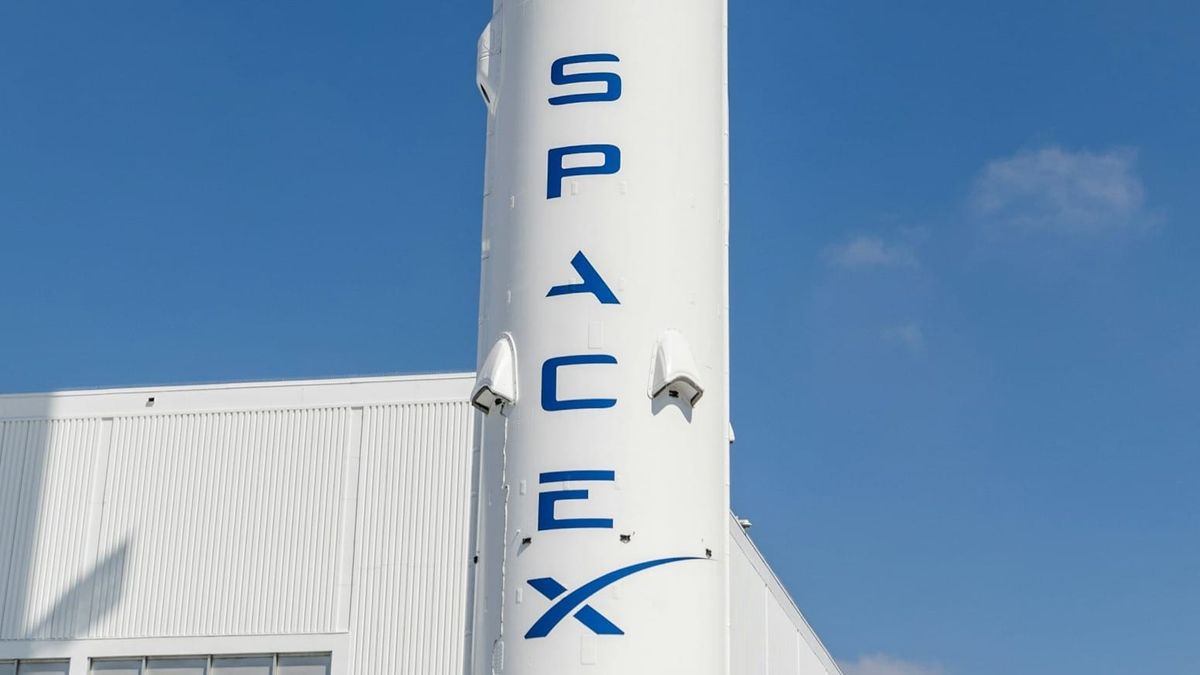
New supply and Starship timing pressure SpaceX shares
Space Exploration Technologies (SPCX) fell sharply Thursday, returning below its June IPO price as investors faced another increase in publicly tradable shares. Around 319 million shares held by early employees and investors became eligible to trade as part of the company’s staggered post-IPO lockup schedule.
The stock was recently down about 6% near $131, compared with its $135 IPO price. The selling coincided with another potential pressure point: CEO Elon Musk said the first attempt to catch Starship’s upper stage with the launch tower would probably occur “in a few months,” pushing the milestone beyond expectations for the upcoming test.
Key Points
- SpaceX stock fell about 6% and below its $135 IPO price as roughly 319 million shares held by early employees and investors became eligible to trade.
- CEO Elon Musk said a catch of Starship’s upper stage will probably occur “in a few months,” delaying a milestone associated with rapid rocket reusability.
- Larger potential supply events remain ahead, including a roughly 1.3 billion-share unlock around third-quarter earnings in early November, followed by the 180-day lockup expiration in December.
Share Unlock Adds New Supply to SpaceX Stock
Thursday’s price action put the spotlight back on SpaceX’s staggered post-IPO lockup schedule.
About 319 million shares became eligible to trade, adding stock previously held by early employees and investors to the potential public supply. The lockup schedule is expected to release about 88% of SpaceX’s 13 billion shares through 2027.
The immediate reaction stood in contrast to an earlier unlock. On Aug. 6, as many as 911.5 million shares became tradable, yet SpaceX stock rose 6% that day.
Thursday’s tranche was considerably smaller, but shares nevertheless fell below the $135 IPO price. SpaceX had traded as low as roughly $131 during the session, down about 6%.
More supply events remain on the calendar. A roughly 1.3 billion-share tranche is scheduled to unlock around the company’s third-quarter earnings in early November, followed by the 180-day lockup expiration in December. Musk’s 6.42 billion shares remain locked until June 2027.
That makes the expanding public float an ongoing part of the SPCX stock story rather than a one-day event.
Why Did SpaceX Stock Fall Below Its IPO Price?
The share unlock was not the only development weighing on investor sentiment Thursday.
Musk said a catch of Starship’s upper stage with the launch tower is probably still several months away. The 14th Starship test, expected later this month, had been expected to feature an attempt to catch the upper stage with mechanical arms.
“Looks like we will probably catch the ship with the tower in a few months,” Musk said.
SpaceX previously caught Starship’s lower stage during a 2024 test. Capturing the upper stage would represent another step toward the company’s goal of making the rocket fully and rapidly reusable.
Starship’s 13th test in July was successful, but the timing of the upper-stage catch matters because the rocket is central to several of SpaceX’s longer-term projects. SpaceX hopes to begin launching Starmind AI computing satellites as soon as 2027, and the supplied material states that the company likely needs Starship for that effort.
William Blair analyst Louie DiPalma said the shift of a few months was not consequential given SpaceX’s position in reusable rocket development. He maintained an Outperform rating without a price target.
The market reaction nevertheless showed that Starship development milestones remain capable of affecting SPCX stock. SpaceX shares were down 6.4% at $130.66 in midday trading in one of the supplied reports, compared with a 0.5% decline in the S&P 500.
What Matters Next for SpaceX?
Investors now face several distinct developments across SpaceX’s unusually broad collection of businesses.
The next Starship test is expected later this month. Progress toward full rocket reusability remains significant because reducing launch costs is connected to SpaceX’s ambitions in areas including orbital AI infrastructure.
At the same time, the company’s financial profile increasingly extends beyond rockets.
SpaceX reported $4.29 billion in second-quarter connectivity revenue, primarily from Starlink, compared with $2.56 billion from AI and $960 million from its space business. Connectivity generated $1.6 billion in operating income and was the only one of the three divisions to report an operating profit in the supplied material.
AI was the fastest-growing segment, with revenue rising 350% year over year. SpaceX spent $18.4 billion on capital expenditures during the quarter, including $15.8 billion directed toward AI compute infrastructure.
The company has also completed its $60 billion acquisition of Cursor, an AI coding company. Deutsche Bank analyst Edison Yu cited access to more than one million real-world users, enterprise adoption and the combination of Cursor with Grok and SpaceX’s compute infrastructure among the potential benefits. Yu raised his full-year EPS estimate by 11% and revenue projection by 1% while maintaining his $235 price target.
Those operating developments are unfolding alongside the near-term supply question created by SpaceX’s post-IPO lockups.
What It Means for Investors
SpaceX’s Thursday decline highlights two different forces influencing the newly public company: execution milestones and stock-market mechanics.
The 319 million-share unlock did not change SpaceX’s underlying businesses, but it increased the number of shares available for trading. The stock’s reaction was also notably different from Aug. 6, when a much larger 911.5 million-share unlock was absorbed while shares gained 6%.
That difference makes the upcoming supply calendar particularly relevant. The approximately 1.3 billion shares expected to unlock around third-quarter earnings represent a considerably larger potential addition to tradable supply, with another lockup expiration following in December.
Starship adds a separate company-specific factor. The rocket is designed to be fully reusable, and SpaceX has tied lower launch costs to broader ambitions that include space-based AI infrastructure.
Meanwhile, SpaceX does not yet trade like a conventional megacap technology stock. DataTrek analysis cited in the supplied material found only a 0.28 correlation between SpaceX and the Magnificent Seven. The stock has instead shown stronger relationships with the broader U.S. equity market and space companies such as Rocket Lab (RKLB) and AST SpaceMobile (ASTS).
That trading pattern reflects the unusual mix inside SpaceX itself. The company spans launch services, satellite connectivity and AI, leaving the market to evaluate several different businesses while the post-IPO share structure continues to evolve.
Conclusion
SpaceX’s return below its $135 IPO price came as two pressures converged: another block of previously locked shares became eligible to trade, and the timing of a closely watched Starship milestone moved further out.
The 319 million-share unlock is only one stage in a much larger release schedule. A roughly 1.3 billion-share tranche is expected around third-quarter earnings in November, followed by another lockup expiration in December.
At the same time, Starship remains an important operating focus as SpaceX works toward full rocket reusability and pursues projects including orbital AI computing.
Thursday’s move therefore brings the market’s attention back to both sides of the SpaceX story: the company’s execution across space, connectivity and AI, and the changing supply of SPCX shares following its June IPO.
FAQs
Why did SpaceX stock fall Thursday?
SpaceX stock fell as roughly 319 million shares held by early employees and investors became eligible to trade. The decline also coincided with Elon Musk saying that a catch of Starship’s upper stage with the launch tower would probably occur in a few months.
What was SpaceX’s IPO price?
SpaceX sold shares at $135 in its June IPO. The stock fell below that level Thursday, trading near $131 during the session.
How many SpaceX shares became eligible to trade?
Around 319 million SpaceX shares became eligible to trade Thursday as part of the company’s staggered post-IPO lockup schedule.
Are more SpaceX share unlocks coming?
Yes. A roughly 1.3 billion-share tranche is expected to unlock around SpaceX’s third-quarter earnings in early November, followed by the 180-day lockup expiration in December. Elon Musk’s 6.42 billion shares remain locked until June 2027.
Why is Starship important to SpaceX?
Starship is SpaceX’s fully reusable rocket designed to reduce the cost of reaching orbit. The company hopes to begin launching Starmind AI computing satellites as soon as 2027, and the supplied material states that SpaceX likely needs Starship for that effort.
This article was created with AI assistance and reviewed by an editor. For details, please refer to our Terms of Use.
Go Beyond the Market Brief with Market Edge
Follow SharperTrades’ complete approach to trading and investing, combining active trade opportunities through Block Orders, long-term research through Stock Investor, and structured market education through the Swing Trading Masterclass. Try Market Edge for $19 your first month →
Explore Research with Stock Investor
Stock Investor is SharperTrades’ platform for long-term investing research and portfolio management. Members receive research reports, portfolio updates, conviction tracking, and in-depth analysis designed to support disciplined investment decisions.
Explore Active Trading & Income Strategies
Block Orders tracks institutional activity and highlights active trade setups and price behavior across long and short opportunities.
For options-focused traders, Essential Option Income provides a structured approach to options income strategies, while Pro Option Trader offers a broader range of options strategies and trade opportunities.
Think More Clearly with SteadyCapital
SteadyCapital is SharperTrades’ decision-support system for long-term investors, built around the SteadyCapital Method™. Review investment ideas, challenge assumptions, evaluate valuation and risk, compare companies, and think through important buy, hold, add, trim, or sell decisions before you act.
Risk Disclosure
All content is provided for educational purposes only and does not constitute investment advice. Trading involves risk, and past performance is not indicative of future results. Please review our full Risk Disclosure for additional information.