Safe-Haven Rotation Pushes Apple to $5 Trillion
Apple briefly crossed a $5 trillion valuation as strong iPhone demand and limited AI infrastructure spending supported shares, even as elevated valuation, memory costs and potential price increases raised questions about future growth.

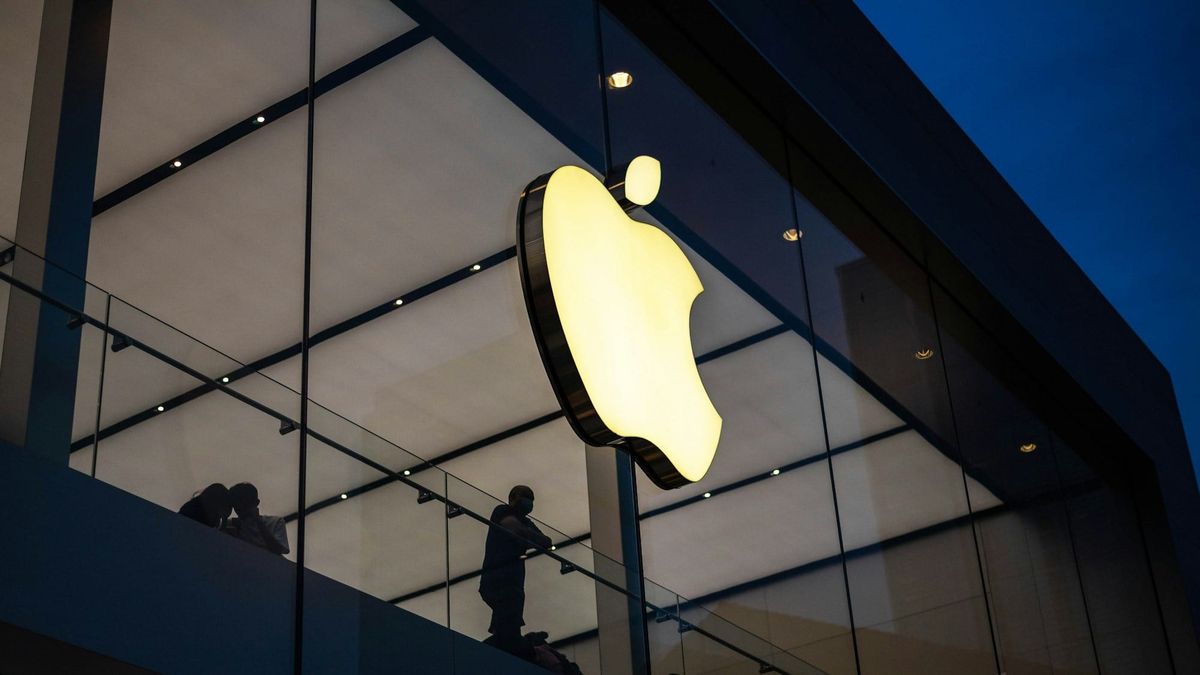
Apple Reclaims Market Leadership as AI Spending Concerns Shift
Apple (AAPL) briefly surpassed a $5 trillion market capitalization on Tuesday, becoming only the second publicly traded company to reach the milestone after Nvidia (NVDA). Shares reached an intraday high of $342.89, valuing Apple at approximately $5.036 trillion before the stock pared its gains.
The move followed a roughly 24% advance in Apple shares this year and nearly 60% over the past 12 months, supported by strong iPhone sales. Apple also benefited as investors moved away from AI-heavy stocks facing concerns about infrastructure spending, while the company's comparatively restrained approach to AI capital expenditures provided a different profile within Big Tech.
Key Points
- Apple briefly surpassed $5 trillion in market value after shares reached $342.89, extending a roughly 24% gain in 2026 and making Apple the world's largest company by market capitalization.
- Strong iPhone demand and Apple's comparatively limited AI infrastructure spending supported the rally as investors became more cautious about the cost of the AI spending race.
- Rising memory-chip costs, potential iPhone price increases and elevated valuation multiples remain central concerns as Apple prepares to report quarterly earnings and transition to incoming CEO John Ternus.
Apple's AI Spending Restraint Becomes a Market Advantage
Apple's $5 trillion milestone comes after years in which the company faced criticism for moving more slowly than its largest technology peers in artificial intelligence.
Apple introduced Apple Intelligence in 2024 but delayed important elements of the platform, including an upgraded Siri. The company subsequently reached an agreement to use Alphabet's (GOOG) Gemini models to power the voice assistant, rather than relying entirely on internally developed models.
That strategy has limited Apple's exposure to the enormous infrastructure investments reshaping the finances of other technology companies.
Apple's capital expenditures totaled $12.7 billion in fiscal 2025. By comparison, the supplied reports show Alphabet planning $205 billion in spending this year, while Microsoft (MSFT) and Amazon (AMZN) increased annual spending plans to as much as $190 billion and $145 billion, respectively.
The difference has become more significant as investors scrutinize the cash required to build AI data centers and the eventual returns from those investments.
Apple initially missed much of the rapid appreciation enjoyed by companies more directly exposed to the AI boom. Since ChatGPT was released in November 2022, Nvidia shares rose about 1,125%, Meta Platforms (META) climbed approximately 386%, and Google advanced 226%, compared with Apple's 130% increase.
More recently, however, Apple's lower exposure to AI infrastructure spending has offered insulation from some of the pressure affecting AI-focused technology companies.
That shift was visible when Apple overtook Nvidia as the world's most valuable company. Apple shares rose as investors moved toward large technology companies viewed as less exposed to the AI spending cycle, while Nvidia and other AI-linked stocks faced renewed selling pressure.
Apple's strategy does not mean it is avoiding AI. The company is expected to introduce an overhauled Siri beta alongside its first foldable iPhone and the iPhone 18 lineup later this fall. Instead, Apple has pursued AI development without matching the infrastructure spending levels of several Big Tech peers.
That distinction has become increasingly relevant to Apple's stock performance as investor attention shifts from AI adoption alone toward the cost of supporting it.
Why Did Apple Stock Reach a $5 Trillion Valuation?
Apple's rise has also been supported by demand for its core products, particularly the iPhone.
The stock has gained approximately 24% in 2026, substantially ahead of the 8% advance cited for the S&P 500. Over the past 12 months, Apple shares have risen nearly 60%.
The company kept iPhone prices unchanged last month even as it raised prices on MacBooks and iPads amid an industry-wide shortage of memory chips. Buyers increased purchases of Apple's flagship smartphone ahead of potential price increases later in the year.
Apple also introduced a new U.S. device leasing program with Klarna (KLAR) on Tuesday, providing another way for customers to access its products through monthly payments.
The Apple Upgrade program covers the iPhone, Apple Watch, Mac and iPad through Apple's physical stores, online store and app. Monthly payments begin at $17.99 for an iPhone, $11.99 for an Apple Watch or iPad, and $24.99 for a Mac.
Customers can choose one- or two-year leases for the iPhone and Apple Watch and two- or three-year terms for Mac and iPad. At the end of the lease, customers can upgrade to a newer device, purchase the existing device with a one-time payment or return it.
Existing devices can also be traded in to reduce monthly lease payments.
The program arrives as higher memory costs put pressure on hardware pricing. Apple has already raised starting prices for Macs and iPads by at least $100, with larger increases on some models, while keeping iPhone prices unchanged for now.
The leasing model changes how those costs are presented to customers by converting the purchase price into recurring monthly payments without reducing the underlying device price.
Together, strong iPhone demand, restrained AI capital spending and Apple's position as a large technology company outside the center of the recent AI spending concerns helped shares briefly reach the $5 trillion threshold.
Valuation and iPhone Pricing Put Attention on Future Growth
Apple's rapid appreciation has also pushed its valuation above historical levels.
The supplied reports show Apple's forward price-to-earnings ratio at 31.6 times earnings, compared with a 10-year average of 24.8 times. Its forward enterprise value-to-EBITDA ratio stood at 26.9 times, above a 10-year average of 18.3 times, while forward enterprise value-to-sales reached 8.8 times compared with a historical average of 6.2 times.
Another estimate placed Apple at roughly 34 times forward earnings, while the stock traded at 38 times expected earnings for the current fiscal year as of Monday's close.
Those multiples make future growth an increasingly important part of the market's valuation of Apple.
KeyBanc analyst Brandon Nispel maintained an Underweight rating and a $250 price target, arguing that investors are underestimating the potential consequences of higher iPhone prices.
His concern centers on the relationship between hardware volumes and Apple's broader ecosystem. If higher memory costs lead Apple to raise iPhone prices, weaker unit growth could reduce user growth and eventually affect Services revenue from businesses such as iCloud and Apple Music.
The concern contrasts with the recent demand strength that helped propel Apple shares higher. The company has kept iPhone prices steady so far, and product demand has remained an important driver of the stock's 2026 advance.
The next phase therefore puts attention on whether Apple can maintain product momentum while managing higher component costs and introducing additional AI capabilities.
The company is scheduled to report third-quarter earnings after Thursday's market close, with analysts expecting quarterly revenue to increase more than 15% from the prior year.
Apple is also approaching a major leadership change. CEO Tim Cook is preparing to hand control of the company to incoming CEO John Ternus on September 1.
What It Means for Investors
Apple's brief move above $5 trillion reflects a notable shift in how the market has treated its position within the AI investment cycle.
For several years, Apple's slower AI development was viewed as a disadvantage relative to companies benefiting directly from rapidly expanding AI infrastructure. More recently, the enormous spending commitments associated with that expansion have created a different comparison.
Apple has continued developing AI features while committing substantially less capital to infrastructure than several Big Tech competitors. That has limited its exposure to concerns surrounding data-center spending and cash flow while allowing the company's established hardware business to remain central to its financial profile.
At the same time, Apple's valuation shows that investors are already assigning a substantial premium to the company. Its forward valuation multiples are above their respective 10-year averages following the stock's 24% rise this year.
The interaction between iPhone demand and pricing is therefore important. Higher memory costs have already led Apple to increase prices across Macs and iPads. The company has not yet increased iPhone prices, but the possibility of future increases has created questions about whether recent volume momentum can continue.
Apple's new leasing program provides additional context. Rather than lowering device prices, the program allows customers to spread those costs across predictable monthly payments while retaining options to upgrade, purchase or return devices at the end of the term.
The $5 trillion milestone consequently brings together several parts of Apple's current market story: strong product demand, relatively restrained AI infrastructure spending, a shift in Big Tech investor sentiment, higher hardware costs and a valuation that has moved well above historical averages.
Conclusion
Apple's move above $5 trillion marked another milestone in a year in which the company has regained the position of the world's largest publicly traded company.
Shares have risen approximately 24% in 2026 and nearly 60% over the past 12 months, with strong iPhone demand supporting the advance. At the same time, Apple's decision to avoid the scale of AI infrastructure spending undertaken by several technology rivals has become increasingly relevant as investors scrutinize the cost and returns associated with data-center investment.
The company's position is not without competing pressures. Memory shortages have already increased Mac and iPad prices, potential iPhone price increases could affect unit demand, and Apple's valuation multiples stand above their longer-term averages.
The launch of Apple Upgrade adds another element by giving U.S. customers a monthly leasing option across the company's major hardware categories as device costs rise.
With quarterly earnings approaching, new AI capabilities expected alongside upcoming devices, and John Ternus preparing to succeed Tim Cook on September 1, Apple's $5 trillion valuation places greater attention on how product demand, pricing, AI development and Services growth evolve from here.
FAQs
Why did Apple reach a $5 trillion market capitalization?
Apple reached the milestone after its shares climbed roughly 24% in 2026, supported by strong iPhone demand and investor interest in its comparatively restrained AI infrastructure spending. The stock reached $342.89 intraday, valuing Apple at about $5.036 trillion.
How is Apple's AI strategy different from other Big Tech companies?
Apple has pursued AI while spending substantially less on infrastructure than several Big Tech peers. Its fiscal 2025 capital expenditures totaled $12.7 billion, while the supplied reports show much larger current spending plans at Alphabet, Microsoft and Amazon.
Why are higher memory costs important for Apple?
Higher memory-chip costs have already contributed to price increases for Macs and iPads and could eventually affect iPhone pricing. Higher iPhone prices could influence unit growth, which is one concern raised about Apple's future hardware and Services growth.
What is the Apple Upgrade leasing program?
Apple Upgrade allows eligible U.S. customers to lease iPhones, Apple Watches, Macs and iPads through Klarna. Monthly payments start at $17.99 for iPhone, $11.99 for Apple Watch or iPad, and $24.99 for Mac, with options to upgrade, purchase or return devices when leases end.
Why is Apple's valuation receiving attention?
Apple's valuation multiples have risen above their longer-term averages following the stock's 2026 rally. Its forward P/E was reported at 31.6 times compared with a 10-year average of 24.8 times, increasing attention on future growth and execution.
This article was created with AI assistance and reviewed by an editor. For details, please refer to our Terms of Use.
Explore Research with Stock Investor
Stock Investor is SharperTrades’ platform for long-term investing research and portfolio management. Members receive research reports, portfolio updates, conviction tracking, and in-depth analysis designed to support disciplined investment decisions.
Explore Additional Market Services
SharperTrades offers additional ways to stay connected to the market. Block Orders tracks institutional activity and highlights active trade setups and price behavior across long and short opportunities. For options-focused traders, Essential Option Income provides a structured approach to income strategies.
Build Your Market Knowledge
If you value the clear, explanatory approach of Market Brief, explore SharperTrades Academy, where we publish in-depth content and structured programs covering technical analysis, options, and risk management to help you better interpret market behavior.
Think More Clearly with SteadyCapital
SteadyCapital is SharperTrades' AI-powered behavioral investing app designed to help investors make better decisions. Review investment ideas, run company valuations, compare businesses, challenge your assumptions, and use the AI Coach to think more clearly before making important investment decisions.
Risk Disclosure
All content is provided for educational purposes only and does not constitute investment advice. Trading involves risk, and past performance is not indicative of future results. Please review our full Risk Disclosure for additional information.