Rivian Surges on R2 Outlook, Analyst Upgrades
Rivian (RIVN) stock jumped after reporting improved gross profit, narrowing losses, and strong 2026 delivery guidance, while analysts offered mixed views on execution risks and the upcoming R2 launch.

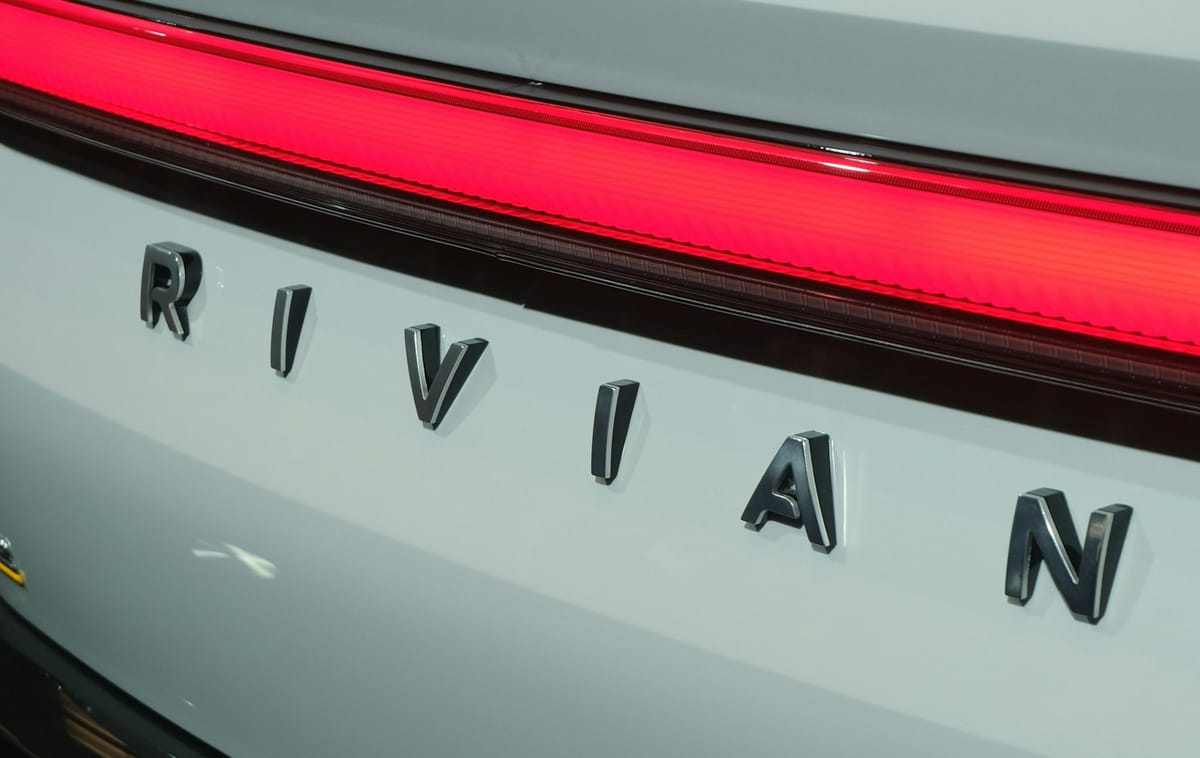
Growth expectations are colliding with execution risk.
Rivian Automotive (RIVN) reported better-than-expected quarterly results and outlined ambitious 2026 delivery targets, driving a sharp move in the stock. The electric vehicle maker also received a rating upgrade from Deutsche Bank, while UBS shifted to a more neutral stance.
The combination of improving profitability metrics and a high-stakes product launch has become central to the current market reaction.
Key Points
- Rivian posted its first annual consolidated gross profit of $144 million in 2025.
- The company expects 62,000 to 67,000 vehicle deliveries in 2026, up more than 50% at the midpoint from 2025.
- Analysts are divided, citing improved outlook but ongoing cash burn and R2 ramp risks.
Profit Milestone Marks Operational Shift
Rivian reported fourth-quarter revenue of approximately $1.29 billion, narrowly topping estimates, while posting a smaller adjusted loss than expected. Adjusted loss per share came in below forecasts, and adjusted EBITDA losses were narrower than projected.
For the full year 2025, consolidated gross profit reached $144 million, reversing a $1.2 billion gross loss the prior year. The improvement was driven by stronger software and services revenue and lower vehicle costs.
However, automotive gross profit remained negative at $432 million for the year, indicating the company continues to lose money on vehicle sales alone. Full-year net loss totaled $3.64 billion.
Software and services revenue rose sharply, supported by vehicle architecture and software development services tied to Rivian’s joint venture with Volkswagen.
What Is Driving the 2026 Delivery Outlook?
Rivian forecasts deliveries between 62,000 and 67,000 vehicles in 2026, compared with 42,247 vehicles delivered in 2025. That represents roughly 50% growth at the midpoint.
The company’s upcoming R2 midsize SUV is expected to begin customer deliveries in the second quarter of 2026. The vehicle is priced starting around $45,000 and targets a broader segment than the R1 lineup.
Management completed early manufacturing validation builds in January and plans to reveal additional details at a March 12 event. Rivian expects the R2 to become the majority of its volume over time.
Despite the growth outlook, Rivian guided for an adjusted EBITDA loss of $1.80 billion to $2.10 billion in 2026 and capital expenditures of roughly $2 billion, reflecting continued investment during the ramp.
How Are Analysts Interpreting the Update?
Deutsche Bank upgraded Rivian to Buy from Hold and raised its price target to $23 from $16. The firm cited “early signs that the company’s prospects are inflecting” and described the 2026 outlook as appearing de-risked.
The bank also noted that some competitors are slowing electric vehicle transitions and highlighted Rivian’s longer-term ambition to build a vertically integrated autonomy stack, potentially strengthening its competitive moat, particularly with Volkswagen involvement.
UBS, however, upgraded the stock only to Neutral from Sell, setting a $16 price target. The firm said the investment case depends on Rivian becoming a larger and ultimately profitable company, warning that 2026 guidance embeds both upside and execution risk.
Wedbush maintained confidence in Rivian’s long-term transformation, pointing to production streamlining and R2 ramp plans.
What It Means for Investors
The market reaction reflects optimism about Rivian’s delivery growth trajectory and the milestone of achieving consolidated gross profit. The R2 launch represents a critical scale opportunity in a cooling EV market.
At the same time, losses remain significant, and 2026 EBITDA guidance indicates continued cash burn during expansion. Supply chain complexity and execution risk around the R2 ramp remain central factors.
In the broader stock market today, Rivian’s move highlights how investors are weighing growth inflection points against profitability timelines in the electric vehicle sector.
Conclusion
Rivian’s latest earnings update combined improving gross profit metrics with aggressive delivery guidance for 2026. Analyst upgrades underscored growing confidence in the company’s trajectory, while neutral ratings emphasized execution and cash flow risks. The R2 launch now stands as the defining catalyst for Rivian’s next phase.
FAQs
Why did Rivian stock jump after earnings?
Rivian stock jumped after reporting improved quarterly results, achieving its first annual consolidated gross profit, and guiding for significant delivery growth in 2026.
What is Rivian’s 2026 delivery forecast?
Rivian expects to deliver between 62,000 and 67,000 vehicles in 2026, representing more than 50% growth at the midpoint from 2025.
Is Rivian profitable?
Rivian achieved consolidated gross profit in 2025, but it still reported a net loss of $3.64 billion and expects continued EBITDA losses in 2026.
When will the R2 SUV launch?
Rivian expects customer deliveries of the R2 midsize SUV to begin in the second quarter of 2026.
This article was created with AI assistance and reviewed by an editor. For details, please refer to our Terms of Use.
Explore Research with Stock Investor
For readers evaluating long-term market opportunities, Stock Investor maintains a curated watchlist of companies selected for ongoing relevance and research focus. These names may not be referenced in this article but are tracked to support disciplined analysis and informed decision-making.
Join the SharperTrades Community
SharperTrades offers additional ways to follow markets more closely, including the Trading Room, where members discuss market developments and review price action in real time, as well as Swing Trade Alerts, and Option Income Alert, which provide curated ideas with educational context.
Learn More in the SharperTrades Academy
If you value the clear, explanatory approach of Market Brief, explore the SharperTrades Academy, where we publish in-depth educational content and self-paced programs covering technical analysis, options, and risk management to help traders and investors better interpret market behavior.
Track Market Participation with DarkOption Flow
For deeper insight into how markets behave during major events, DarkOption Flow provides tools designed to monitor market participation and activity. It can be used alongside price action analysis and market sentiment analysis, particularly during periods of elevated volatility.
Risk Disclosure
All content is provided for educational purposes only and does not constitute investment advice. Trading involves risk, and past performance is not indicative of future results. Please review our full Risk Disclosure for additional information.