Oil Supply Stress Spreads Through the Global Economy as Fuel Costs and Inflation Rise
High oil and fuel prices are squeezing households and businesses as global supply buffers shrink. U.S. gasoline reached $4.47 a gallon, diesel has climbed above $6, and disruptions across the Middle East and Russia are increasing pressure on inflation and economic activity.

Oil’s Supply Shock Is Becoming an Economic Problem
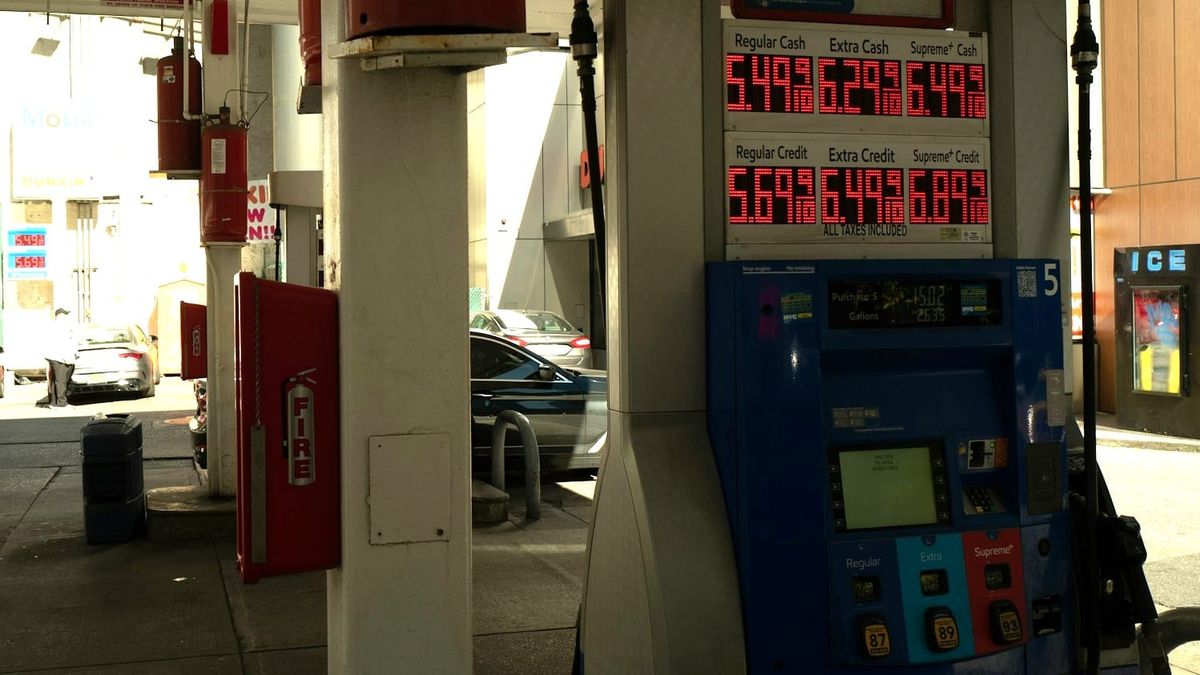
The global oil market is showing signs of strain even as crude futures have pulled back in recent sessions. U.S. gasoline reached $4.47 a gallon on Friday, up 17 cents in one week, while diesel prices have climbed to record levels above $6 a gallon.
The pressure extends well beyond U.S. consumers. Supply disruptions in the Middle East and Russia, falling inventories, reduced strategic reserves and renewed Chinese demand are tightening physical energy markets. The latest escalation has also reached Saudi Arabia, where authorities said they intercepted a Houthi ballistic missile targeting Riyadh and thwarted attempted attacks on infrastructure in Yanbu, where a key Saudi pipeline terminates.
Key Points
- U.S. gasoline reached $4.47 a gallon Friday, while diesel has risen above $6 as crude and refined-product supplies tighten.
- The U.S. Strategic Petroleum Reserve has fallen to 285 million barrels, while disruptions in Saudi Arabia, the Strait of Hormuz and Russia have reduced the market’s ability to absorb additional shocks.
- Higher energy costs are reaching transportation, construction and household budgets while adding to inflation pressure as the Federal Reserve raises interest rates.
Why Is the Global Oil Market Under So Much Pressure?
The headline futures market does not fully capture the stress developing in physical oil markets. Brent spot crude reached $137 a barrel Friday, $33 above the Brent futures price. Until recently, spot and futures prices had generally moved within about a dollar of each other.
That gap matters because spot prices reflect barrels needed for near-term delivery. A sharp premium can signal that buyers seeking oil immediately are facing tighter conditions than futures prices suggest.
One source of pressure is the loss of supply buffers that helped the market absorb the initial shock from the Iran conflict. Countries released strategic reserves, commercial inventories were drawn down and restrictions on sanctioned crude stored at sea were eased. Chevron (CVX) CEO Mike Wirth said those mechanisms have largely played out.
The U.S. Strategic Petroleum Reserve has fallen to 285 million barrels from a capacity of more than 700 million. Only about another 30 million barrels can be released before congressional limits make further depletion legally more complicated.
Saudi Arabia has become another pressure point. An attack damaged its East-West pipeline, which had helped bypass the Strait of Hormuz, putting an estimated 2.5 million barrels per day in limbo. Europe normally receives roughly 600,000 to 800,000 barrels of the approximately 14 million barrels it consumes each day from Saudi Arabia.
Security concerns have continued. Saudi Arabia said it intercepted a Houthi ballistic missile aimed at Riyadh and thwarted attempted attacks on civilian infrastructure in Yanbu and other locations. The Houthis separately claimed attacks on Saudi Aramco facilities, although those claims were not independently verified.
Russia has added another layer of disruption. From March through August, estimates cited in the supplied material indicate an average loss of about 770,000 barrels per day of diesel supply from the Middle East compared with the same period in 2025, versus roughly 350,000 barrels per day of lost Russian supply. In July and August alone, however, Russian diesel shipments fell by 615,000 barrels per day from a year earlier.
The result is a market with less room for additional disruptions.
Higher Oil Prices Are Moving From Energy Markets Into the Economy
The economic impact is becoming increasingly visible at the fuel pump. Americans have spent approximately $97 billion more on fuel since the Iran conflict began in late February, equal to roughly $740 per household.
Gasoline directly reduces household purchasing power because money spent filling a vehicle cannot be spent elsewhere. Diesel has an even broader economic reach because it powers trucking, agriculture, construction and freight transportation. Higher diesel prices increase the cost of moving goods throughout the economy.
Those pressures are also spreading internationally.
Construction provides one example. Oil is an input in plastics and other materials used extensively in housing. Construction-product inflation in Britain was already 6% in the year through July, and Noble Francis of the Construction Products Association said it could reach double-digit percentages if oil remains above $100 a barrel and industrial energy costs stay elevated.
The impact can also arrive with a delay because manufacturers often operate under longer-term contracts. Construction product prices in July 2026 were already 50% higher than in January 2020.
China represents another important part of the global equation. The country had relied heavily on its estimated 1.2 billion barrels of inventories after the conflict began and has used an estimated 147 million barrels. More recently, Chinese buyers have returned to international markets, increasing competition for available supply.
Shanghai crude futures exceeded $130 a barrel earlier in the week before trading around $115 Friday, another indication of pressure outside U.S. and European energy markets.
How Are Oil Prices Complicating the Inflation and Interest-Rate Outlook?
Higher energy costs are arriving as inflation remains elevated. The consumer price index was running 3.4% above year-earlier levels in the supplied data, while the Federal Reserve raised interest rates last week.
That creates an unusually difficult economic combination. Higher interest rates can restrain borrowing and spending, but they cannot directly increase the supply of crude oil, diesel or gasoline.
Energy inflation can meanwhile move through several layers of the economy. Higher diesel costs increase freight expenses. Transportation costs affect distributors and manufacturers. Businesses facing those higher costs may pass some of them through to customers.
Wall Street has consequently been paying close attention to how persistent energy inflation could influence monetary policy. Investors had priced in more than a 50% probability of another Federal Reserve rate increase in October, while Fed officials projected one additional increase this year.
The pressure is occurring even though the oil market has absorbed a remarkable supply disruption without an even larger sustained crude-price increase.
Combined crude and refined-product inventories have fallen by roughly 555 million barrels during the conflict. But demand was approximately 4.4 million barrels per day below the comparable period last year, helping offset the supply loss. Brent has averaged $94 a barrel since the conflict began.
JPMorgan Chase (JPM) said significant reserves remain in China, Europe, Japan and South Korea. Those inventories provide additional capacity to absorb disruption, but they also represent finite buffers.
The bank said the uncertainty has become significant enough that its commodities team no longer has a baseline scenario for the conflict's effect on oil. That uncertainty reflects how many variables now influence the market simultaneously: Middle East supply disruptions, Russian refinery outages, strategic reserves, weaker consumption and changes in Chinese demand.
What It Means for Investors
Oil is increasingly functioning as more than an energy-market story. Its effects are moving through household spending, transportation costs, industrial production, construction, inflation, interest rates and broader market sentiment.
The impact also differs sharply by industry. Higher crude prices can increase upstream revenue and cash flow for producers such as Chevron and Exxon Mobil (XOM), while airlines, transportation companies, retailers, manufacturers and other energy-intensive businesses face higher operating costs.
The physical market is especially important to watch because futures prices alone may not show the full degree of supply stress. Brent spot crude trading at a substantial premium to futures indicates that near-term barrels are being valued very differently from future supply.
At the same time, weaker consumption has helped keep the system in balance. That means the economic cost of the shortage is not limited to higher prices: part of the adjustment has occurred through reduced demand.
Conclusion
The global oil shock is increasingly reaching the broader economy. U.S. gasoline has climbed to $4.47 a gallon, diesel has moved above $6, strategic reserves have declined and physical crude markets are showing growing signs of tightness.
Supply disruptions across the Middle East and Russia are colliding with diminished inventories and renewed Chinese demand. Meanwhile, households and businesses are absorbing higher transportation and energy expenses at a time when inflation is already elevated and interest rates are rising.
The central market issue is therefore no longer simply where crude futures trade on a given day. It is how much capacity remains across inventories, strategic reserves and global consumption to absorb another disruption without creating additional pressure throughout the economy.
FAQs
Why are oil prices under pressure?
Oil supplies have been disrupted by the Iran conflict, attacks on energy infrastructure and reduced Russian refined-product exports. Strategic and commercial inventories have also been drawn down, leaving the market with smaller buffers against additional disruptions.
Why are diesel prices so important to the economy?
Diesel powers trucking, agriculture, construction and freight transportation. When diesel becomes more expensive, the cost of moving goods rises and can spread through supply chains into prices paid by businesses and consumers.
How are higher oil prices affecting U.S. households?
U.S. gasoline reached $4.47 a gallon Friday. Americans have spent approximately $97 billion more on fuel since the Iran conflict began in late February, equal to roughly $740 per household.
Why can higher oil prices make inflation harder to control?
Higher fuel and transportation costs can increase expenses across the economy. Higher interest rates can reduce demand, but they do not directly increase oil or fuel supplies, making an energy-driven inflation shock more difficult to address through monetary policy alone.
Is the oil supply problem limited to the United States?
No. Europe faces tighter access to Saudi crude, China has drawn down oil inventories and returned to international markets, and disruptions to Middle Eastern and Russian supplies have affected global crude and refined-product markets.
This article was created with AI assistance and reviewed by an editor. For details, please refer to our Terms of Use.
Go Beyond the Market Brief with Market Edge
Follow SharperTrades’ complete approach to trading and investing, combining active trade opportunities through Block Orders, long-term research through Stock Investor, and structured market education through the Swing Trading Masterclass. Try Market Edge for $19 your first month →
Explore Research with Stock Investor
Stock Investor is SharperTrades’ platform for long-term investing research and portfolio management. Members receive research reports, portfolio updates, conviction tracking, and in-depth analysis designed to support disciplined investment decisions.
Explore Active Trading & Income Strategies
Block Orders tracks institutional activity and highlights active trade setups and price behavior across long and short opportunities.
For options-focused traders, Essential Option Income provides a structured approach to options income strategies, while Pro Option Trader offers a broader range of options strategies and trade opportunities.
Think More Clearly with SteadyCapital
SteadyCapital is SharperTrades’ decision-support system for long-term investors, built around the SteadyCapital Method™. Review investment ideas, challenge assumptions, evaluate valuation and risk, compare companies, and think through important buy, hold, add, trim, or sell decisions before you act.
Risk Disclosure
All content is provided for educational purposes only and does not constitute investment advice. Trading involves risk, and past performance is not indicative of future results. Please review our full Risk Disclosure for additional information.