Nvidia Scandal Complicates U.S.-China Chip Diplomacy as Washington Weighs Tighter Controls
Nvidia’s controversy threatens to weaken Jensen Huang’s influence over U.S.-China technology policy as Congress considers tighter AI chip export controls and Washington prepares for further trade negotiations with Beijing.

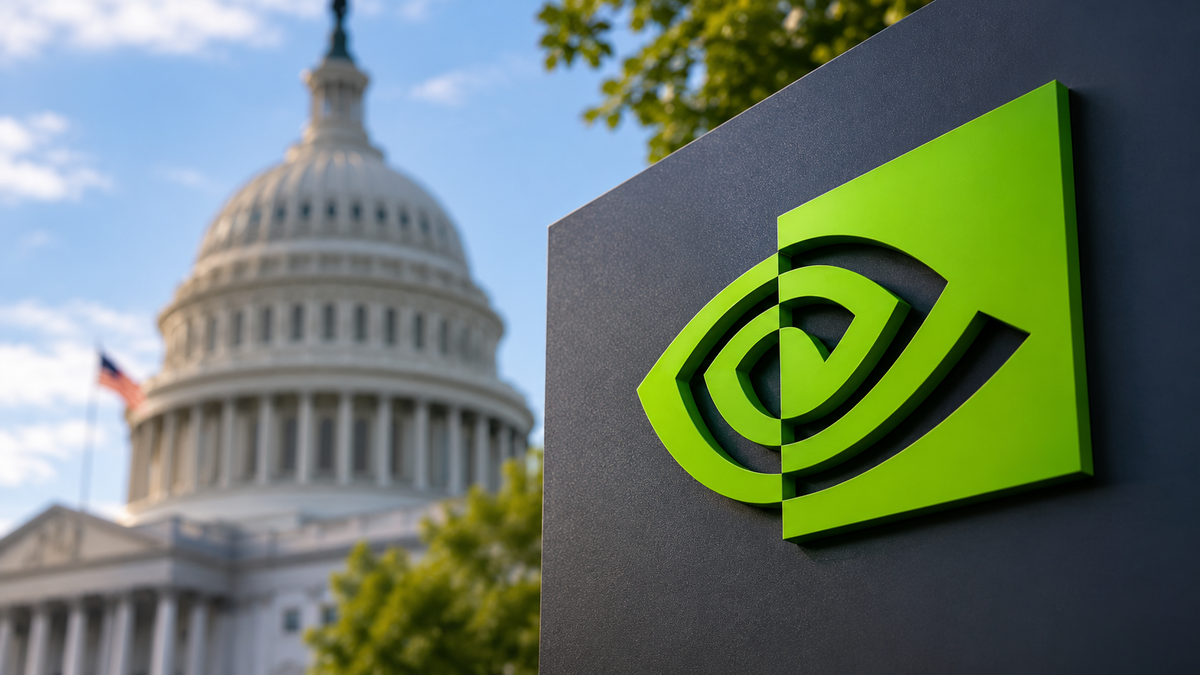
Nvidia’s China Strategy Faces a Changing Political Landscape
Nvidia (NVDA) faces a new challenge in its efforts to expand access to China’s artificial intelligence market. The investigation involving CEO Jensen Huang has intensified scrutiny of the company’s relationships with Asian customers and its longstanding campaign to ease U.S. restrictions on advanced semiconductor exports. The timing is particularly sensitive: Congress is considering additional technology restrictions following the midterm elections, while Washington and Beijing are trying to maintain a fragile trade truce. The central question for Nvidia is whether its influence over U.S.-China chip policy will diminish as national security concerns gain political momentum.
Key Points
- Political influence: The controversy could weaken Jensen Huang’s efforts to persuade Washington to ease restrictions on advanced AI chip exports to China.
- Export controls: Lawmakers are considering tighter technology restrictions, with the investigation adding urgency to concerns about Chinese access to American semiconductors.
- Trade diplomacy: The developments coincide with an extension of the U.S.-China trade truce and preparations for further discussions between Presidents Trump and Xi.
Huang’s China Strategy Faces Growing Resistance in Washington
Jensen Huang has become one of the technology industry’s most prominent advocates for maintaining commercial ties between the United States and China. The Nvidia CEO has repeatedly argued that limiting Chinese access to American AI chips could accelerate Beijing’s efforts to develop domestic alternatives, potentially weakening the long-term competitive position of U.S. semiconductor companies. That argument has helped shape Nvidia’s approach to Washington, where Huang has maintained close ties with President Donald Trump while lobbying for permission to sell certain advanced processors to Chinese customers.
However, the controversy surrounding Huang’s relationship with a former executive suspected by U.S. intelligence officials of Chinese intelligence ties has complicated those efforts. The investigation does not establish that Huang knowingly participated in espionage or disclosed confidential information, and Nvidia’s board has stated that it has no reason to believe national security or company secrets were compromised. Nevertheless, geopolitical analysts believe the revelations could reduce Washington’s willingness to support Nvidia’s position on export controls.
Federal scrutiny has also intensified. President Donald Trump confirmed Monday that the FBI is examining Huang's relationship with Alice Huang, a former Megaspeed executive suspected by U.S. officials of Chinese intelligence ties. Trump publicly expressed confidence that Huang had been unaware of her alleged intelligence connections. The FBI inquiry adds a separate dimension to Nvidia's internal investigation, although no findings of wrongdoing by Huang have been established.
Michael Hirson of 22V Research described Huang’s efforts to persuade the White House and technology policy organizations to adopt a more permissive approach to China. Those efforts had already frustrated lawmakers and administration officials who favor tighter restrictions. The political environment has since shifted further, as Democrats gained control of Congress in the midterm elections, increasing expectations of additional scrutiny of the technology sector and the administration’s relationships with major corporate leaders. Kurt Tong, a former U.S. diplomat and managing partner at The Asia Group, indicated that the Nvidia controversy could give additional momentum to technology restrictions in Washington.
The significance extends beyond Huang’s personal standing. Nvidia has been an influential participant in the broader debate over whether U.S. technological leadership is better protected through continued commercial engagement or tighter limits on Chinese access to advanced computing.
Could Congress Tighten Restrictions on Nvidia’s AI Chip Exports?
Megaspeed's business relationships have also drawn attention to potential gaps in U.S. semiconductor export controls. According to reporting cited by The Wall Street Journal, the Singapore-based company has provided Nvidia-powered computing capacity to Chinese customers, including Alibaba. This raises a distinction between physically exporting restricted chips to China and allowing Chinese companies to access computing infrastructure located elsewhere.
U.S. authorities have separately investigated allegations that Megaspeed helped restricted chips reach China. Those allegations remain unresolved, and Megaspeed has denied wrongdoing, stating that investigations found no evidence of illegal chip transfers or other unlawful activity.
The controversy could also increase pressure on the Commerce Department and its Bureau of Industry and Security to examine how export restrictions are enforced. Geopolitical consultants believe Congress could consider tougher controls through the National Defense Authorization Act, including additional oversight of semiconductor exports and international data-center networks. However, no new restrictions resulting from the investigation have been confirmed.
However, significant constraints remain. Nvidia’s importance to the American technology sector gives the company considerable economic influence, and the Trump administration has emphasized the role of U.S. technology companies in maintaining global AI leadership. China’s control over critical minerals creates another complication for Washington, limiting the scope of potential trade pressure. For now, additional restrictions remain a possibility rather than a confirmed policy change.
U.S.-China Trade Talks Add Another Layer of Uncertainty
The Nvidia controversy comes as Washington and Beijing attempt to stabilize their broader economic relationship. China announced Monday that it would extend several elements of its trade truce with the United States by two months, preserving temporary suspensions affecting tariffs, critical-mineral export controls, and measures targeting selected American companies. The extension provides additional negotiating time ahead of an expected meeting between Trump and Chinese President Xi Jinping at the APEC summit in Shenzhen.
Yet the semiconductor dispute remains separate from many of the traditional trade issues under negotiation. Washington has sought greater Chinese cooperation on critical-mineral exports and agricultural purchases, while Beijing has pushed for stronger assurances concerning American trade restrictions. Advanced AI technology adds a national security dimension that makes compromise more complicated.
At the same time, China has continued encouraging domestic AI companies to rely more heavily on Chinese semiconductor suppliers. Barron’s reported that hundreds of thousands of Nvidia chips previously approved for Chinese customers remained in Hong Kong, illustrating that regulatory authorization alone does not guarantee demand from Beijing. Nvidia thus faces competing pressures: restrictions imposed by Washington and Beijing’s efforts to reduce dependence on American technology.
What It Means for Investors
For Nvidia shareholders, the China-policy implications are distinct from the company’s immediate financial performance. Nvidia has already excluded Chinese data-center chip sales from its financial guidance, so tighter restrictions would not necessarily reduce the revenue expectations the company currently communicates.
The broader concern involves Nvidia’s long-term access to international markets and its ability to maintain commercial relationships with customers operating across Asia. Additional scrutiny of regional data-center operators could complicate sales channels even outside mainland China, particularly where authorities suspect that restricted technology may be reaching prohibited destinations.
Political influence is another consideration. Huang has played an unusually prominent role in shaping the public debate over American semiconductor exports, and if his ability to advocate for looser restrictions diminishes, Nvidia could face a less favorable policy environment regardless of whether the company’s underlying AI demand changes. The controversy has not established a deterioration in Nvidia’s core technology position or confirmed any compromise of proprietary information. Instead, it has introduced additional uncertainty into the regulatory environment surrounding one of the company’s most strategically important international markets.
Conclusion
The Nvidia controversy is becoming part of a larger debate over the future of U.S.-China technology relations. The trade-truce extension offers some diplomatic continuity, but it does not resolve the competing priorities surrounding advanced AI technology. Congressional scrutiny, decisions by U.S. regulators, and whether Washington’s approach to semiconductor exports becomes more restrictive will determine what comes next, and the outcome could shape Nvidia’s access to China well beyond the immediate controversy surrounding its chief executive.
FAQs
How could the Jensen Huang controversy affect Nvidia’s China strategy?
The controversy could weaken Huang’s influence in Washington, where he has advocated for easing restrictions on advanced AI chip exports to China. Lawmakers are considering tighter controls, although no new restrictions directly resulting from the investigation have been confirmed.
Why does the U.S. restrict Nvidia chip exports to China?
The United States restricts exports of certain advanced AI semiconductors because of concerns that the technology could strengthen China’s military and artificial intelligence capabilities.
Could Nvidia lose additional revenue from China?
Additional restrictions could limit future business opportunities, but Nvidia already excludes Chinese data-center chip sales from its financial guidance. The reporting does not establish a specific additional revenue loss resulting from the controversy.
How does the U.S.-China trade truce relate to Nvidia?
The trade truce temporarily suspends several tariffs and trade restrictions while both governments continue negotiations. However, the dispute over advanced AI chip exports remains a separate national security issue.
What developments should Nvidia investors watch next?
Important developments include the November 18 congressional briefing, potential changes to U.S. semiconductor export controls, further trade discussions between Washington and Beijing, and any additional scrutiny of Nvidia’s Asian customer relationships.
This article was created with AI assistance and reviewed by an editor. For details, please refer to our Terms of Use.
Go Beyond the Market Brief with Market Edge
Follow SharperTrades’ complete approach to trading and investing, combining active trade opportunities through Block Orders, long-term research through Stock Investor, and structured market education through the Swing Trading Masterclass. Try Market Edge for $19 your first month →
Explore Research with Stock Investor
Stock Investor is SharperTrades’ platform for long-term investing research and portfolio management. Members receive research reports, portfolio updates, conviction tracking, and in-depth analysis designed to support disciplined investment decisions.
Explore Active Trading & Income Strategies
Block Orders tracks institutional activity and highlights active trade setups and price behavior across long and short opportunities.
For options-focused traders, Essential Option Income provides a structured approach to options income strategies, while Pro Option Trader offers a broader range of options strategies and trade opportunities.
Think More Clearly with SteadyCapital
SteadyCapital is SharperTrades’ decision-support system for long-term investors, built around the SteadyCapital Method™. Review investment ideas, challenge assumptions, evaluate valuation and risk, compare companies, and think through important buy, hold, add, trim, or sell decisions before you act.
Risk Disclosure
All content is provided for educational purposes only and does not constitute investment advice. Trading involves risk, and past performance is not indicative of future results. Please review our full Risk Disclosure for additional information.