Nvidia Board Investigation Raises Governance and National Security Questions
Nvidia's board has launched an independent investigation following reports that CEO Jensen Huang was targeted by a suspected Chinese intelligence operation. The company says it has no reason to believe corporate secrets or national security were compromised.

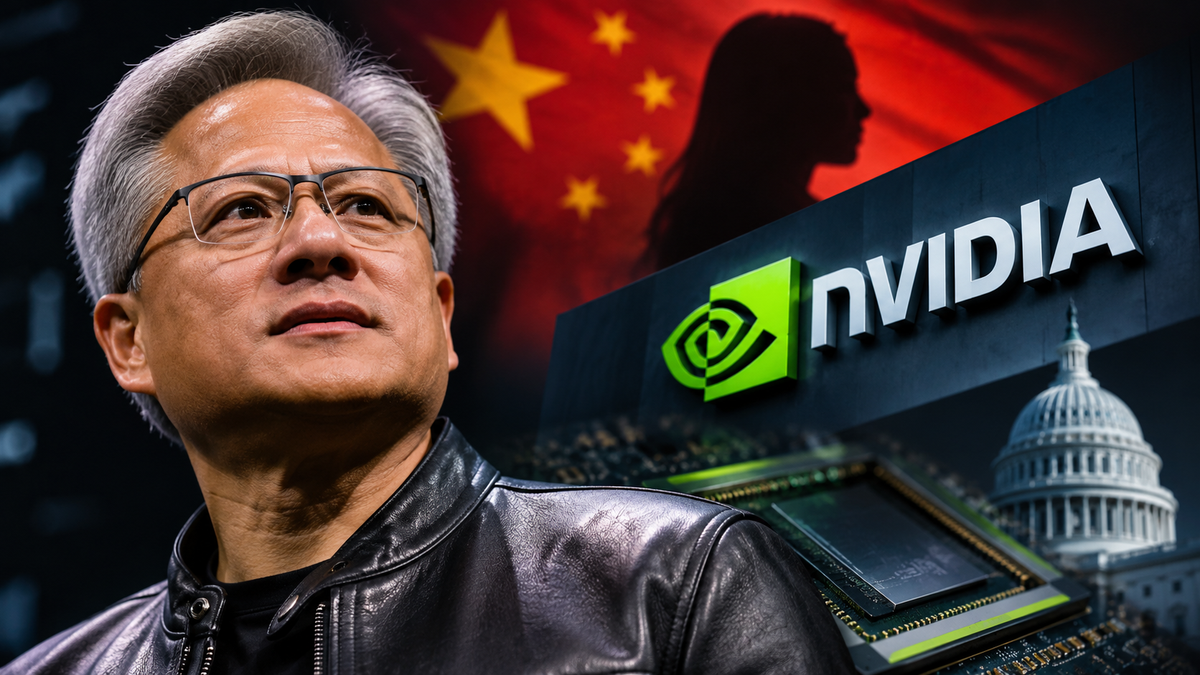
Nvidia Faces New Scrutiny Over CEO's Reported Intelligence Exposure
Nvidia (NVDA) announced Sunday, November 8, that its board of directors is launching an independent investigation following reports that CEO Jensen Huang was the target of a foreign intelligence effort involving a former executive at one of the company's customers.
The announcement follows Huang's acknowledgment of a personal relationship with Alice Huang, a former executive at Singapore-based Megaspeed International whom U.S. intelligence officials reportedly suspected of sharing information with the Chinese government. Nvidia's board emphasized that it currently has no reason to believe company secrets or national security were compromised and expressed confidence in Huang's leadership.
Key Points
- Independent investigation announced: Nvidia's board will examine reports that CEO Jensen Huang was targeted by a foreign intelligence effort, with independent directors and outside legal counsel overseeing the review.
- No confirmed security breach: The board says it has no reason to believe corporate secrets or national security were compromised and continues to support Huang's leadership.
- China chip policy adds significance: The investigation comes as Nvidia advocates for broader access to international markets, including China, amid U.S. restrictions on advanced AI semiconductor exports.
Nvidia Board Launches Independent Review Following Intelligence Reports
Nvidia's board announced the investigation after reports emerged concerning Huang's relationship with Alice Huang, also known as Huang Le, a former executive at Megaspeed International. According to reporting from The Wall Street Journal, U.S. officials concluded last year that Alice Huang had been sharing information with the Chinese government while working with Nvidia on data-center development in Asia. The allegations concern Alice Huang's reported activities and possible intelligence connections. They do not establish that Jensen Huang knowingly participated in espionage or disclosed confidential information. The two individuals are not related.
In an internal message to employees Sunday, Jensen Huang acknowledged having an affair and apologized to his family, colleagues, board members and shareholders. He also accepted responsibility for falling short of his obligations to the company.
The board followed with a formal response. Independent directors, assisted by outside legal counsel, will oversee an investigation examining the available information surrounding the reported foreign intelligence effort. The board stated that it has no reason to believe Nvidia's confidential information or national security was compromised, and it expressed confidence in Huang and the company's leadership team. Nvidia confirmed that Huang supports the investigation and has committed to cooperating, and a company spokesperson said he intends to continue serving as chief executive without interruption. The investigation therefore represents a governance and security review rather than an announced leadership transition.
Why Does the Investigation Raise National Security Questions?
The significance of the investigation extends beyond the reported personal relationship because of Nvidia's position in the global semiconductor industry. The company is a major supplier of advanced graphics processing units used to train and operate artificial intelligence systems, and its technology has become central to competition between the United States and China over access to advanced computing capabilities. Washington has imposed restrictions on exports of certain high-performance AI chips to China, citing national security concerns. Huang has advocated for allowing greater access to international markets, including the sale of advanced computing technology to Chinese customers, a position that has attracted scrutiny from policymakers who argue the restrictions are necessary to protect sensitive technology.
The reported intelligence concerns have introduced another dimension to that debate. According to the supplied reporting, U.S. intelligence officials suspected Alice Huang of acting as an intelligence asset while working at a company involved in Nvidia-related data-center projects. The reports also indicate that U.S. officials believed Jensen Huang was unaware of her alleged intelligence connections, although some officials reportedly questioned that assessment. China's Ministry of Foreign Affairs has denied the espionage allegations. Nvidia previously described the interactions between Huang and Alice Huang as not unusual and stated that it does not share classified information with customers. These differing statements underscore the distinction between reported intelligence suspicions and verified findings.
The board's investigation is intended to examine the available evidence and determine whether any corporate or security concerns require further action. The matter also arrives at a sensitive point in Nvidia's relationship with U.S. policymakers, as Huang has maintained close contact with the Trump administration while advocating for policies that would allow the company to compete more broadly in international semiconductor markets. The outcome could therefore become relevant to discussions surrounding corporate governance, information security and export policy, although no policy changes have been announced in connection with the review.
What Happens Next for Nvidia and Its Leadership?
The immediate focus is the independent investigation and whether it identifies any evidence of compromised information or other corporate concerns. Nvidia has not announced a timetable for completing the review. The board has stated that the inquiry will examine all available information, while Huang has committed to cooperating.
Separately, the supplied reporting indicates that congressional scrutiny may increase, with Huang expected to appear before lawmakers and a November 11 deadline referenced in the coverage. The precise scope and outcome of any congressional proceedings remain unclear.
The company's commercial importance extends well beyond semiconductor sales. Nvidia has become a central participant in the global AI infrastructure expansion, supplying processors and other computing hardware to major technology businesses, and with a market capitalization of approximately $4.5 trillion, its leadership and corporate governance are closely watched by investors and policymakers. However, the reporting does not establish any disruption to Nvidia's operations, customer relationships or financial outlook resulting from the investigation, nor does it identify a confirmed disclosure of proprietary technology or classified information.
The timing also matters for interpreting Nvidia stock performance. The board announced the investigation Sunday, November 8, outside regular U.S. stock-market trading hours. Consequently, the previously reported share-price movements cannot be attributed to the investigation. The next developments will depend on findings from the independent review, additional disclosures from the company and any subsequent government response.
What It Means for Investors
The investigation introduces a governance issue involving the company's chief executive at a time when semiconductor technology remains central to U.S.-China relations. The distinction between allegations and established findings is particularly important. The available reporting describes intelligence suspicions involving a former executive at an Nvidia customer, but it does not establish that Jensen Huang knowingly participated in espionage or that Nvidia's confidential information was compromised.
For shareholders, the relevant developments include the scope and findings of the board's review, any regulatory or congressional response, and whether the matter produces changes in corporate governance or business operations. The available information does not establish a financial impact on Nvidia or a market reaction to Sunday's announcement.
Conclusion
Nvidia's decision to launch an independent investigation marks a significant governance development for one of the world's most prominent semiconductor companies. Although Huang has acknowledged a personal relationship, the allegations concerning intelligence activity remain separate from any established finding of wrongdoing by the Nvidia CEO. The board continues to support his leadership, and the investigation's findings will provide the next important evidence for assessing the implications for Nvidia, its shareholders and the broader debate over advanced semiconductor exports.
FAQs
Why is Nvidia investigating CEO Jensen Huang?
Nvidia's board launched an independent investigation following reports that Jensen Huang was targeted by a foreign intelligence effort involving a former executive at an Nvidia customer. Independent directors and outside legal counsel will oversee the review.
Has Nvidia confirmed that company secrets were compromised?
No. Nvidia's board stated that it has no reason to believe corporate secrets or national security were compromised. The independent investigation will examine the available information.
Who is Alice Huang, and what is her connection to Nvidia?
Alice Huang, also known as Huang Le, is a former executive at Singapore-based Megaspeed International, an Nvidia customer. U.S. intelligence officials reportedly suspected her of sharing information with the Chinese government. Those allegations have not been established as findings of Nvidia's investigation.
Is Jensen Huang stepping down as Nvidia CEO?
No leadership change has been announced. Nvidia's board expressed confidence in Jensen Huang, and the company stated that he intends to continue serving as CEO while cooperating with the investigation.
How has Nvidia stock reacted to the investigation?
The investigation was announced Sunday, November 8, outside regular U.S. stock-market trading hours. The supplied reporting does not establish a market reaction to the announcement.
This article was created with AI assistance and reviewed by an editor. For details, please refer to our Terms of Use.
Go Beyond the Market Brief with Market Edge
Follow SharperTrades’ complete approach to trading and investing, combining active trade opportunities through Block Orders, long-term research through Stock Investor, and structured market education through the Swing Trading Masterclass. Try Market Edge for $19 your first month →
Explore Research with Stock Investor
Stock Investor is SharperTrades’ platform for long-term investing research and portfolio management. Members receive research reports, portfolio updates, conviction tracking, and in-depth analysis designed to support disciplined investment decisions.
Explore Active Trading & Income Strategies
Block Orders tracks institutional activity and highlights active trade setups and price behavior across long and short opportunities.
For options-focused traders, Essential Option Income provides a structured approach to options income strategies, while Pro Option Trader offers a broader range of options strategies and trade opportunities.
Think More Clearly with SteadyCapital
SteadyCapital is SharperTrades’ decision-support system for long-term investors, built around the SteadyCapital Method™. Review investment ideas, challenge assumptions, evaluate valuation and risk, compare companies, and think through important buy, hold, add, trim, or sell decisions before you act.
Risk Disclosure
All content is provided for educational purposes only and does not constitute investment advice. Trading involves risk, and past performance is not indicative of future results. Please review our full Risk Disclosure for additional information.