Northrop Grumman’s Record Backlog and Stronger Outlook Drive Defense Stock Rebound
Northrop Grumman shares rallied after stronger earnings, a record $110 billion backlog, and higher profit guidance. Demand for military aircraft, missiles, and space systems supports growth despite uncertainty surrounding U.S. defense spending.

Strong Defense Demand Meets a Market Concerned About Government Spending
Northrop Grumman (NOC) shares surged approximately 5% on Tuesday, October 20, after the aerospace and defense contractor reported stronger-than-expected third-quarter earnings, raised its 2026 profit outlook, and outlined continued growth expectations for 2027.
The rally followed a difficult period for defense stocks, pressured by rising interest rates, inflation concerns, and uncertainty surrounding future military budgets. Northrop's results offered evidence that demand for major defense programs remains strong even as investors reassess the sector's outlook ahead of the November U.S. midterm elections.
Key Points
- Record defense demand: Northrop Grumman's backlog reached $110 billion as new contracts exceeded quarterly revenue, supporting visibility into future business.
- Profitability and cash flow improve: Third-quarter earnings exceeded expectations, with growth across all four operating divisions and stronger cash generation.
- Guidance rises despite policy uncertainty: Management increased its 2026 earnings outlook and projected continued growth in 2027, while military spending decisions remain an important market concern.
Northrop Grumman Reports Stronger Earnings and Record Orders
Northrop Grumman reported third-quarter earnings of $7.89 per share, exceeding Wall Street expectations of approximately $7.19. Revenue increased 7% from a year earlier to $11.1 billion, broadly matching analyst forecasts.
The company also reported higher operating income, reflecting increased activity across its aerospace, defense, mission, and space businesses.
However, one of the most significant developments was the continued expansion of its order backlog.
Northrop secured more than $16 billion in new contract awards during the quarter, lifting its total backlog to a record $110 billion, approximately 20% above the prior-year level.
Its book-to-bill ratio reached 1.5, meaning the company received approximately $1.50 in new orders for every dollar of quarterly revenue.
For a defense contractor operating large, multiyear programs, this measure provides insight into future production requirements and the durability of customer demand.
Military Aircraft and Missile Programs Lead Growth
Aeronautics Systems delivered the strongest revenue expansion, with sales increasing 14% as production and sustainment activity accelerated across several major aircraft programs.
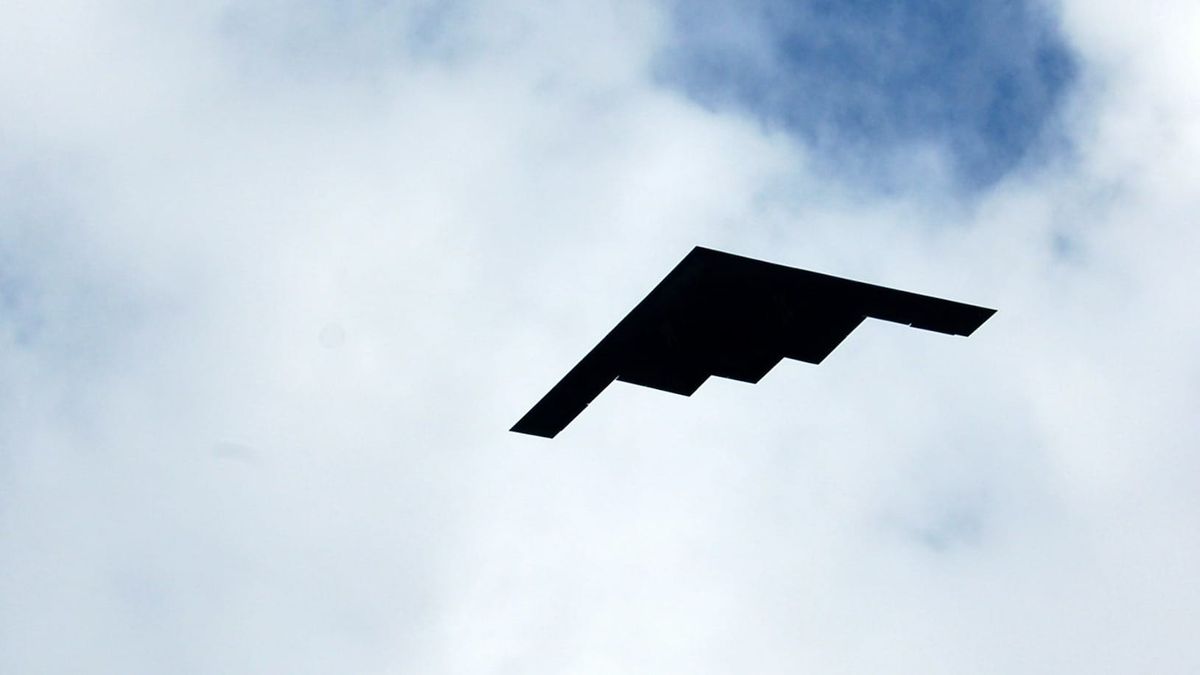
Higher volumes on the F-35 fighter aircraft, increased B-21 Raider bomber activity, and additional B-2 sustainment work contributed to the division's performance.
Defense Systems also recorded double-digit sales growth, supported by the Sentinel intercontinental ballistic missile program and tactical solid rocket motor production.
Mission Systems and Space Systems reported more modest increases, driven by radar, marine systems, national security space programs, and missile defense activities.
The results indicate that Northrop's growth is not limited to a single defense program, although major strategic platforms remain central to its longer-term outlook.
Cash Generation Strengthens
Adjusted free cash flow increased more than 40% from the prior year to approximately $1.8 billion.
The improvement reflected stronger working-capital performance and proceeds from the sale of a B-21 test asset.
Working capital refers to the cash tied up in everyday operations, including inventory, receivables, and payments to suppliers. Better management of these items can improve cash generation without requiring equivalent increases in reported earnings.
The asset sale also contributed to the quarterly result, making it important to distinguish recurring operating cash generation from individual transactions.
Why Did Northrop Grumman Stock Rally Despite Defense Sector Weakness?
Northrop's earnings announcement arrived after a substantial decline in defense stocks.
Before Tuesday's session, the company's shares had fallen approximately 10% in 2026 and roughly 30% since the start of the Iran war in late February.
The broader aerospace and defense sector had also weakened. The iShares U.S. Aerospace & Defense ETF (ITA) declined nearly 18% from its August level through October 19.
These declines occurred despite continued demand for military equipment and rising earnings expectations among major defense contractors.
The market's concerns have centered increasingly on the financial and political environment surrounding U.S. military spending.
Higher interest rates, inflation, potential changes to government contracting practices, and the approaching midterm elections have complicated the outlook for companies dependent on federal defense budgets.
Earnings Help Ease Investor Concerns
Northrop's results provided a contrast between its operating performance and the recent weakness in its stock.
The company raised its 2026 earnings-per-share guidance to $29.35–$29.75, compared with its previous forecast of $28.60–$29.10.
Management attributed the improvement to stronger segment performance and a lower expected tax rate, partially offset by higher corporate costs and interest expenses.
Its annual revenue outlook remained unchanged.
The positive earnings revision, combined with the record backlog, helped support a rebound in shares that had already experienced a significant valuation decline.
Northrop was trading at approximately 17 times expected earnings over the following 12 months, down from about 27 times in March.
That contraction indicates investors had become less willing to pay a premium for future earnings, even as the company's underlying business continued expanding.
Defense Spending Remains a Political Question
The November 3 midterm elections have introduced additional uncertainty around the proposed 2027 military budget.
President Donald Trump has called for a $1.5 trillion defense budget, substantially above the previous spending level. However, Congress must approve the final appropriations.
Changes in congressional control could affect the scale or timing of future defense spending, particularly for major development and procurement programs.
Northrop has significant exposure to strategic platforms such as the B-21 bomber and Sentinel missile system, making government funding decisions especially relevant.
At the same time, demand for munitions, missile defense, and military readiness has received support across political parties.
The sector therefore faces a distinction between strong demand for defense capabilities and uncertainty over how quickly government budgets will translate that demand into funded programs.
What Comes Next for Northrop Grumman?
Northrop's initial 2027 outlook calls for revenue growth of 5% to 7%, with all four operating segments expected to contribute.
Management also expects segment operating income to grow faster than revenue, producing modest margin expansion.
The company projected adjusted free cash flow of $3.3 billion to $3.7 billion, although another source cited a narrower range ending at $3.5 billion. The broader range comes from the detailed management outlook.
Capital spending is expected to increase as Northrop prepares for higher production rates on the B-21 bomber.
That investment creates a balance between expanding manufacturing capacity and maintaining cash generation.
B-21, Sentinel, and Space Programs Remain Central
Several major programs are approaching important development and production milestones.
Northrop completed the first full vertical assembly of an inert Sentinel missile at Vandenberg Space Force Base and received approval from the U.S. Air Force to proceed toward an initial flight in 2027.
Management expects the Sentinel program to remain a growth contributor through the 2030s as development advances toward production.
In space, the company deployed its first 21 satellites for the Space Development Agency's Tranche 1 Transport Layer.
Nearly 50 of its planned 150 satellites are expected to be deployed over the following six months, supporting military communications and tracking capabilities.
Northrop also added $1.4 billion to its backlog through work associated with Virginia-class submarines, supporting U.S. Navy production requirements through 2032.
These developments provide additional visibility into the company's existing program commitments.
Autonomous Aircraft and Advanced Electronics Expand the Portfolio
Beyond traditional defense platforms, Northrop is developing technologies involving autonomous aircraft and advanced microelectronics.
Its Talon Blue aircraft completed a fully autonomous flight, including taxiing, takeoff, maneuvers, and landing.
The company is also developing collaborative combat aircraft capabilities designed to operate alongside other military systems.
Separately, Northrop is evaluating strategic alternatives for its microelectronics and quantum technology businesses.
Options include continued internal investment, expanding the investment base, or potentially separating the operations.
Management expects to provide additional information in the coming months.
These initiatives represent potential changes in the company's technology portfolio, although their eventual commercial and financial contributions remain unresolved.
What It Means for Investors
Northrop Grumman's latest results underscore the difference between operating fundamentals and market valuation.
The company's expanding backlog, higher earnings guidance, and broad-based revenue growth demonstrate continued demand for major defense systems. Yet its stock had experienced substantial weakness as investors weighed political uncertainty and broader financial conditions.
This divergence is important because defense contractors operate within an unusual business environment. Long-term government contracts can provide revenue visibility, but future funding decisions, program execution, and production costs remain critical to profitability.
Northrop's exposure to strategic aircraft, missile systems, and national security space programs places it at the center of several major U.S. defense priorities. However, that same exposure makes the company sensitive to changes in procurement schedules and congressional appropriations.
The latest earnings reaction suggests investors are reassessing the balance between those risks and the company's demonstrated operating performance, rather than responding solely to expectations of higher military spending.
Conclusion
Northrop Grumman's third-quarter results delivered stronger earnings, record contract demand, and an improved profit outlook at a time when defense stocks have faced considerable market pressure. Major aircraft, missile, and space programs continue to support the company's business, while new investments in autonomous systems and advanced technologies broaden its capabilities. The central question now extends beyond defense demand itself: how effectively Northrop can convert its substantial backlog into profitable growth while navigating government funding decisions, production requirements, and changing market expectations.
FAQs
Why did Northrop Grumman stock rise on October 20, 2026?
Northrop Grumman shares rallied approximately 5% after the company reported stronger-than-expected third-quarter earnings, raised its full-year profit guidance, and announced a record $110 billion backlog. The results helped ease investor concerns following a period of weakness in defense stocks.
How did Northrop Grumman perform in the third quarter of 2026?
Northrop reported earnings of $7.89 per share on revenue of approximately $11.1 billion, representing 7% year-over-year sales growth. All four operating segments recorded revenue increases, while adjusted free cash flow improved more than 40%.
What is driving Northrop Grumman's future growth?
Major defense programs, including the B-21 Raider bomber, Sentinel missile system, military satellites, and missile defense technologies, are supporting Northrop's growth outlook. The company is also investing in autonomous aircraft and advanced electronics.
What is Northrop Grumman's outlook for 2027?
Northrop expects sales to grow between 5% and 7% in 2027, with operating income increasing faster than revenue. Management also anticipates modest margin expansion and adjusted free cash flow of approximately $3.3 billion to $3.7 billion.
How could the 2026 midterm elections affect Northrop Grumman?
The November elections could influence congressional decisions on future military spending. Changes to defense appropriations may affect funding levels or procurement schedules for major programs, although existing contracts and continued demand for military capabilities provide some business visibility.
This article was created with AI assistance and reviewed by an editor. For details, please refer to our Terms of Use.
Go Beyond the Market Brief with Market Edge
Follow SharperTrades’ complete approach to trading and investing, combining active trade opportunities through Block Orders, long-term research through Stock Investor, and structured market education through the Swing Trading Masterclass. Try Market Edge for $19 your first month →
Explore Research with Stock Investor
Stock Investor is SharperTrades’ platform for long-term investing research and portfolio management. Members receive research reports, portfolio updates, conviction tracking, and in-depth analysis designed to support disciplined investment decisions.
Explore Active Trading & Income Strategies
Block Orders tracks institutional activity and highlights active trade setups and price behavior across long and short opportunities.
For options-focused traders, Essential Option Income provides a structured approach to options income strategies, while Pro Option Trader offers a broader range of options strategies and trade opportunities.
Think More Clearly with SteadyCapital
SteadyCapital is SharperTrades’ decision-support system for long-term investors, built around the SteadyCapital Method™. Review investment ideas, challenge assumptions, evaluate valuation and risk, compare companies, and think through important buy, hold, add, trim, or sell decisions before you act.
Risk Disclosure
All content is provided for educational purposes only and does not constitute investment advice. Trading involves risk, and past performance is not indicative of future results. Please review our full Risk Disclosure for additional information.