Defense Deals Split the eVTOL Trade as Archer Rallies and Joby Expands Its Military Push
Archer Aviation and Joby Aviation are pursuing increasingly different paths beyond electric air taxis. Archer’s Boeing deal is driving investor enthusiasm, while Joby’s $500 million Resonant Sciences acquisition deepens its defense exposure as JOBY shares fall.

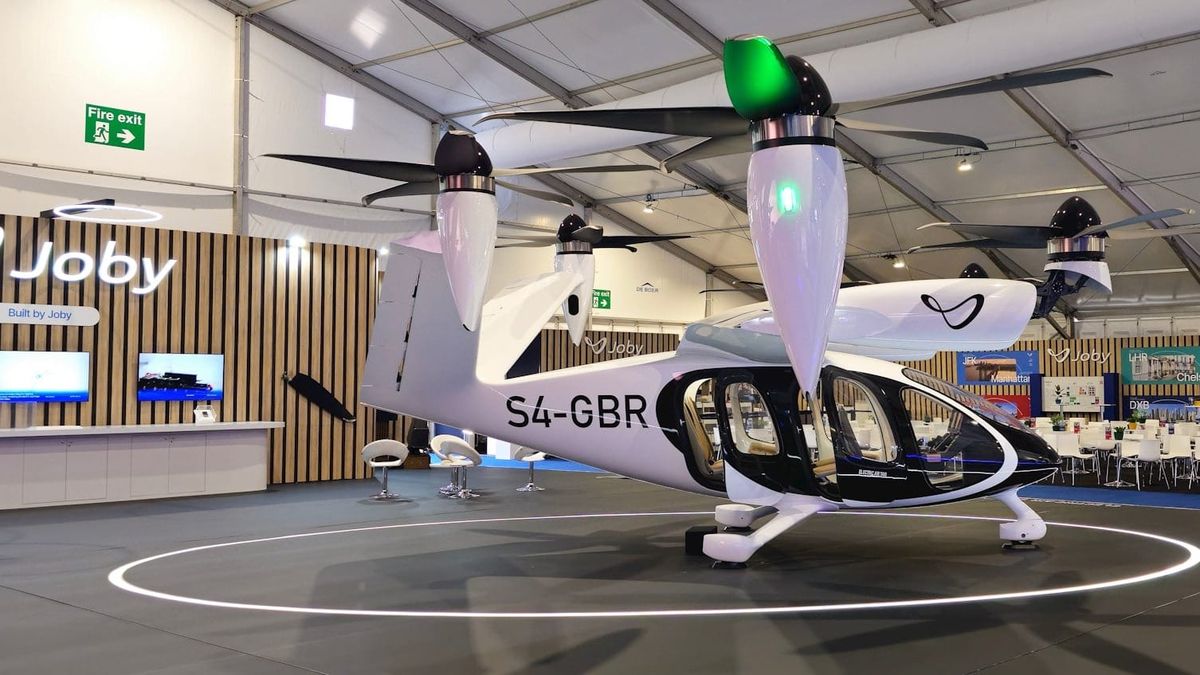
Archer and Joby Are Building Different Bridges to the Air-Taxi Future
The competition between Archer Aviation (ACHR) and Joby Aviation (JOBY) is increasingly about more than which company can bring an electric air taxi to market first. Both remain focused on eVTOL commercialization, but their latest moves show two distinct strategies for generating revenue and building broader aerospace businesses while certification continues.
Archer shares climbed more than 8% Tuesday as investors continued reacting to its agreement to acquire Boeing-owned aerospace and defense businesses. Joby moved in the opposite direction, falling roughly 5% after announcing a $500 million acquisition of Resonant Sciences that will establish a dedicated defense division alongside its commercial air-taxi operation.
Key Points
- Joby agreed to acquire Resonant Sciences for about $500 million, creating a dedicated defense business with more than $100 million in trailing-12-month revenue while keeping its commercial organization focused on electric air taxis.
- Archer is expanding into defense, drones, autonomy, and aviation software through its Boeing transaction, including Insitu, a business generating more than $200 million in annual revenue.
- The two companies remain unprofitable and are still pursuing eVTOL certification, but Joby currently has substantially more quarterly revenue and cash while Archer is pursuing a broader aerospace and defense diversification strategy.
Joby’s $500 Million Deal Creates a Dedicated Defense Business
Joby’s agreement to acquire Resonant Sciences represents a significant expansion of its defense strategy.
The approximately $500 million transaction is expected to consist of about $450 million in cash and $50 million in Joby common stock. The deal is expected to close during the first half of 2027.
Resonant, based in Ohio, develops advanced radio-frequency, sensing, communications, electronic countermeasure, mission, and low-observability technologies for U.S. national security customers. The company employs about 250 people, more than 90% of whom hold security clearances, and its products are qualified across more than 20 commercial and defense airframes.
Resonant generated more than $100 million in trailing-12-month revenue, growing about 40% year over year, and has recently operated at high-teens adjusted EBITDA margins. Its backlog more than doubled year over year, while bookings during the first half of 2026 exceeded three times the level recorded during the same period a year earlier.
Once the transaction closes, Resonant will become Joby’s dedicated defense business under Resonant co-founder and CEO J. Micah North.
Joby plans to consolidate its existing defense projects into the division, including turbine-electric and hydrogen-electric aircraft development and its autonomy technology stack. The combined operation will have approximately 1 million square feet of manufacturing, integration, and testing space across the Dayton, Ohio region.
The structure is also designed to separate Joby’s two major priorities. The defense organization will pursue military technologies and programs while Joby’s commercial aviation business remains focused on certifying, manufacturing, and commercializing its electric air taxi.
Joby’s defense expansion follows earlier work on hybrid aircraft. Its defense initiatives include a gas-turbine hybrid VTOL based on its S4 platform, while a hydrogen-electric version previously completed a 521-mile flight.
The company also expects Resonant’s RF sensing and signal-processing capabilities to complement Joby’s autonomy technology in the development of software-defined autonomous systems.
How Do Archer and Joby’s Strategies Differ?
Both companies are trying to address the same fundamental challenge: developing and commercializing eVTOL aircraft requires substantial spending before those aircraft can generate meaningful passenger revenue.
Their approaches to that period are increasingly different.
Joby has built a near-term revenue base around its existing aviation operations. Second-quarter revenue reached $38.6 million, with $36.2 million coming from the Blade helicopter business acquired last year. Joby subsequently raised its 2026 revenue forecast to $115 million to $125 million.
Blade also provides Joby with an existing passenger aviation network and terminals in markets including New York City.
The Resonant acquisition adds a second established revenue source while creating a dedicated defense operation.
Archer generated $5 million in second-quarter revenue, up 213% sequentially and above analyst expectations. Its Boeing transaction, however, would substantially change its business mix.
Archer agreed to acquire Boeing (BA) businesses Wisk Aero, Insitu, and SkyGrid in exchange for a Boeing equity stake in Archer. The combination adds autonomous aircraft technology, unmanned defense aircraft, and air-traffic-management capabilities.
Insitu alone generates more than $200 million in annual revenue and is expected to contribute positive free cash flow. Management has described the business as capable of helping Archer operate on a more self-funding basis.
The acquired businesses also bring nearly 2 million autonomous flight hours of data, which can support Archer’s ZEE aviation AI platform and broader autonomy development.
Archer is additionally developing its Halo-Thunder autonomous VTOL platform with Anduril. The aircraft is intended for a different mission than Midnight, with heavier payload, longer range, and greater speed. First flight is targeted for next year, with customer deliveries planned for 2029.
Joby, by comparison, is placing its established defense activities inside a separate Resonant-led organization while keeping the commercial aircraft business concentrated on the air-taxi launch.
The distinction is significant: both companies are diversifying, but Archer is assembling a broader portfolio spanning eVTOLs, drones, autonomy, AI, defense, and air-traffic technology, while Joby is pairing its commercial air-taxi operation with existing passenger aviation revenue and a dedicated defense technology business.
Certification, Cash and Revenue Define the Next Stage
Despite their expanding businesses, the core eVTOL race remains unfinished.
Archer’s Midnight has completed piloted city-to-city flights between Salinas and Monterey, California, with each leg taking about nine minutes. Archer said Midnight is in the fourth and final phase of the FAA type-certification process, with an accepted means of compliance and an approved quality management system allowing it to build FAA-creditable conforming aircraft.
Joby has five aircraft flying and another 12 in production. Its manufacturing effort is also being supported by Toyota, and Joby plans electric air-taxi pilot flights in Texas as part of a federal program intended to establish the operational groundwork for future commercial service.
Neither company’s core electric air-taxi operation is yet producing meaningful commercial passenger revenue, and both continue to report substantial losses.
Joby recorded a Q2 net loss of approximately $245 million, compared with Archer’s $263.2 million loss.
Their spending levels were also relatively close. Joby reported operating expenses of $299.5 million, while Archer recorded $284.2 million.
The balance sheets provide another distinction. Joby had approximately $2.3 billion in cash and investments, compared with roughly $1.56 billion for Archer.
Archer reported an adjusted EBITDA loss of $177.1 million in Q2 and expects a third-quarter adjusted EBITDA loss between $170 million and $200 million.
The acquisitions therefore serve an important strategic purpose for both companies: adding businesses capable of generating revenue while their eVTOL programs continue through certification, manufacturing development, and commercialization.
What It Means for Investors
The latest company news is turning the JOBY-versus-ACHR comparison into a broader question about how each company intends to finance and build its business before electric air taxis reach scale.
Joby currently has the stronger quarterly revenue position. Its $38.6 million of Q2 revenue substantially exceeded Archer’s $5 million, although nearly all of Joby’s revenue came from Blade rather than its electric aircraft.
Resonant would further expand that revenue base. The defense company brings more than $100 million of trailing-12-month revenue, high-teens adjusted EBITDA margins in recent periods, classified capabilities, established government programs, and a growing backlog.
Archer’s strategy could produce an even larger transformation of its current business mix. Insitu generates more than $200 million annually, while Wisk and SkyGrid add technology in autonomous eVTOLs and air-traffic management. Archer is also building defense aircraft and aviation-specific AI products.
At the same time, both companies continue to consume substantial capital. Q2 operating expenses approached $300 million at each company, and both reported net losses above $240 million.
The contrasting stock moves Tuesday illustrate how differently investors are currently responding to the two strategies. Archer shares rallied as the market continued digesting the Boeing transaction and management’s description of Insitu as a profitable, cash-generating business. Joby shares declined following the announcement that it would spend approximately $450 million in cash and $50 million in stock to acquire Resonant.
The next phase of the comparison will depend on measurable execution: progress toward FAA certification, manufacturing expansion, defense integration, revenue growth from acquired businesses, and the amount of capital required to reach commercial eVTOL operations.
Conclusion
Archer Aviation and Joby Aviation remain direct competitors in electric air taxis, but their businesses are becoming considerably broader.
Joby has built an existing aviation revenue stream through Blade and is now adding Resonant Sciences as a dedicated defense operation with more than $100 million in trailing revenue.
Archer is pursuing a more expansive aerospace strategy through its Boeing transaction, bringing Wisk, Insitu, and SkyGrid into a portfolio that increasingly spans commercial eVTOLs, defense drones, autonomous flight, aviation AI, and air-traffic technology.
The financial comparison remains mixed. Joby generated nearly eight times Archer’s Q2 revenue and held roughly $2.3 billion in cash and investments, compared with Archer’s approximately $1.56 billion. Both, however, recorded quarterly net losses exceeding $240 million.
For the eVTOL sector, the strategic shift is becoming increasingly clear. The competition between JOBY and ACHR is no longer defined solely by which company certifies an electric air taxi first. It increasingly includes which company can build sustainable revenue-producing aerospace businesses while financing the costly path toward commercial electric flight.
FAQs
Why is Joby Aviation acquiring Resonant Sciences?
Joby is acquiring Resonant Sciences for about $500 million to create a dedicated defense business combining Resonant’s established RF, sensing, mission systems, manufacturing operations, and government programs with Joby’s hybrid aircraft and autonomy technologies.
How do Joby and Archer differ financially?
Joby reported Q2 revenue of $38.6 million and approximately $2.3 billion in cash and investments, while Archer reported $5 million in revenue and roughly $1.56 billion in liquidity. Joby recorded a net loss of about $245 million, compared with Archer’s $263.2 million loss.
How are Archer and Joby approaching defense differently?
Archer is building a broader aerospace and defense portfolio through its Boeing transaction, including Wisk, Insitu, and SkyGrid, alongside its Halo-Thunder platform and aviation AI initiatives. Joby plans to place its defense programs inside a dedicated Resonant-led business while keeping its commercial organization focused on electric air taxis.
Which company currently generates more revenue, Joby or Archer?
Joby currently generates more quarterly revenue. It reported $38.6 million in Q2 revenue, including $36.2 million from Blade, compared with Archer’s $5 million. Archer’s planned acquisition of Boeing-owned Insitu would add a business generating more than $200 million annually.
Are Archer and Joby commercially operating electric air taxis yet?
No. Both companies continue working toward regulatory approval and commercial passenger operations. Archer’s Midnight is in the final phase of FAA type certification, while Joby is also progressing toward commercial operations and plans pilot flights in Texas.
This article was created with AI assistance and reviewed by an editor. For details, please refer to our Terms of Use.
Go Beyond the Market Brief with Market Edge
Follow SharperTrades’ complete approach to trading and investing, combining active trade opportunities through Block Orders, long-term research through Stock Investor, and structured market education through the Swing Trading Masterclass. Try Market Edge for $19 your first month →
Explore Research with Stock Investor
Stock Investor is SharperTrades’ platform for long-term investing research and portfolio management. Members receive research reports, portfolio updates, conviction tracking, and in-depth analysis designed to support disciplined investment decisions.
Explore Active Trading & Income Strategies
Block Orders tracks institutional activity and highlights active trade setups and price behavior across long and short opportunities.
For options-focused traders, Essential Option Income provides a structured approach to options income strategies, while Pro Option Trader offers a broader range of options strategies and trade opportunities.
Think More Clearly with SteadyCapital
SteadyCapital is SharperTrades’ decision-support system for long-term investors, built around the SteadyCapital Method™. Review investment ideas, challenge assumptions, evaluate valuation and risk, compare companies, and think through important buy, hold, add, trim, or sell decisions before you act.
Risk Disclosure
All content is provided for educational purposes only and does not constitute investment advice. Trading involves risk, and past performance is not indicative of future results. Please review our full Risk Disclosure for additional information.