Consumer Stress Pushes Companies to Compete Harder on Value
Lower-income consumers are pulling back as food, housing and energy costs strain household budgets. McDonald’s and Kraft Heinz are adjusting pricing and products, while Starbucks and other restaurant operators look for new ways to capture increasingly selective spending.

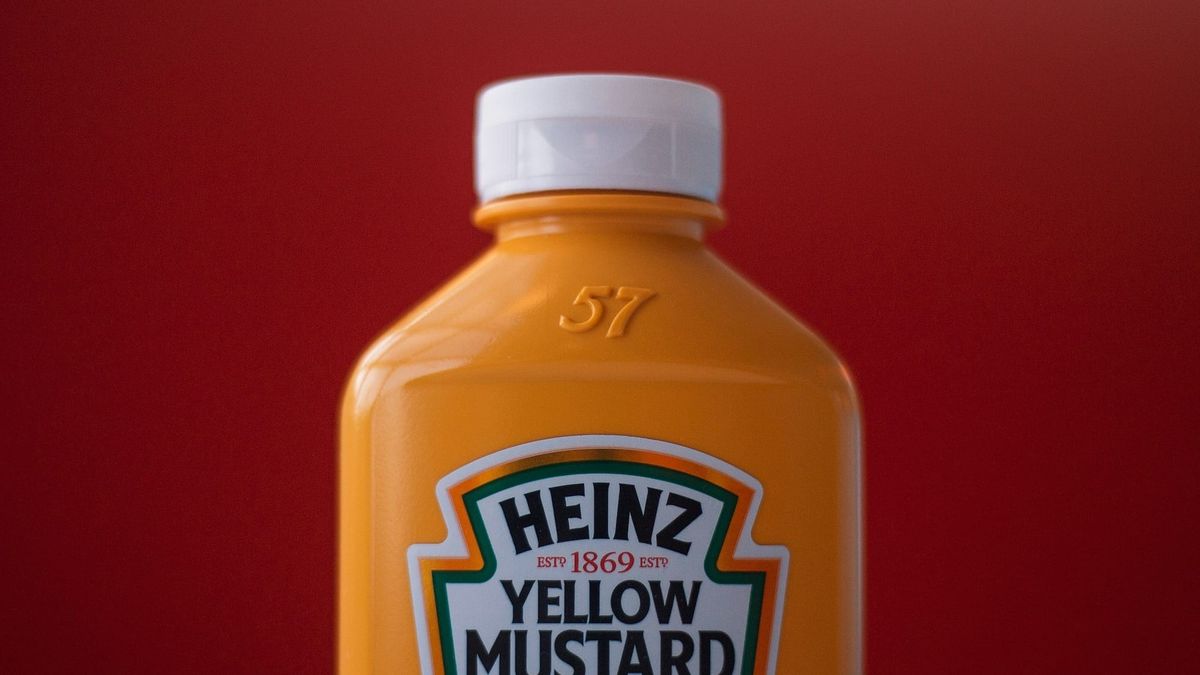
Value Is Becoming More Important as Household Budgets Tighten
Financial pressure on lower-income households is becoming increasingly visible in consumer-facing businesses. Kraft Heinz (KHC) CEO Steve Cahillane said lower-income consumers are running out of money near the end of the month and dipping into savings, prompting the company to cut selected prices, increase promotions and introduce smaller package sizes.
McDonald’s (MCD) is seeing a similar divide. Management has reported that lower-income customers are pulling back while higher-income consumers remain more resilient. At the same time, McDonald’s and Starbucks (SBUX) are expanding their beverage offerings as restaurant operators look for incremental purchases in a more selective spending environment.
Key Points
- Kraft Heinz is cutting selected prices, increasing promotions and introducing smaller packages as lower-income consumers face tighter monthly budgets.
- McDonald’s says lower-income customers are reducing spending while higher-income consumers remain more resilient, increasing the importance of value and menu innovation.
- McDonald’s and Starbucks are expanding energy-drink offerings as restaurant operators pursue incremental beverage and food purchases.
Consumer Pressure Is Changing the Value Equation
The consumer picture is increasingly divided by income.
Kraft Heinz CEO Steve Cahillane said lower-income consumers are experiencing negative cash flows and dipping into savings toward the end of the month. He also said the industry has experienced years of volume degradation after consumers absorbed too much price.
Kraft Heinz is responding directly to that pressure. The company is reducing prices on some products that have become too expensive, increasing promotional activity and introducing smaller package sizes at lower price points.
McDonald’s is observing a similar pattern. CEO Chris Kempczinski has pointed to heightened anxiety among consumers, while CFO Ian Borden said higher gasoline prices are hitting lower-income households particularly hard. Those customers are pulling back, while higher-income consumers have remained considerably more resilient.
The corporate commentary is supported by broader household financial measures included in the supplied data.
Credit card balances reached $1.25 trillion during the first quarter of 2026, while auto loan balances climbed to $1.69 trillion. The personal saving rate fell to 2.7% in June.
The Federal Reserve's latest Report on the Economic Well-Being of U.S. Households found that 16% of adults did not pay all their bills in full during the previous month. Among consumers who struggled with their bills, 42% said they paid at least one late.
The pressure comes after several years of higher living costs. Food prices have increased more than 33% since the beginning of 2020, housing costs are up about 33%, and energy prices have increased more than 42%.
Slower inflation does not reverse those earlier increases. Consumers continue making spending decisions from a substantially higher price base, leaving financially constrained households with less flexibility.
How Are McDonald’s and Kraft Heinz Responding?
Affordability is becoming increasingly important to the strategies of both companies, although they are approaching the challenge differently.
For Kraft Heinz, the response centers directly on price and package size.
The company is increasing promotions and lowering prices on selected products while introducing smaller packages that allow consumers to spend less per purchase. Those changes come as management tries to stabilize a business that continues to face top-line pressure.
Kraft Heinz now expects 2026 organic net sales to decline between 0.5% and 2.0%, an improvement from its previous forecast for a decline of 1.5% to 3.5%.
The company is also investing to strengthen its brands. Kraft Heinz plans to spend approximately $700 million during 2026 across marketing, research and development, and new products. Marketing spending is being increased to at least 6% of sales, including an additional $100 million.
Cash generation provides resources for those efforts. Operating cash flow increased 8.2% during the first half of 2026 to $2.1 billion, while free cash flow increased 10.3% to $1.7 billion.
Kraft Heinz returned approximately $900 million through dividends during the period. Its quarterly dividend remains $0.40 per share, where it has remained since the company cut the payout in 2019.
With adjusted EPS expected between $2.03 and $2.09, the $1.60 annual dividend represents a payout ratio of roughly 77% at the midpoint of guidance.
McDonald’s faces a different challenge. Rather than selling packaged groceries for consumption at home, it must continue convincing increasingly selective consumers to make restaurant visits.
Value remains part of that equation, but McDonald’s is also expanding its menu to create additional reasons for customers to spend.
Energy Drinks Add Another Front in the Fight for Spending
McDonald’s is rolling out its Red Bull Dragonberry Energizer nationwide on August 17 as restaurant chains increase their focus on energy beverages.
Research involving 2,400 U.S. consumers helps explain the interest.
Seventy-four percent of respondents said they were very or somewhat interested in purchasing energy drinks from a restaurant or coffee shop, including 44% who were very interested.
The category may also generate spending that would not otherwise occur. Sixty percent of energy-beverage consumption at restaurants and coffee shops was described as incremental.
Food attachment could further increase the value of those purchases. Among survey respondents, 53% said they order packaged food alongside an energy beverage, while 47% said they purchase prepared food.
McDonald’s is not alone in pursuing the category.
Starbucks introduced its Energy Refreshers lineup in April, combining iced green tea, sparkling fruit juice and plant-based caffeine sources. Other restaurant operators have also expanded energy-beverage offerings.
For McDonald’s, the rollout arrives alongside slower U.S. same-store sales growth and increased burger competition described in the supplied material.
The company nevertheless remains highly cash generative. McDonald’s produced approximately $8.2 billion in free cash flow over the latest 12 months.
Its valuation provides a mixed picture. A DCF estimate included in the supplied information places intrinsic value at approximately $262 per share compared with a recent share price around $272.83, putting the market price roughly 4.2% above that cash-flow-based estimate.
An earnings-based comparison looks different. McDonald’s trades at approximately 22 times earnings, compared with a cited hospitality industry average of roughly 23.6 times.
The difference illustrates why operating execution remains important. Consumer traffic, margins, cash generation and the effectiveness of new menu initiatives can influence how those valuation measures evolve.
What It Means for Investors
The central market signal is not that all U.S. consumers are experiencing the same degree of financial stress.
The data instead point to a widening difference between households with financial flexibility and those operating with little room to absorb additional costs.
McDonald’s has explicitly identified that divergence, reporting weaker spending among lower-income customers while higher-income consumers remain more resilient.
Kraft Heinz is seeing enough price sensitivity to change how products reach consumers. Price reductions, promotions and smaller packages are designed to address households that may still need the company's products but have less money available for each shopping trip.
Restaurant companies face a related problem. Consumers can reduce visit frequency, change what they order or seek more value from each purchase.
McDonald’s expansion into energy drinks illustrates one response: adding a category with evidence of incremental demand and a tendency to be purchased alongside food. Starbucks' Energy Refreshers demonstrate that the opportunity is attracting attention across the restaurant and coffee market.
The underlying financial conditions make these strategies increasingly relevant. Consumers are carrying substantial credit card and auto debt, saving a smaller percentage of their income and continuing to absorb food, housing and energy costs that have risen considerably since 2020.
For consumer-facing companies, the question is increasingly how to maintain spending when a portion of their customers has less financial flexibility.
Conclusion
Persistent living-cost pressure is changing how consumer companies compete.
Kraft Heinz is addressing affordability directly through selected price reductions, greater promotional activity and smaller package sizes. At the same time, it is investing approximately $700 million in marketing, research and development, and new products as it works to strengthen sales and its brands.
McDonald’s is confronting a more visible income divide, with lower-income customers pulling back while higher-income consumers remain more resilient. Its nationwide energy-drink rollout adds another product category as the company looks for incremental restaurant spending.
Starbucks is pursuing the same beverage category with its Energy Refreshers, illustrating how restaurant operators are searching for additional sources of demand even as household budgets remain under pressure.
The broader consumer story is therefore becoming less about whether Americans are spending at all and more about who still has room to spend, where they are cutting back and how companies adapt their pricing and products to a more value-conscious environment.
FAQs
Why are lower-income consumers under greater financial pressure?
Higher living costs are consuming more of household budgets while savings remain limited. Food and housing costs have each increased about 33% since the beginning of 2020, energy prices have risen more than 42%, and the personal saving rate fell to 2.7% in June.
How is Kraft Heinz responding to weaker consumer finances?
Kraft Heinz is reducing prices on selected products, increasing promotions and introducing smaller packages at lower price points. The company is also investing approximately $700 million during 2026 across marketing, research and development, and new products.
What is McDonald’s seeing among lower-income consumers?
McDonald’s is seeing lower-income customers reduce spending while higher-income consumers remain more resilient. Management has cited heightened consumer anxiety and higher gasoline prices as pressures affecting lower-income households.
Why are McDonald’s and Starbucks expanding into energy drinks?
McDonald’s and Starbucks are expanding their energy-beverage offerings as consumer research indicates strong interest and incremental spending potential. Sixty percent of energy-beverage consumption at restaurants and coffee shops was described as incremental, and many purchases are accompanied by food.
How is McDonald’s valued based on the supplied data?
McDonald’s presents a mixed valuation picture. A supplied DCF estimate values the shares at about $262 compared with a recent price around $272.83, while its approximately 22 times P/E is below the cited hospitality industry average of roughly 23.6 times.
This article was created with AI assistance and reviewed by an editor. For details, please refer to our Terms of Use.
Go Beyond the Market Brief with Market Edge
Follow SharperTrades’ complete approach to trading and investing, combining active trade opportunities through Block Orders, long-term research through Stock Investor, and structured market education through the Swing Trading Masterclass. Try Market Edge for $19 your first month →
Explore Research with Stock Investor
Stock Investor is SharperTrades’ platform for long-term investing research and portfolio management. Members receive research reports, portfolio updates, conviction tracking, and in-depth analysis designed to support disciplined investment decisions.
Explore Active Trading & Income Strategies
Block Orders tracks institutional activity and highlights active trade setups and price behavior across long and short opportunities.
For options-focused traders, Essential Option Income provides a structured approach to options income strategies, while Pro Option Trader offers a broader range of options strategies and trade opportunities.
Think More Clearly with SteadyCapital
SteadyCapital is SharperTrades’ decision-support system for long-term investors, built around the SteadyCapital Method™. Review investment ideas, challenge assumptions, evaluate valuation and risk, compare companies, and think through important buy, hold, add, trim, or sell decisions before you act.
Risk Disclosure
All content is provided for educational purposes only and does not constitute investment advice. Trading involves risk, and past performance is not indicative of future results. Please review our full Risk Disclosure for additional information.