Baidu’s AI Growth Accelerates as Search Weakness Pressures Earnings
Baidu’s AI cloud and GPU businesses grew rapidly in Q2, but falling search advertising revenue and weaker profits outweighed that progress. The stock dropped as investors questioned how quickly AI growth can offset pressure in the company’s legacy internet business.

Baidu’s AI Transition Is Growing Faster, but the Core Business Is Still Shrinking
Baidu (BIDU) reported a difficult second quarter as rapid growth in AI cloud infrastructure failed to offset weakness in its traditional search and advertising business. Revenue fell 4% year over year to RMB31.3 billion, while net income dropped 68% to RMB2.3 billion, both below analyst expectations.
The underlying transition toward artificial intelligence continued to accelerate. Baidu Core AI-powered business revenue reached RMB12.5 billion, AI Cloud Infrastructure revenue grew 50%, and GPU cloud revenue surged 283%. But the company remains in an expensive transition as advertising revenue stays under pressure and management continues investing in models, chips, applications and autonomous driving.
Key Points
- Baidu’s Q2 revenue fell 4% year over year to RMB31.3 billion, while net income dropped 68% to RMB2.3 billion and missed expectations.
- AI Cloud Infrastructure revenue rose 50%, GPU cloud revenue jumped 283%, and AI-powered businesses reached RMB12.5 billion in revenue.
- Advertising remained under pressure as users shifted toward AI chatbots and new formats, while Apollo Go continued expanding its autonomous-driving footprint internationally.
Why Did Baidu Stock Fall After Earnings?
Baidu’s earnings reaction reflected a widening gap between fast-growing AI operations and declining legacy revenue.
Second-quarter revenue came in at RMB31.3 billion, below expectations of roughly RMB31.7 billion to RMB32.0 billion and down 4% from a year earlier.
Net income attributable to Baidu fell to RMB2.3 billion, or RMB5.74 per diluted ADS. Non-GAAP earnings per ADS were RMB7.22, below analyst expectations of roughly RMB9.84 to RMB9.92.
Baidu Core generated RMB25.2 billion in revenue, down 4% year over year. iQIYI contributed RMB6.3 billion.
Adjusted EBITDA totaled RMB6.2 billion, ahead of one cited estimate of RMB5.79 billion, with an adjusted EBITDA margin of 20%. Adjusted operating income was RMB3.8 billion, representing a 12% margin.
The earnings miss showed that AI growth has not yet been large enough to fully counter pressure on Baidu’s established internet business.
That pressure is particularly visible in online marketing.
Baidu’s search business has faced competition for user attention as consumers increasingly use large-language models and AI chatbots. Management said it is also deliberately limiting monetization of AI search while prioritizing answer quality, reliability and user experience.
The company expects advertising revenue to remain under pressure during the second half.
AI Cloud and GPU Demand Are Becoming More Important
Baidu’s strongest second-quarter performance came from AI infrastructure.
AI Cloud Infrastructure revenue increased 50% year over year to RMB7.3 billion. Within that business, GPU cloud revenue surged 283%, accelerating from 184% growth in the first quarter.
CEO Robin Li said Baidu Core AI-powered business revenue reached RMB12.5 billion, representing half of the company’s general business revenue.
Cloud growth was supported by demand for both AI training and inference, increased spending from existing customers and broader adoption across internet services, autonomous driving, smartphones, financial services and embodied AI.
Revenue from embodied AI customers increased approximately sixfold year over year.
Baidu’s Qianfan model-as-a-service platform also expanded rapidly, with revenue from external customer token usage growing more than ninefold from a year earlier.
Management said GPU cloud has a more attractive margin profile than traditional CPU cloud. A greater share of GPU-related revenue, combined with improved resource utilization, operating efficiency and model-serving revenue, could support the economics of the cloud business.
Baidu is also continuing to invest in its own AI chips.
Demand for its Kunlun chips remained strong, while the company continued expanding compatibility with Chinese foundation models and frameworks. Baidu is advancing its M100 chip for large-scale inference and its upcoming M300 chip.
The proposed listing process for Kunlunxin is also continuing.
The broader competitive environment remains significant. Baidu is competing in a crowded Chinese AI market that includes Alibaba (BABA), DeepSeek and a growing number of AI startups and model providers.
Apollo Go and AI Applications Broaden Baidu’s Transformation
Baidu’s AI strategy extends beyond cloud infrastructure.
The company continues developing AI applications, foundation models and autonomous-driving services as it attempts to move beyond its historical dependence on search advertising.
ERNIE Assistant daily active users increased 83% year over year, while average daily conversation rounds more than tripled.
Monthly active users of Baidu’s Miaoda coding platform were 67% higher in June than in March following the release of Miaoda 3.0.
AI daily active user penetration across Baidu Wenku and Baidu Drive increased 27.4% year over year in June.
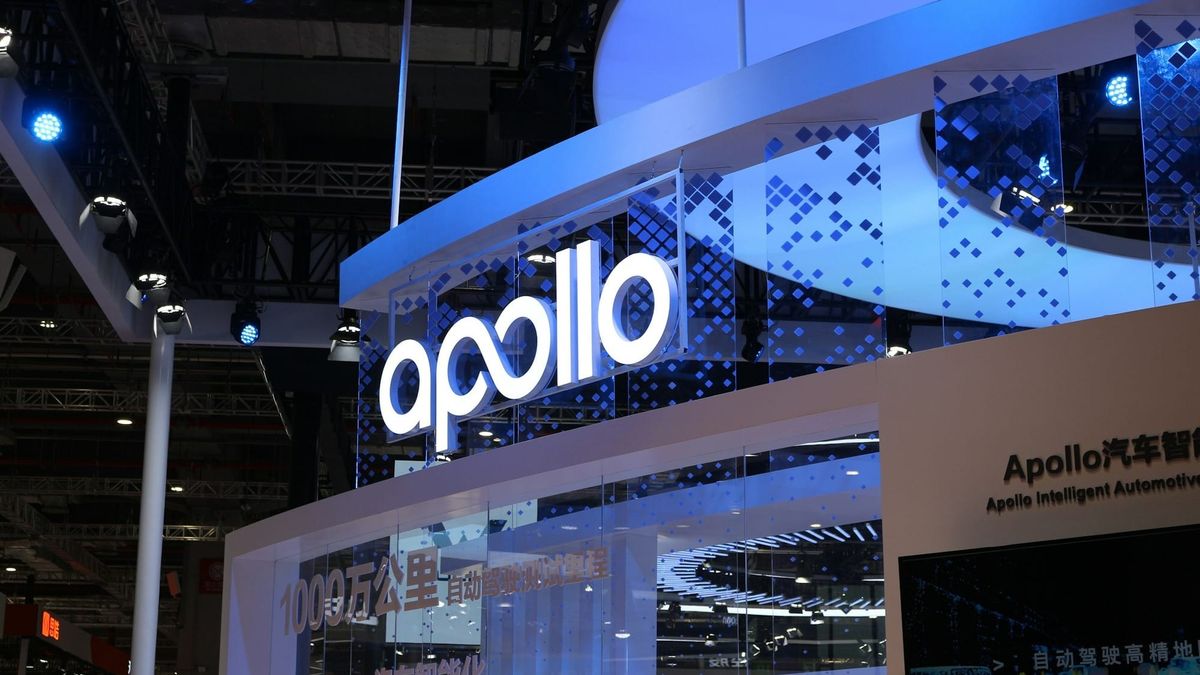
Apollo Go also continued expanding.
The autonomous-driving business completed about 1 million fully driverless operational rides in Q2, bringing cumulative public rides to more than 23 million as of June.
The company received Hong Kong’s first permits for fully driverless testing in June and began testing on Airport Island in July.
Apollo Go also began open-road testing in London with Uber (UBER) and Lyft, launched fully driverless commercial operations in Dubai, began testing in Switzerland with PostBus and signed a memorandum of understanding in Kazakhstan.
The company said Apollo Go’s fully driverless vehicles had recorded approximately one airbag deployment per 14.4 million kilometers as of the end of June.
These initiatives show how Baidu is attempting to build multiple AI-related businesses around cloud computing, chips, models, software applications and autonomous mobility rather than relying on a single source of growth.
What It Means for Investors
Baidu’s second-quarter results highlight the central challenge of its transition from an internet-centric company to an AI-first company.
The growth rates in AI infrastructure are substantial. GPU cloud revenue increased 283%, AI Cloud Infrastructure revenue rose 50%, and AI-powered businesses now account for a large portion of Baidu Core revenue.
But the legacy business is still declining.
Search and advertising remain under pressure as user behavior shifts toward AI chatbots and other new formats. Management is also choosing to prioritize product development and user experience over immediate AI-search monetization.
That makes the pace of the transition important.
Baidu had RMB283.1 billion in cash and investments at the end of June and generated RMB3.4 billion in quarterly operating cash flow, providing resources to continue investing in AI infrastructure, chips, models and autonomous driving.
At the same time, the company is emphasizing investment discipline, return on invested capital and operating efficiency.
For BIDU stock, the key tension is therefore not whether the company has meaningful AI growth. Q2 clearly showed that it does.
The more important issue is whether AI cloud, GPU infrastructure, AI applications and autonomous driving can expand quickly enough to offset continued weakness in advertising and produce stronger companywide earnings growth.
Conclusion
Baidu’s second quarter showed two very different businesses moving in opposite directions.
Its traditional search and advertising operations remained under pressure, contributing to a 4% decline in total revenue and a sharp drop in net income.
At the same time, AI infrastructure continued expanding rapidly. GPU cloud revenue grew 283%, AI Cloud Infrastructure revenue increased 50%, and AI-powered businesses generated RMB12.5 billion in revenue.
Apollo Go, Kunlun chips, ERNIE applications and model-serving platforms are also broadening the company’s AI exposure.
The stock’s decline shows that investors are currently placing greater weight on the weakness in revenue and profitability than on the growth rates inside Baidu’s AI operations.
The company’s transition is progressing, but Q2 demonstrated that the financial benefits from that shift have not yet fully replaced the economics of its legacy search business.
FAQs
Why did Baidu stock fall after its Q2 earnings?
Baidu stock fell after revenue and profit missed analyst expectations. Revenue declined 4% year over year to RMB31.3 billion, while net income fell 68% to RMB2.3 billion despite strong growth in AI cloud infrastructure.
How fast is Baidu’s AI cloud business growing?
Baidu’s AI Cloud Infrastructure revenue increased 50% year over year to RMB7.3 billion in Q2, while GPU cloud revenue surged 283%.
Why is Baidu’s advertising business under pressure?
Baidu said users are increasingly shifting toward AI chatbots and other new formats. The company is also prioritizing AI search quality and user experience over near-term monetization, and expects advertising pressure to continue in the second half.
How is Baidu’s Apollo Go business performing?
Apollo Go completed about 1 million fully driverless operational rides in Q2 and surpassed 23 million cumulative public rides by June. The service also expanded testing and operations into markets including Hong Kong, London, Dubai, Switzerland and Kazakhstan.
What is Baidu investing in beyond AI cloud?
Baidu is investing in Kunlun AI chips, ERNIE foundation models, AI applications such as Miaoda, autonomous driving through Apollo Go and model-serving infrastructure through its Qianfan platform.
This article was created with AI assistance and reviewed by an editor. For details, please refer to our Terms of Use.
Go Beyond the Market Brief with Market Edge
Follow SharperTrades’ complete approach to trading and investing, combining active trade opportunities through Block Orders, long-term research through Stock Investor, and structured market education through the Swing Trading Masterclass. Try Market Edge for $19 your first month →
Explore Research with Stock Investor
Stock Investor is SharperTrades’ platform for long-term investing research and portfolio management. Members receive research reports, portfolio updates, conviction tracking, and in-depth analysis designed to support disciplined investment decisions.
Explore Active Trading & Income Strategies
Block Orders tracks institutional activity and highlights active trade setups and price behavior across long and short opportunities.
For options-focused traders, Essential Option Income provides a structured approach to options income strategies, while Pro Option Trader offers a broader range of options strategies and trade opportunities.
Think More Clearly with SteadyCapital
SteadyCapital is SharperTrades’ decision-support system for long-term investors, built around the SteadyCapital Method™. Review investment ideas, challenge assumptions, evaluate valuation and risk, compare companies, and think through important buy, hold, add, trim, or sell decisions before you act.
Risk Disclosure
All content is provided for educational purposes only and does not constitute investment advice. Trading involves risk, and past performance is not indicative of future results. Please review our full Risk Disclosure for additional information.