Anthropic’s $1 Trillion IPO Draws Micron Into AI Financing Spotlight
Anthropic’s planned $1 trillion IPO includes a $26 billion investment commitment from major technology companies, including Micron. The offering highlights growing AI financing needs as memory-chip stocks face valuation pressure and uncertainty over data-center spending.

Anthropic’s IPO Tests Investor Confidence in the AI Boom
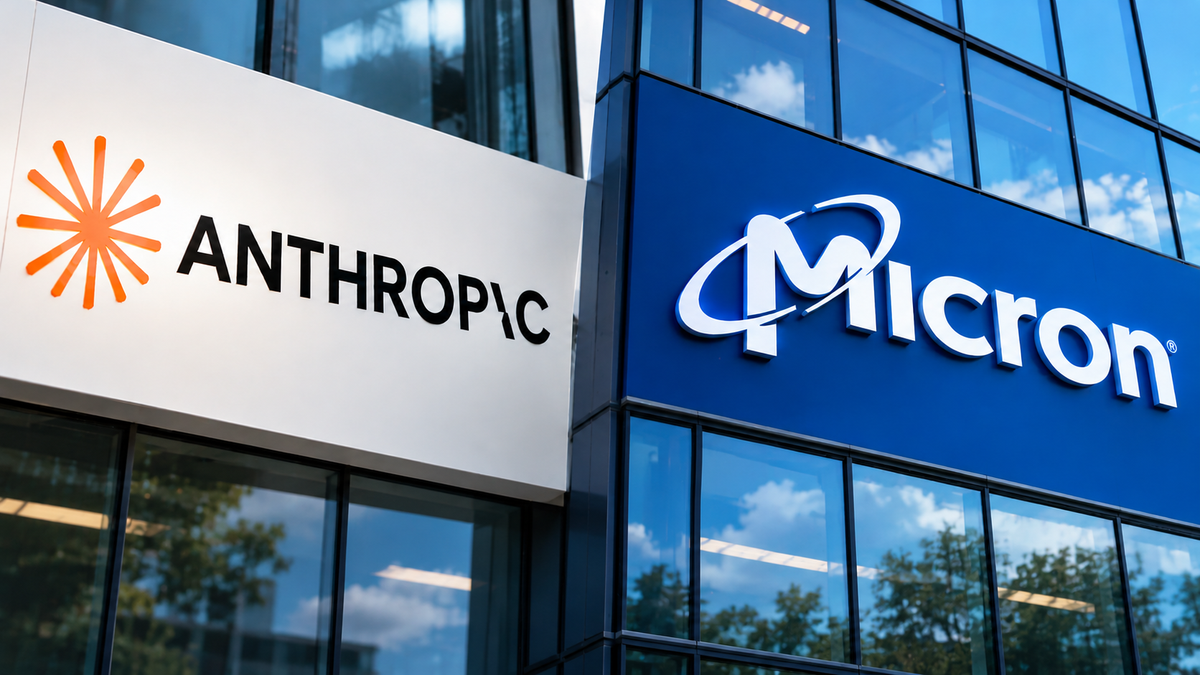
Anthropic (ANT), the developer of Claude artificial intelligence models, launched its initial public offering roadshow Tuesday, targeting a valuation of approximately $1 trillion while securing financial commitments from some of the technology industry's largest companies. Among the participants is Micron Technology (MU), whose shares have been volatile amid concerns about AI infrastructure spending and future memory-chip demand. Anthropic's proposed listing and Micron's recent stock decline highlight a central question facing investors: whether expanding AI adoption can support the industry's increasingly substantial financial commitments.
Key Points
- Anthropic's IPO: The Claude developer is seeking a valuation of approximately $1.02 trillion, alongside a $26 billion private placement backed by major technology companies.
- Micron's participation: The memory-chip manufacturer has committed approximately $1 billion to the offering, even as its stock faces pressure from concerns about AI infrastructure spending.
- Investor uncertainty: Anthropic's valuation and Micron's depressed earnings multiple reflect competing expectations about the sustainability of AI demand, profitability, and future investment.
Anthropic’s IPO Attracts $26 Billion in Technology Investments
Anthropic is moving forward with one of the largest proposed public offerings in market history despite recent volatility across artificial intelligence stocks. According to its amended registration filing, the company plans to offer 825 million Class A shares at an estimated price between $70 and $78 per share. At the upper end of that range, the offering would be valued at approximately $64.4 billion, with Anthropic targeting an equity market value near $1.02 trillion. Its fully diluted valuation, which includes potential shares from options and other awards, could exceed $1.4 trillion. The target is well below earlier reports that the company might seek a valuation approaching $2 trillion, although it continues to attract significant institutional and strategic interest.
The company also disclosed agreements for a separate $26 billion private placement involving seven technology companies: Micron, Nvidia (NVDA), Advanced Micro Devices (AMD), Broadcom (AVGO), Microsoft (MSFT), Alphabet's Google (GOOGL), and Taiwan Semiconductor Manufacturing (TSM). The investors have agreed to purchase Class N shares at the final IPO price, with the transaction expected to close after the public offering, subject to specified conditions. Micron's commitment of approximately $1 billion is a direct financial investment in a company whose AI computing requirements are closely tied to semiconductor demand. The arrangement also highlights the relationships between AI developers and their suppliers, as several participants provide chips, infrastructure, or computing services used to develop and operate AI systems.
Anthropic expects to price its offering on November 18, with shares scheduled to begin trading on the Nasdaq under the symbol ANT on November 19.
Why Is Micron Struggling Despite Strong AI Memory Demand?
Micron's participation comes during a difficult period for memory-chip stocks. The company's shares have declined sharply over the past month, with recent reports placing the pullback between approximately 17% and 30%, depending on the measurement period. Investors have become increasingly concerned that Democratic victories in the U.S. midterm elections could slow construction of AI data centers, potentially weakening demand for memory used in advanced computing systems. Those concerns have pressured Micron's valuation despite expectations for continued earnings growth, and its forward price-to-earnings ratio recently fell to approximately four times projected earnings, well below its three-year median. That discount reflects uncertainty about the durability of current memory-market conditions, as memory manufacturing has historically been cyclical, with periods of strong demand and rising prices often followed by oversupply and weaker profitability.
Micron has, however, established long-term take-or-pay agreements covering more than 35% of its forecast revenue through 2030. These contracts generally require customers to purchase agreed quantities or make payments even if they do not take delivery, and they are supported by nearly $32 billion in customer cash deposits, providing some visibility into future revenue. Nevertheless, investors remain concerned about whether those agreements would remain intact during a significant downturn in AI spending, since similar arrangements elsewhere in the semiconductor industry have previously been renegotiated when market conditions changed.
Analysts continue to point to evidence of underlying demand. KeyBanc analyst John Vinh reiterated a $1,750 price target for Micron, citing growth in cloud computing and traditional server activity. Goldman Sachs analyst James Schneider also maintained a $1,250 price target, emphasizing the company's potential to generate strong free cash flow. These targets reflect analyst expectations rather than guaranteed outcomes, and they stand in contrast to the market's recent cautious assessment of memory-chip valuations.
Anthropic’s Growth Raises Questions About AI Profitability
Anthropic's proposed valuation is supported by rapid growth in enterprise adoption of its Claude models. According to the company's roadshow materials, quarterly revenue increased from approximately $2 billion in late 2025 to $17 billion in the third quarter of 2026. Enterprise spending on AI services has also expanded substantially, reflecting the growing use of artificial intelligence across technology, finance, healthcare, and other industries. Anthropic reported gross margins of approximately 85%, indicating that revenue exceeds the direct costs of providing its services by a substantial amount.
Developing increasingly advanced AI models, however, requires significant research and development spending. The company allocated approximately $19 billion of its $33 billion in year-to-date sales to research and development, illustrating the financial demands of maintaining its technological position. Although Anthropic has reported positive adjusted operating margins in recent quarters, competition presents another challenge. Rival AI developers and increasingly capable open-weight models are placing pressure on pricing, potentially limiting the profitability of AI services over time, and Anthropic has already reduced some usage-based prices in response.
For Micron, these developments matter because AI developers represent an important source of demand for the computing infrastructure that relies on advanced memory. The relationship between software adoption, infrastructure spending, and semiconductor demand is therefore central to the investment outlook. A successful fundraising would strengthen Anthropic's financial resources, but its future spending patterns will ultimately determine how much of that financing translates into additional demand for infrastructure suppliers.
What It Means for Investors
Anthropic's IPO and Micron's recent stock performance illustrate two sides of the AI investment cycle. Anthropic is seeking substantial capital to finance continued growth in AI services, while Micron's valuation reflects concerns that infrastructure demand could weaken despite currently strong memory-market conditions. The private placement creates an additional financial connection between Anthropic and the companies supporting its expansion, but an equity investment does not automatically establish additional semiconductor orders or guarantee future revenue for participating suppliers.
Micron's long-term supply agreements provide greater visibility into potential revenue, but their effectiveness during a prolonged downturn remains a point of debate, as does whether current earnings represent a sustainable level of profitability or a cyclical peak. For Anthropic, the immediate focus will be the final IPO price, investor demand, and the market's reception when trading begins. Beyond the offering, its ability to maintain enterprise growth while managing research costs and pricing competition will be important to assessing the business. For Micron, memory pricing, customer commitments, and developments in data-center construction remain the more direct indicators of future financial performance.
Conclusion
Anthropic's planned public offering is a significant financing event for the AI industry, bringing together major technology companies in a $26 billion private placement. Micron's participation demonstrates its financial connection to the expanding AI ecosystem, even as its shares reflect growing uncertainty about infrastructure spending. The contrasting valuations of the two companies highlight the distinction between expectations for AI software growth and concerns about the cyclical nature of semiconductor manufacturing. As Anthropic approaches its November listing, investors will be watching whether strong AI adoption continues to translate into sustainable revenue, profitability, and infrastructure demand.
FAQs
When is Anthropic expected to go public?
Anthropic expects to price its initial public offering on November 18, 2026, with shares scheduled to begin trading on the Nasdaq under the ticker ANT on November 19.
How much is Anthropic seeking to raise through its IPO?
Anthropic plans to offer 825 million Class A shares at an estimated price of $70 to $78 each, representing approximately $64.4 billion at the upper end. It also has agreements for a separate $26 billion private placement involving major technology companies.
How is Micron involved in Anthropic's IPO?
Micron has agreed to invest approximately $1 billion in Anthropic's concurrent private placement. The investment is part of a broader $26 billion commitment from seven technology companies.
Why has Micron stock declined despite strong memory-chip demand?
Micron shares have faced pressure from concerns that slower AI data-center construction could weaken future memory demand. Investors are also questioning whether current semiconductor earnings and memory prices can remain elevated.
What are the main risks facing Anthropic and Micron?
Anthropic faces substantial research costs, increasing competition, and potential pressure on AI service pricing. Micron faces uncertainty about future memory demand, industry cyclicality, and whether long-term customer agreements will remain effective during weaker market conditions.
This article was created with AI assistance and reviewed by an editor. For details, please refer to our Terms of Use.
Go Beyond the Market Brief with Market Edge
Follow SharperTrades’ complete approach to trading and investing, combining active trade opportunities through Block Orders, long-term research through Stock Investor, and structured market education through the Swing Trading Masterclass. Try Market Edge for $19 your first month →
Explore Research with Stock Investor
Stock Investor is SharperTrades’ platform for long-term investing research and portfolio management. Members receive research reports, portfolio updates, conviction tracking, and in-depth analysis designed to support disciplined investment decisions.
Explore Active Trading & Income Strategies
Block Orders tracks institutional activity and highlights active trade setups and price behavior across long and short opportunities.
For options-focused traders, Essential Option Income provides a structured approach to options income strategies, while Pro Option Trader offers a broader range of options strategies and trade opportunities.
Think More Clearly with SteadyCapital
SteadyCapital is SharperTrades’ decision-support system for long-term investors, built around the SteadyCapital Method™. Review investment ideas, challenge assumptions, evaluate valuation and risk, compare companies, and think through important buy, hold, add, trim, or sell decisions before you act.
Risk Disclosure
All content is provided for educational purposes only and does not constitute investment advice. Trading involves risk, and past performance is not indicative of future results. Please review our full Risk Disclosure for additional information.