Alibaba's AI Cloud Growth Lifts Stock as Export Controls Cloud the Outlook
Alibaba (BABA) reversed higher after strong AI cloud growth and improving profitability offset weaker earnings expectations and rising infrastructure costs. New U.S. computing restrictions remain a concern for its 2027 outlook.

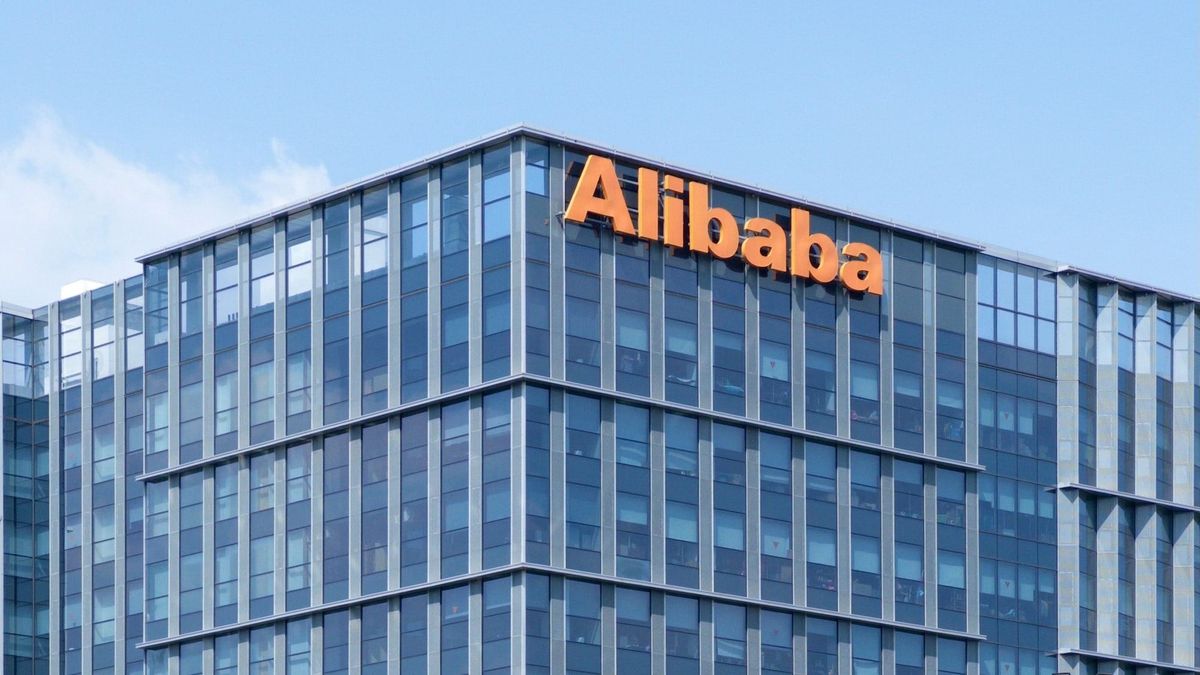
Alibaba's Cloud Momentum Meets a New Regulatory Challenge
Alibaba Group (BABA) shares rebounded on Thursday, November 19, after the Chinese e-commerce and cloud computing company reported accelerating artificial intelligence demand, stronger operating profitability, and continued expansion of its cloud business.
The stock initially reached a new 52-week low before reversing higher, gaining approximately 1%–3% during morning trading. Revenue exceeded expectations, although adjusted earnings per share fell short. Investors were also weighing management's warning that new U.S. restrictions on access to computing resources could slow cloud growth in 2027.
Key Points
- AI cloud revenue accelerated 53% year over year, supported by stronger external customer demand and continued growth in AI-related products.
- Operating profitability improved substantially, particularly in e-commerce, although heavy infrastructure investments pushed free cash flow further into negative territory.
- New U.S. computing restrictions could slow cloud growth in 2027, prompting Alibaba to accelerate development and deployment of its proprietary AI chips.
AI Cloud Demand Drives Alibaba's Revenue Growth
Alibaba reported September-quarter revenue of RMB271.52 billion, an increase of 10% from the previous year and above market expectations. The strongest performance came from its AI Cloud and Compute Services business, where revenue increased 53% year over year to approximately RMB61 billion, accelerating from 45% growth in the preceding quarter. External customer revenue grew even faster, rising 64%, while recurring revenue from those customers increased 67%. These figures indicate that Alibaba's cloud expansion is being supported by customers outside its own corporate operations, including businesses incorporating AI into their products and services.
Management highlighted demand across automotive, financial services, biotechnology, and embodied AI, a field involving artificial intelligence integrated into physical systems and machines. AI-related product revenue reached approximately RMB17.9 billion, marking the company's thirteenth consecutive quarter of triple-digit growth in that category. The cloud business now represents roughly 22% of consolidated revenue, making its performance increasingly important to Alibaba's overall financial results.
Profitability within the segment also improved. Cloud adjusted EBITA margin expanded to approximately 14.5%, compared with 11.6% in the previous quarter. Adjusted EBITA measures operating profitability before interest, taxes, and certain accounting adjustments. The improvement reflected stronger revenue growth, pricing adjustments amid tight computing capacity, and greater operating efficiency. Alibaba's AI Labs and Applications business also reported accelerating revenue growth, while its operating losses narrowed from the preceding quarter. Together, these developments show that AI adoption is supporting both higher cloud revenue and improving segment-level profitability, even as the company continues investing heavily in infrastructure.
Why Did Alibaba Stock Reverse Higher Despite Mixed Earnings?
Alibaba's initial decline and subsequent recovery reflected competing signals in its quarterly results. Although adjusted earnings per share missed expectations, investors received evidence of stronger operating performance across the company's two major businesses: cloud computing and e-commerce. Consolidated adjusted EBITA rose 260% year over year to RMB32.64 billion, although the comparison benefited from unusually weak results in the prior-year period.
The e-commerce business delivered a particularly notable profitability improvement. Adjusted EBITA increased 243%, primarily because losses from quick commerce narrowed substantially. Quick commerce involves rapid delivery of products purchased through online platforms, a business that requires significant spending on fulfillment, delivery infrastructure, and customer acquisition. Alibaba's Taobao Instant Commerce operations improved their unit economics while maintaining market share. Unit economics describe the revenue and costs associated with individual transactions or customers, and improving them can reduce losses even when overall revenue growth remains modest.
Top-line growth in e-commerce was weak. Revenue increased just 2%, reflecting continued pressure on consumer spending and competition in China's retail market, while customer management revenue, which includes income generated from services provided to merchants, rose only 1% on a comparable basis. Management acknowledged that domestic consumption remained under pressure, with shoppers cautious and competition intense in certain categories. Even so, the reduction in quick-commerce losses helped support a substantial improvement in operating earnings.
The market's positive reaction also came against a difficult backdrop. The stock had declined significantly over the preceding year, while investors continued questioning the financial returns from the company's substantial AI investments. Prominent investor Michael Burry recently reiterated a preference for purchasing Alibaba shares at considerably lower prices, citing concerns about returns on invested capital and the company's financing decisions. His comments reflected one valuation perspective rather than a change in Alibaba's reported operating performance. The earnings release provided evidence of improving profitability, but it also reinforced the financial costs associated with expanding the company's AI infrastructure.
Can Alibaba Sustain Cloud Growth Under New U.S. Restrictions?
The most significant uncertainty in Alibaba's outlook involves access to advanced computing resources. CEO Eddie Wu said the company was assessing new U.S. restrictions affecting overseas computing capacity and the potential consequences for its supply chain. Management indicated that cloud revenue growth could moderate to approximately 30%–45% in calendar 2027, compared with the faster growth recorded in the September quarter, before reaccelerating to 50% or more in 2028 as domestic computing capacity expands. These projections reflect management's preliminary assessment rather than confirmed future results.
A central part of Alibaba's response involves developing its own AI processors. The company expects to begin mass production of its next-generation Zhenwu V900 chip in the first quarter of 2027, followed by commercial-scale computing clusters using the processor in the second quarter. Wu indicated that most additional AI chip capacity after 2027 would primarily come from Alibaba's proprietary domestic processors, supplemented by other Chinese suppliers, a strategy intended to reduce reliance on computing technologies potentially affected by U.S. restrictions. Alibaba's semiconductor unit, T-Head, has also confidentially submitted a listing application to regulators, although management provided no timetable for a potential public offering. The company's longer-term ambitions remain substantial: Management reiterated its target of $100 billion in annual external cloud revenue by 2030, alongside an adjusted operating margin exceeding 20%.
However, the cost of expanding computing infrastructure continues to pressure cash generation. Capital expenditures reached approximately RMB50.5 billion in the September quarter, increasing 60% year over year. Free cash flow was negative RMB34.5 billion, compared with an outflow of RMB21.8 billion a year earlier. Free cash flow measures the cash remaining after operating expenses and capital investments, so a negative figure indicates that the business is spending more cash than it generates through those activities during the period. Alibaba attributed the increased spending to computing capacity expansion, higher semiconductor component costs, and additional processor infrastructure. Despite the outflow, the company ended September with a net cash position of approximately $32.9 billion.
Management also indicated that changing computing restrictions could lead Alibaba to reconsider its long-term infrastructure capacity target and associated capital spending plans. Wu expects the company to invest most aggressively in domestic chip expansion during 2027 and 2028, with a goal of returning to positive overall cash flow in the second half of 2028. The central question is whether Alibaba can maintain strong AI demand while adapting its infrastructure strategy to a more restrictive technology environment.
What It Means for Investors
Alibaba's latest earnings highlight an important distinction between operating growth and cash generation. The cloud business is expanding rapidly on increasing enterprise adoption of AI services, and profitability is improving across both cloud computing and e-commerce, evidence that the company's investments are contributing to business growth and better operating efficiency. Yet the company is still spending heavily to build the computing capacity required to support that demand, and negative free cash flow shows that improving accounting profitability has not yet translated into positive cash generation after infrastructure investment.
The distinction matters because future cloud expansion depends partly on technology availability and government export policies. Management's plan to increase reliance on domestic AI chips adds another operational consideration: the company's ability to scale proprietary processors and deploy them commercially. Alibaba's outlook therefore depends on several connected developments. Cloud demand must remain strong, infrastructure spending must become more financially sustainable, and the transition toward domestic computing technology must support the company's growth objectives. E-commerce provides an additional source of operating earnings, although weak consumer spending and competitive pressure remain challenges.
Conclusion
Alibaba's September-quarter results showed accelerating AI cloud demand, stronger operating profitability, and substantial improvement in its e-commerce business, helping BABA stock reverse higher despite an adjusted earnings miss and continued pressure on free cash flow. New U.S. computing restrictions have nonetheless introduced uncertainty into the 2027 cloud outlook, and Alibaba's response centers on expanding domestic AI chip production while continuing to invest in computing infrastructure and enterprise AI services.
The next important measure of progress will be whether Alibaba can sustain cloud growth, improve cash generation, and execute its transition toward proprietary computing technology.
FAQs
Why did Alibaba stock rise on November 19, 2026?
Alibaba shares reversed higher after the company reported accelerating AI cloud revenue growth and substantially improved operating profitability. Cloud revenue increased 53% year over year, while reduced quick-commerce losses supported stronger e-commerce earnings. The gains came despite an adjusted earnings miss and continued negative free cash flow.
How fast is Alibaba's AI cloud business growing?
Alibaba's AI Cloud and Compute Services revenue increased 53% year over year to approximately RMB61 billion in the September 2026 quarter. External customer revenue rose 64%, while AI-related product revenue recorded its thirteenth consecutive quarter of triple-digit growth.
Why is Alibaba's free cash flow negative?
Alibaba reported negative free cash flow of approximately RMB34.5 billion in the September quarter, compared with an outflow of RMB21.8 billion a year earlier. The company attributed the pressure primarily to substantial investments in AI computing infrastructure, including capacity expansion and higher semiconductor component costs.
How could U.S. export restrictions affect Alibaba?
Alibaba said new U.S. restrictions on access to overseas computing resources could constrain cloud growth in 2027. Management indicated that cloud revenue growth could moderate to 30%–45% next year while the company expands its reliance on domestically developed AI processors.
What is Alibaba's long-term AI cloud strategy?
Alibaba aims to generate $100 billion in annual external cloud revenue by 2030 while expanding its proprietary computing infrastructure. The company plans to begin mass production of its Zhenwu V900 AI chip in early 2027 and increasingly rely on domestic processors to support future cloud growth.
This article was created with AI assistance and reviewed by an editor. For details, please refer to our Terms of Use.
Go Beyond the Market Brief with Market Edge
Follow SharperTrades’ complete approach to trading and investing, combining active trade opportunities through Block Orders, long-term research through Stock Investor, and structured market education through the Swing Trading Masterclass. Try Market Edge for $19 your first month →
Explore Research with Stock Investor
Stock Investor is SharperTrades’ platform for long-term investing research and portfolio management. Members receive research reports, portfolio updates, conviction tracking, and in-depth analysis designed to support disciplined investment decisions.
Explore Active Trading & Income Strategies
Block Orders tracks institutional activity and highlights active trade setups and price behavior across long and short opportunities.
For options-focused traders, Essential Option Income provides a structured approach to options income strategies, while Pro Option Trader offers a broader range of options strategies and trade opportunities.
Think More Clearly with SteadyCapital
SteadyCapital is SharperTrades’ decision-support system for long-term investors, built around the SteadyCapital Method™. Review investment ideas, challenge assumptions, evaluate valuation and risk, compare companies, and think through important buy, hold, add, trim, or sell decisions before you act.
Risk Disclosure
All content is provided for educational purposes only and does not constitute investment advice. Trading involves risk, and past performance is not indicative of future results. Please review our full Risk Disclosure for additional information.