AI Storage Demand Drives Seagate Growth as HAMR Boosts Margins
Seagate beat fiscal Q4 estimates and issued stronger-than-expected Q1 guidance as AI and cloud demand lifted storage revenue, pricing, margins, and cash flow. HAMR adoption and long-term customer commitments added visibility into fiscal 2027.

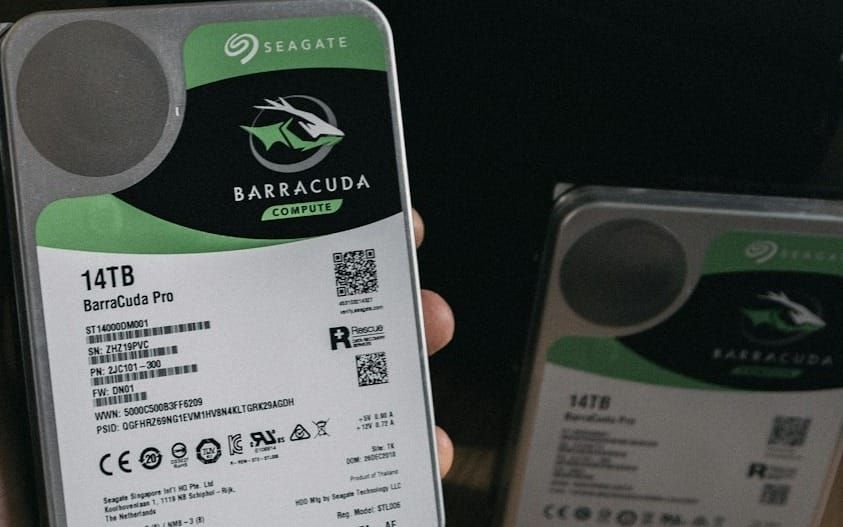
Seagate Extends Its AI-Driven Storage Momentum
Seagate Technology (STX) reported fiscal fourth-quarter revenue of $3.63 billion, up about 49% year over year and above Wall Street expectations of roughly $3.48 billion. Adjusted earnings reached $5.71 per share, topping estimates near $5.09.
The stronger signal came from the outlook. Seagate guided fiscal first-quarter 2027 revenue to approximately $4.1 billion and adjusted earnings to $7.30 per share at the midpoint, both above consensus estimates, as cloud data centers and AI workloads continue to drive mass-capacity storage demand.
Key Points
- Seagate reported fiscal Q4 adjusted EPS of $5.71 on revenue of $3.63 billion, both above Wall Street expectations.
- Fiscal Q1 2027 guidance called for about $4.1 billion in revenue and $7.30 in adjusted EPS, signaling another sequential step higher.
- AI-driven data center demand, pricing discipline, and adoption of Seagate's HAMR-based Mozaic platform are supporting stronger margins and longer customer planning horizons.
What Drove Seagate's Strong Quarter?
Seagate's fiscal fourth quarter reflected rising demand from cloud data centers and AI-related workloads.
Revenue increased to $3.63 billion from the prior year, while non-GAAP gross margin reached 52.7% and non-GAAP operating margin expanded to 44.6%, up sharply from 26.2% a year earlier.
Management said data center demand accounted for roughly 90% of exabyte shipments, while enterprise nearline revenue increased for a fifth consecutive quarter. Most nearline exabyte capacity has already been allocated through calendar 2028 under long-term supply arrangements, giving Seagate unusually strong demand visibility for a historically cyclical storage business.
Pricing also contributed. Seagate kept hard-drive unit production relatively flat while price per exabyte increased 11% year over year in the fourth quarter. Guidance implies that pricing growth could accelerate further in the current quarter.
The company generated $1.3 billion in operating cash flow and $1.1 billion in free cash flow during Q4. For fiscal 2026, free cash flow reached a record $3.1 billion.
Why Is HAMR Becoming More Important to Seagate's Growth?
Seagate's HAMR technology is central to its strategy for increasing storage density without relying on higher drive unit volumes.
The company's Mozaic platform uses heat-assisted magnetic recording, or HAMR, to increase the amount of data that can be stored on a hard drive. Management said HAMR-based products represented approximately 40% of nearline exabyte shipment run rate exiting fiscal 2026.
Mozaic 3 products are qualified across major cloud customers, while Mozaic 4 is ramping with leading cloud service providers. Seagate expects 50% of HAMR exabytes to come from Mozaic 4 by the end of calendar 2026.
That transition matters because higher-capacity drives can improve product mix and pricing while allowing customers to expand storage capacity without requiring proportionate growth in physical drive counts.
Management said it plans to continue expanding capacity primarily through technology transitions and higher-density products rather than by materially increasing total drive production.
What Matters Next for STX?
Seagate's fiscal first-quarter 2027 outlook points to continued acceleration.
The company expects revenue of approximately $4.1 billion, plus or minus $100 million, compared with Wall Street expectations around $3.8 billion. Adjusted EPS is expected to reach $7.30, plus or minus $0.20, versus consensus estimates between roughly $5.85 and $6.08 cited in the reports.
At the midpoint, that guidance implies roughly 13% sequential revenue growth and nearly 28% sequential adjusted EPS growth.
Management also expects operating margin of approximately 50% in the September quarter and said pricing, Mozaic adoption, product mix, and supply-demand conditions should continue supporting profitability.
The outlook stands out against weakness elsewhere in memory and semiconductor markets. Micron Technology (MU), SanDisk, and SK Hynix (SKHY) came under pressure as investors reacted to concerns about higher memory-sector capital spending and potential future supply increases.
Seagate's shares moved higher instead, highlighting a distinction between HDD mass-capacity storage and NAND or DRAM memory markets. Western Digital (WDC) was comparatively stable as the broader memory-related selloff intensified.
What It Means for Investors
Seagate's latest results suggest AI infrastructure demand is benefiting more than just processors and memory.
As AI models generate and retain increasing amounts of data, hyperscale customers need additional mass-capacity storage. Seagate's results show that this demand is supporting revenue growth, pricing, margins, and longer-term supply commitments.
The combination of strong customer planning horizons and restrained drive production has also changed the economics of the business. Rather than relying primarily on unit growth, Seagate is increasingly using higher-capacity HAMR products and tighter supply discipline to increase revenue per unit of storage delivered.
The contrast with recent weakness in DRAM and NAND-related stocks is also notable. While investors have become more concerned about rising capital spending and future supply in memory markets, Seagate's results showed continued strength in HDD-based mass-capacity storage.
Conclusion
Seagate closed fiscal 2026 with a strong quarter and entered fiscal 2027 with guidance well above Wall Street expectations.
AI-driven cloud demand, higher pricing, disciplined production, and accelerating HAMR adoption pushed revenue, margins, earnings, and free cash flow higher. Management's comments that customers are extending planning horizons through 2029 and beyond also added visibility to future demand.
For STX stock, the central question is shifting from whether AI infrastructure supports storage growth to how effectively Seagate can sustain pricing, expand HAMR adoption, and convert long-term customer commitments into continued earnings and cash-flow growth.
FAQs
Why did Seagate stock rise after earnings?
Seagate shares rose after the company beat fiscal fourth-quarter earnings and revenue expectations and issued fiscal first-quarter 2027 guidance above Wall Street estimates.
How much did Seagate earn in fiscal Q4?
Seagate reported fiscal fourth-quarter adjusted earnings of $5.71 per share on revenue of $3.63 billion.
How is AI demand affecting Seagate?
AI and cloud workloads are increasing demand for mass-capacity storage, supporting higher exabyte shipments, stronger pricing, improved margins, and longer customer planning horizons.
What is Seagate's HAMR technology?
HAMR, or heat-assisted magnetic recording, is the technology behind Seagate's Mozaic platform and allows the company to increase storage density and deliver higher-capacity hard drives.
What did Seagate guide for fiscal Q1 2027?
Seagate forecast approximately $4.1 billion in revenue and adjusted earnings of $7.30 per share at the midpoint for fiscal Q1 2027.
This article was created with AI assistance and reviewed by an editor. For details, please refer to our Terms of Use.
Explore Research with Stock Investor
Stock Investor is SharperTrades’ platform for long-term investing research and portfolio management. Members receive research reports, portfolio updates, conviction tracking, and in-depth analysis designed to support disciplined investment decisions.
Explore Additional Market Services
SharperTrades offers additional ways to stay connected to the market. Block Orders tracks institutional activity and highlights active trade setups and price behavior across long and short opportunities. For options-focused traders, Essential Option Income provides a structured approach to income strategies.
Build Your Market Knowledge
If you value the clear, explanatory approach of Market Brief, explore SharperTrades Academy, where we publish in-depth content and structured programs covering technical analysis, options, and risk management to help you better interpret market behavior.
Think More Clearly with SteadyCapital
SteadyCapital is SharperTrades' AI-powered behavioral investing app designed to help investors make better decisions. Review investment ideas, run company valuations, compare businesses, challenge your assumptions, and use the AI Coach to think more clearly before making important investment decisions.
Risk Disclosure
All content is provided for educational purposes only and does not constitute investment advice. Trading involves risk, and past performance is not indicative of future results. Please review our full Risk Disclosure for additional information.