AI Power Demand Drives Caterpillar to Record Revenue
Caterpillar delivered its first quarter with more than $20 billion in sales as demand strengthened across construction, mining and power generation. AI data centers helped lift generator and turbine demand, while higher volumes, pricing and operating leverage expanded profitability.

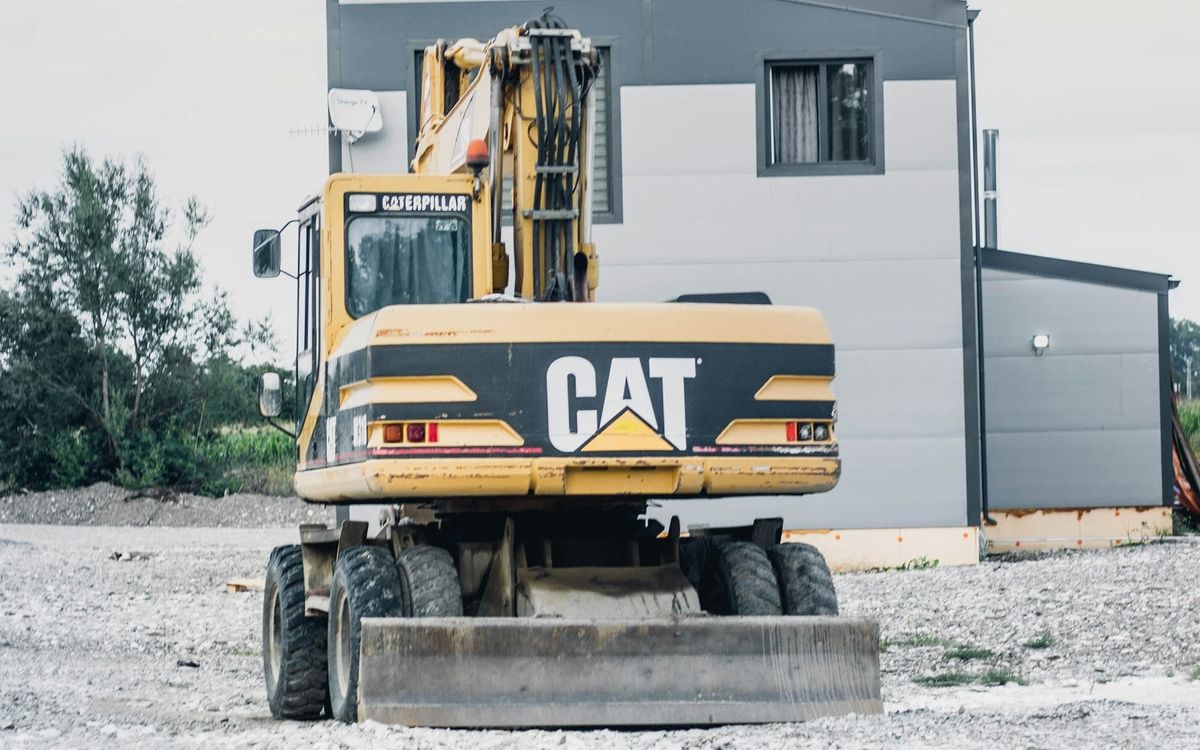
Caterpillar Converts Record Orders Into Broad-Based Growth
Caterpillar (CAT) reported second-quarter sales and revenue of $20.5 billion, up 24% from a year earlier and above Wall Street expectations of approximately $19.3 billion. Adjusted earnings reached $8.17 per share, compared with analyst estimates near $6.22.
The results reflected higher equipment volumes, favorable pricing and growth across all three primary operating segments. Power-generation demand tied to AI data centers remained an important driver, but the quarter also showed strength across construction, mining, energy and transportation markets.
Key Points
- Caterpillar reported record quarterly sales of $20.5 billion, up 24% year over year and above Wall Street expectations.
- Adjusted earnings rose 73% to $8.17 per share as higher volumes, pricing and productivity expanded margins.
- Demand for generators and turbines used in AI data centers helped lift Power & Energy sales, while construction and resource markets also strengthened.
Record Sales Extend Across Caterpillar’s Core Businesses
Caterpillar's second-quarter growth was not concentrated in a single product category.
Construction Industries sales increased 35% to approximately $8.3 billion. North American construction sales rose 50%, reflecting strong demand for equipment across the region. Segment profit increased 57% to $1.9 billion, while the segment margin expanded to 23.3%.
Power & Energy sales rose 17% to approximately $8.2 billion. Within that division, power-generation sales increased 29% as customers ordered large reciprocating engines and turbines for data center applications, utilities, oil and gas operations and prime-power projects.
Resource Industries generated approximately $4.6 billion in revenue, up 20% from a year earlier. The segment benefited from higher equipment demand across mining and rail markets.
Financial Products also contributed to the quarter. Revenue increased 10% to approximately $1.1 billion, while segment profit rose 32% to $328 million.
The combined performance helped Caterpillar exceed $20 billion in quarterly sales for the first time in its history.
Higher sales volumes contributed approximately $3.1 billion to the year-over-year increase, while favorable pricing added another $595 million.
Why Did Caterpillar Stock Rise After Earnings?
Caterpillar shares rose sharply because the company exceeded expectations on revenue, earnings and profitability while demonstrating that its record backlog was converting into actual sales.
Adjusted earnings of $8.17 per share were well above the roughly $6.22 expected by Wall Street and increased from $4.72 in the same quarter a year earlier.
Reported earnings per share rose to $7.77 from $4.62.
Operating profit climbed 50% to approximately $4.3 billion. The reported operating margin widened to 20.9% from 17.3%, while the adjusted operating margin increased to 21.9% from 17.6%.
The margin improvement showed that Caterpillar was generating greater profitability from its revenue growth. Higher prices, favorable product mix, productivity gains and operating leverage more than offset tariff expenses, manufacturing inflation and increased investment.
Caterpillar's backlog reached $72.1 billion, up 92% from the same period a year earlier. Management also reported strong order rates and record quarterly orders across the business.
That backlog provides visibility into future demand and suggests that the quarter's sales growth was supported by customer orders rather than primarily by dealers building inventory.
The stock's move also affected the broader market because Caterpillar is one of the highest-weighted components of the price-weighted Dow Jones Industrial Average. Its post-earnings advance made a substantial contribution to the index's gain.
What Matters Next for Caterpillar’s Growth Outlook?
The next phase of Caterpillar's growth will depend partly on its ability to expand power-generation capacity while continuing to convert its backlog into revenue.
Management is targeting production of large reciprocating engines at nearly three times 2024 levels. The backlog for those engines has increased more than 3.5 times since early 2024, with customer orders extending into 2028.
AI data centers are an important part of that demand because they require substantial and reliable electricity. Caterpillar supplies generators and turbines used to provide prime power, backup generation and other forms of electrical infrastructure.
The company is also benefiting from broader demand across utilities, oil and gas, construction, infrastructure and mining. That diversity reduces the quarter's dependence on a single end market.
For the third quarter, Caterpillar expects another period of year-over-year sales growth across all three primary segments. Management also expects the enterprise adjusted operating margin to increase from the prior-year period as higher prices and volume offset increased manufacturing, research, development and administrative costs.
For full-year 2026, the company now expects sales and revenue growth in the mid- to high teens, above its previous outlook. Growth is expected across Construction Industries, Power & Energy and Resource Industries.
Margin pressure remains a consideration. Resource Industries faces higher manufacturing, research and development costs, including spending on autonomous equipment. Caterpillar is also investing in additional Power & Energy capacity, which could limit some of the near-term operating leverage from higher sales.
The company nevertheless generated $4.4 billion in operating cash flow during the quarter and ended the period with $6.7 billion in cash. Caterpillar returned approximately $2.2 billion to shareholders, including $1.5 billion through share repurchases and $700 million through dividends.
What It Means for Investors
Caterpillar's second-quarter results show how the AI infrastructure cycle is extending beyond semiconductors and cloud providers into industrial equipment and power generation.
Demand for data center electricity helped lift orders for Caterpillar's generators and turbines, but the company's results were broader than the AI theme alone. Construction Industries sales increased 35%, Resource Industries grew 20% and Power & Energy rose 17%.
The breadth of that growth is important because it shows Caterpillar benefiting from multiple capital-spending cycles, including construction, infrastructure, mining, energy and data centers.
The company's backlog provides additional context. At $72.1 billion, backlog was 92% higher than a year earlier, while large-engine orders extend into 2028. The second-quarter results demonstrated that Caterpillar was converting those orders into higher revenue and stronger margins.
Valuation and expectations remain part of the market reaction. Caterpillar shares had risen sharply before the report and were trading at a higher earnings multiple than the company historically commanded. That placed greater pressure on Caterpillar to deliver more than an ordinary earnings beat.
The company met that higher threshold by reporting record sales, earnings well above expectations and margin expansion across a period of tariff, inflation and investment pressure.
The next test will be whether Caterpillar can continue increasing production, converting backlog and preserving profitability as it invests in capacity and customers maintain their infrastructure spending.
Conclusion
Caterpillar delivered record second-quarter revenue as stronger demand spread across construction, mining and power generation.
Sales increased 24% to $20.5 billion, marking the first quarter above $20 billion in company history. Adjusted earnings rose 73% to $8.17 per share, while the adjusted operating margin expanded to 21.9%.
Power-generation demand from AI data centers remained an important growth driver, supporting orders for large engines and turbines. However, the quarter also included 35% growth in Construction Industries and 20% growth in Resource Industries.
A $72.1 billion backlog, record order activity and customer commitments extending into 2028 provide visibility into future demand. Caterpillar also raised its full-year sales outlook and expects continued growth across its primary segments.
The central issue for Caterpillar now is execution: expanding production capacity, converting its backlog into sales and maintaining margins while absorbing higher manufacturing costs and investing for future growth.
FAQs
Why did Caterpillar stock rise after its second-quarter earnings?
Caterpillar stock rose because the company reported record revenue, earnings well above Wall Street expectations and stronger operating margins. Sales increased 24% to $20.5 billion, while adjusted earnings reached $8.17 per share.
How is AI demand affecting Caterpillar?
AI demand is increasing the need for power-generation equipment used in data centers. Caterpillar reported stronger demand for large reciprocating engines and turbines that provide electricity for data center applications.
How large was Caterpillar’s second-quarter backlog?
Caterpillar's backlog reached $72.1 billion, an increase of 92% from the same period a year earlier. Large-engine customer orders extended into 2028.
Which Caterpillar business grew the fastest?
Construction Industries recorded the fastest sales growth, increasing 35% to approximately $8.3 billion. Power & Energy sales rose 17%, while Resource Industries increased 20%.
What is Caterpillar’s outlook for 2026?
Caterpillar expects full-year sales and revenue to increase in the mid- to high teens compared with 2025. The company anticipates strong growth across all three primary operating segments.
This article was created with AI assistance and reviewed by an editor. For details, please refer to our Terms of Use.
Explore Research with Stock Investor
Stock Investor is SharperTrades’ platform for long-term investing research and portfolio management. Members receive research reports, portfolio updates, conviction tracking, and in-depth analysis designed to support disciplined investment decisions.
Explore Additional Market Services
SharperTrades offers additional ways to stay connected to the market. Block Orders tracks institutional activity and highlights active trade setups and price behavior across long and short opportunities. For options-focused traders, Essential Option Income provides a structured approach to income strategies.
Build Your Market Knowledge
If you value the clear, explanatory approach of Market Brief, explore SharperTrades Academy, where we publish in-depth content and structured programs covering technical analysis, options, and risk management to help you better interpret market behavior.
Think More Clearly with SteadyCapital
SteadyCapital is SharperTrades' AI-powered behavioral investing app designed to help investors make better decisions. Review investment ideas, run company valuations, compare businesses, challenge your assumptions, and use the AI Coach to think more clearly before making important investment decisions.
Risk Disclosure
All content is provided for educational purposes only and does not constitute investment advice. Trading involves risk, and past performance is not indicative of future results. Please review our full Risk Disclosure for additional information.